A friend of mine — let’s call him Marcus — spent about eight months grinding through forex charts before he finally admitted he was down nearly $4,200 on a demo-turned-live account. He wasn’t reckless. He’d read the books, followed the YouTube gurus, even paid for a signal service. The problem wasn’t effort. It was that nobody had walked him through what forex trading actually is versus what it’s sold as. So let’s do that together, honestly, with real numbers and no hype.

What Forex Trading Actually Is — Strip Away the Marketing
Foreign exchange (forex or FX) trading is the simultaneous buying of one currency and selling of another. The global forex market turns over roughly $7.5 trillion per day as of the Bank for International Settlements’ 2022 Triennial Survey (with 2025 estimates pushing closer to $8 trillion daily). That makes it the most liquid financial market on Earth — larger than equities and futures combined.
The market operates 24 hours a day, five days a week, across four major sessions: Sydney, Tokyo, London, and New York. The London-New York overlap window (roughly 8 AM–12 PM EST) consistently produces the highest volume and tightest spreads on pairs like EUR/USD and GBP/USD. If you’re trading outside that window as a short-term trader, you’re often swimming against a thinner, choppier tide.
Currency pairs are quoted as a ratio. EUR/USD at 1.0875 means 1 euro buys 1.0875 US dollars. The base currency is always on the left; the quote currency on the right. Prices move in pips — for most major pairs, one pip = 0.0001. On a standard lot (100,000 units), one pip of movement = approximately $10 in P&L.
The Leverage Conversation Nobody Has Honestly
Here’s where Marcus went wrong — and where most beginners quietly blow up. Forex brokers routinely offer leverage of 50:1, 100:1, even 500:1 in offshore jurisdictions. In the US, CFTC-regulated brokers cap retail leverage at 50:1 on majors and 20:1 on minors. EU brokers under ESMA rules cap it at 30:1 for majors.
Leverage is a multiplier — on both gains and losses. At 100:1 leverage, a 1% adverse move wipes your entire position margin. EUR/USD moves 1% in a single session multiple times per month. The math is brutal when you’re on the wrong side:
- Account size: $1,000
- Leverage used: 50:1
- Position value: $50,000 (0.5 standard lots)
- Stop-loss set at: 20 pips = $100 loss (10% of account)
- No stop-loss, 80-pip move against you: $400 loss — account down 40% in one trade
The specific condition under which losses cascade: holding oversized positions through high-impact news events (NFP, FOMC, CPI releases) without stops. EUR/USD regularly moves 80–150 pips in the 15 minutes following a US CPI print. Brokers can also widen spreads dramatically during these windows — a pair that normally costs 0.8 pips to trade might cost 5–8 pips at the moment you most want to exit.
Major, Minor, and Exotic Pairs — Know Where You’re Playing
Not all currency pairs are created equal, and the category you trade determines your risk profile significantly.
- Major pairs (EUR/USD, USD/JPY, GBP/USD, USD/CHF, AUD/USD, USD/CAD, NZD/USD): Tightest spreads (0.5–1.5 pips at top brokers), deepest liquidity, most research coverage. Best starting point for beginners.
- Minor pairs (EUR/GBP, EUR/JPY, GBP/JPY): Moderate liquidity, spreads of 1–3 pips. GBP/JPY in particular is notorious for 150–300 pip intraday swings — traders call it the “beast” for good reason.
- Exotic pairs (USD/TRY, USD/ZAR, EUR/MXN): Wide spreads (often 30–100+ pips), low liquidity, heavy sensitivity to geopolitical shocks. In 2025, USD/TRY has been particularly volatile around Turkish central bank policy shifts. These are not beginner territory.
How Brokers Actually Make Money — And Why It Matters
Most retail forex brokers operate on one of two models: market maker (dealing desk) or ECN/STP (no dealing desk). This distinction matters more than most beginners realize.
Market makers take the other side of your trade internally, profiting from spread and sometimes from your losses. This creates an inherent conflict of interest, though regulated brokers are required to maintain best-execution policies. ECN brokers (like IC Markets, Pepperstone, or FXCM’s institutional offering) route your orders to a pool of liquidity providers — banks, hedge funds, other participants — earning a small commission per lot instead. ECN spreads on EUR/USD can drop to 0.0–0.2 pips during peak hours, but you pay a commission of roughly $3–$7 per standard lot round trip.
For a scalper executing 20 trades a day, commission structure is existential. For a swing trader holding positions for days, it’s nearly irrelevant. Matching your broker model to your strategy is step zero.
What the Data Says About Retail Trader Survival
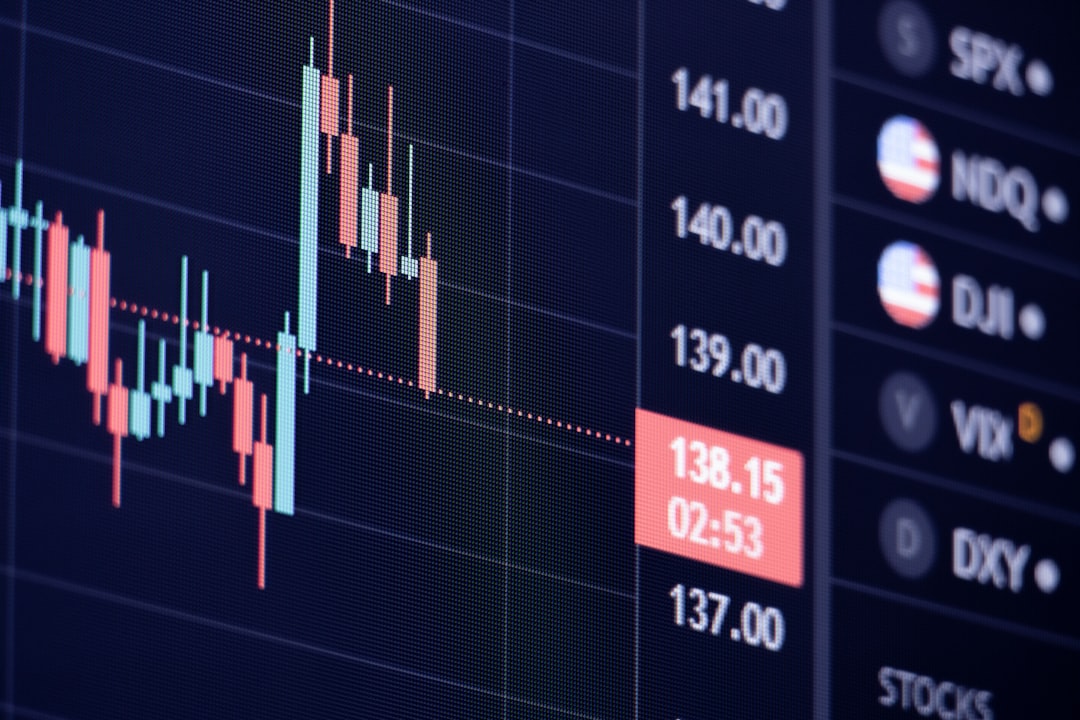
ESMA requires brokers in Europe to publish the percentage of retail accounts that lose money. Across major brokers in 2024–2025, those numbers cluster consistently between 70% and 82% of retail clients lose money. IG Group reports around 70%, Saxo Bank around 65%, while some offshore brokers quietly sit above 80%.
This isn’t a conspiracy — it’s the natural outcome of:
- Undercapitalization (trading too large relative to account size)
- No defined edge — trading based on feelings or tip-following rather than a systematic approach
- Ignoring transaction costs — at 1 pip spread per trade, 100 trades/month costs $1,000 on standard lots
- Overtrading during low-liquidity sessions
- Revenge trading after losses, escalating position sizes to “recover”
The 20–30% who do make consistent money tend to share a few common traits: strict position sizing (risking 0.5–2% of account per trade, not 10–20%), a defined strategy with a positive expected value, and rigorous trade journaling that separates luck from skill.
Building a Framework That Doesn’t Blow Up
If you’re genuinely interested in forex trading in 2025, here’s a practical starting scaffold — not a get-rich scheme, just a structured approach to not losing your shirt in the first six months:
- Demo first, seriously: Most brokers offer unlimited demo accounts with real-time feeds. Trade demo for at least 3 months, targeting 50+ documented trades before touching live capital.
- Start with one pair: Master EUR/USD before expanding. Its behavior, correlations with US economic data, and typical daily range (60–90 pips in 2025) are well-documented.
- Use a position size calculator: Myfxbook has a free one. Never manually calculate in the heat of a trade.
- Backtest your strategy: Platforms like Forex Tester or TradingView’s Pine Script allow historical simulation. If your strategy doesn’t show positive expectancy over 200+ historical trades, it won’t magically work live.
- Keep a trade journal: Note entry reason, exit reason, emotional state, and outcome. Edgewonk and TraderVue are popular journaling tools with analytics built in.
- Understand your macro calendar: Bookmark Investing.com’s economic calendar. Filter for high-impact events and decide in advance whether you hold through them or flatten positions.
Realistic Alternatives If Full Forex Trading Feels Like Too Much
If active forex trading sounds overwhelming — or your lifestyle doesn’t support sitting in front of charts — there are adjacent options worth considering. Currency ETFs like UUP (Invesco DB US Dollar Index Bullish Fund) or FXE (Invesco CurrencyShares Euro Trust) give currency exposure without leverage or direct forex account complexity. Managed forex accounts and PAMM (Percentage Allocation Money Management) funds exist, but vet them extremely carefully — the space attracts fraud disproportionately.
For those interested in systematic approaches, algorithmic trading via MetaTrader 4/5 Expert Advisors or Python-based bots connected to OANDA’s or Interactive Brokers’ API is a legitimate path — but it requires programming skills and still demands rigorous backtesting on out-of-sample data to avoid curve-fitting disasters.
Bottom line from someone who’s watched both sides of this market: Forex trading isn’t a scam, but it’s also not passive income or a side hustle you can ignore after setup. The traders who last treat it like a craft — they study, journal, size positions conservatively, and respect the fact that liquidity doesn’t care about your rent payment. Start smaller than you think you need to, demo longer than feels necessary, and treat every early loss as tuition rather than failure. Marcus eventually rebuilt his account by dropping to micro lots and focusing on just two pairs — slow, unglamorous, but he’s up 18% over the past four months. That’s actually how it tends to go.
📚 관련된 다른 글도 읽어 보세요
- World Whisky Styles Compared: A Globe-Trotting Guide to Scotch, Bourbon, Japanese & Beyond (2026 Edition)
- Asian Baijiu’s Global Market Surge in 2026: How China’s Spirit Is Rewriting the World’s Drink Map
- 입문자도 헷갈리는 스코틀랜드 싱글몰트 위스키 종류 완전정복: 5대 산지 + 추천 브랜드 2026 최신판
태그: forex trading for beginners, currency pairs explained, forex leverage risk, forex trading strategy 2025, how forex brokers work, pip calculation forex, retail forex trading tips
Leave a Reply