A few months back, I found myself at a bar in Osaka, staring at a whisky menu that stretched three pages long. My travel companion — a craft beer guy through and through — leaned over and whispered, “What’s the actual difference between all of these? Is it just marketing?” I laughed, because I used to ask the same question. That night, sipping a beautifully peated Islay dram alongside a silky Yamazaki 12, something clicked for both of us. The differences are real, they’re rooted in geography, grain, water, and culture — and once you understand them, the world of whisky becomes endlessly fascinating.
So whether you’re a curious newcomer or a seasoned sipper looking to sharpen your knowledge, let’s take a sensory journey through the world’s major whisky styles. Grab a glass — or just your imagination — and let’s dig in.
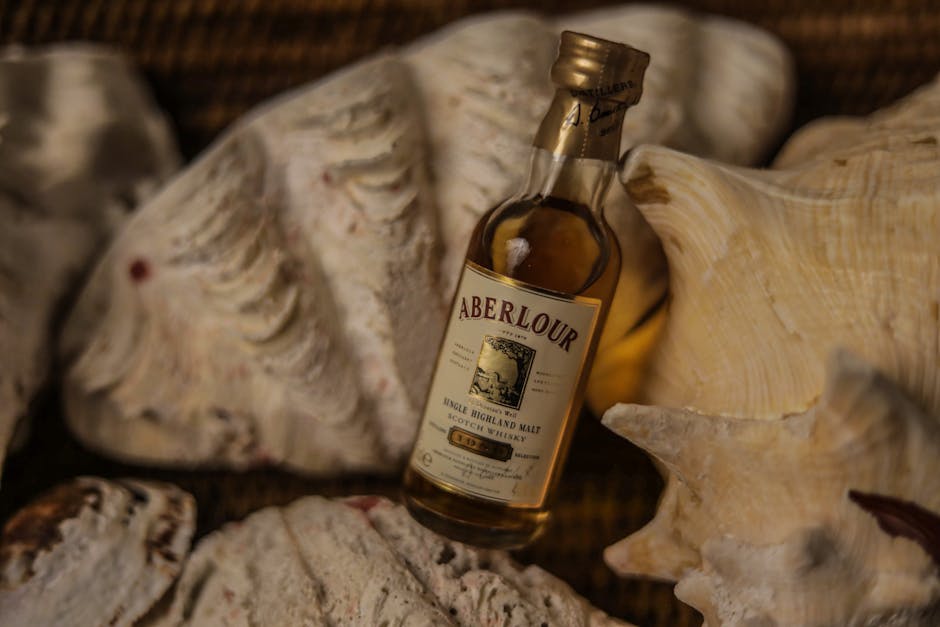
🏴 Scotch Whisky: The Ancient Benchmark
Scotland is where most people’s whisky journey begins, and for good reason. Scotch whisky has been produced for over 500 years — the earliest documented record dates to 1494 — and today Scotland’s whisky industry generates over £5.4 billion in export value annually (Scotch Whisky Association, 2026 report). There are five legally recognized Scotch regions, each with a distinct personality:
- Highland: Diverse and broad — expect heather, honey, and sometimes light peat. Think Glenmorangie, Dalmore.
- Speyside: The most densely distillery-packed region on Earth. Fruity, floral, elegant. Macallan, Glenfiddich, Balvenie live here.
- Islay: The wild child. Heavy peat smoke, iodine, seaweed, campfire. Laphroaig, Ardbeg, Bruichladdich. Not subtle, absolutely unforgettable.
- Lowland: Light, grassy, gentle. Great for newcomers. Auchentoshan famously does triple distillation here.
- Campbeltown: Tiny but mighty. Briny, oily, complex. Springbank is the star.
Legally, Scotch must be aged a minimum of 3 years in oak casks in Scotland, bottled at no less than 40% ABV, and contain no added substances other than water and caramel coloring (E150a). Single malt means one distillery, one malted barley — blended Scotch mixes grain and malt whiskies from multiple distilleries. Johnnie Walker Black Label, one of the world’s best-selling blends, uses around 40 different whiskies in its blend.
🇺🇸 American Bourbon & Rye: Sweet, Bold, and Unapologetically Big
Bourbon is America’s native spirit, and it’s having a global moment. U.S. whiskey exports hit a record $1.2 billion in 2025, with demand surging particularly in Asia and Europe (Distilled Spirits Council, 2026). The rules around bourbon are surprisingly strict:
- Made in the USA (not just Kentucky — that’s a myth)
- Grain mash must be at least 51% corn
- Distilled to no more than 160 proof (80% ABV)
- Aged in new, charred American oak barrels (this is huge — the new oak gives massive vanilla, caramel, and toasted wood notes)
- Entered into the barrel at no more than 125 proof
- No age statement required, but “Straight Bourbon” must be aged at least 2 years
Buffalo Trace, Four Roses, Maker’s Mark, and the legendary Pappy Van Winkle (which resells on secondary markets for thousands of dollars per bottle) represent the spectrum from accessible to ultra-rare. Rye whiskey, meanwhile, swaps most of the corn for rye grain — drier, spicier, more savory. Bulleit Rye and WhistlePig are excellent entry points.
🇯🇵 Japanese Whisky: Precision and Poetry in a Glass
Japanese whisky is, in my humble opinion, the most emotionally resonant category to explore. It borrowed heavily from Scotch tradition — Masataka Taketsuru literally studied distillation in Scotland in 1919 before founding what became Nikka — but evolved into something uniquely Japanese: meticulous, layered, and deeply contemplative.
As of 2026, new Japanese Whisky labeling standards introduced in 2021 are fully in force, requiring that any bottle labeled “Japanese Whisky” must use malted grain, be distilled and aged (minimum 3 years) entirely in Japan, bottled at 40% ABV minimum. This closed a loophole where many brands were blending imported Scotch and selling it as “Japanese.”
Key players and their characters:
- Suntory Yamazaki: Silky, fruity, with a distinctive Mizunara oak influence — sandalwood, incense, coconut
- Suntory Hakushu: Fresh, herbal, lightly smoky — almost like a forest in a glass
- Nikka Yoichi: Peated, robust, coastal — the most Scotch-like of the Japanese expressions
- Nikka Miyagikyo: Elegant, floral, fruity — distilled beside a river in Sendai
- Chichibu (Ichiro’s Malt): The indie darling — experimental, limited, beloved by collectors worldwide
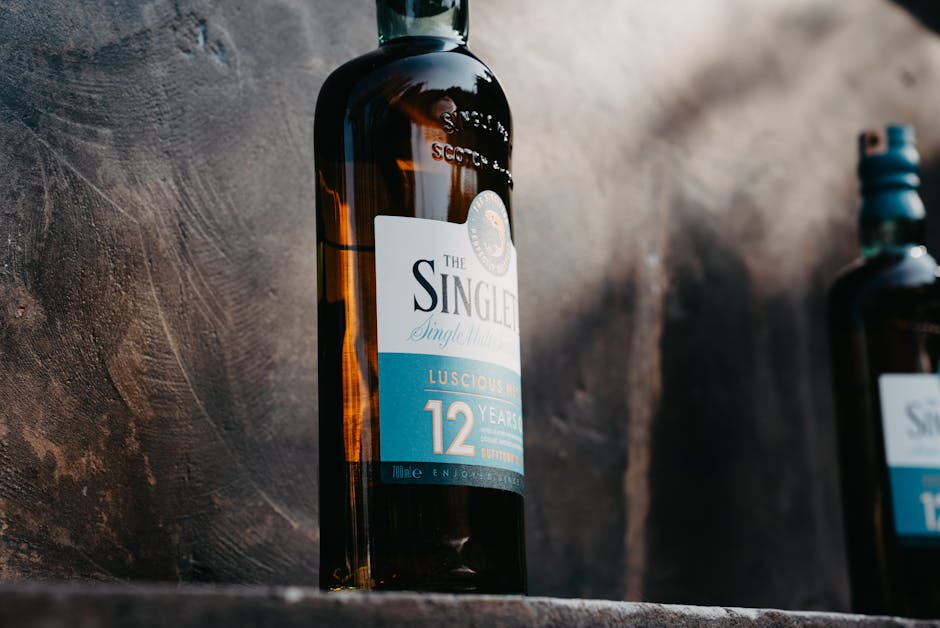
🇮🇪 Irish Whiskey: The Comeback Kid
Irish whiskey is the fastest-growing major spirits category in the world — global sales surpassed 14 million 9-liter cases in 2025 (IWSR Drinks Market Analysis). It was virtually extinct in the mid-20th century, but the revival has been extraordinary. Key characteristics:
- Triple distillation is traditional (though not legally required), producing a famously smooth spirit
- Must be aged minimum 3 years in wooden casks on the island of Ireland
- Pot Still Irish Whiskey is uniquely Irish — made from a mix of malted and unmalted barley in a pot still, producing a creamy, spicy, oily texture. Redbreast 12 is the gold standard here.
- Jameson dominates globally, but the craft scene — Teeling, Waterford, Dingle — is producing world-class expressions
- Generally no peat smoke (with rare exceptions), making it approachable and food-friendly
🌍 The Rest of the World: Canada, India, Taiwan & Emerging Regions
The whisky world has truly gone global. Here’s a quick-fire rundown of what’s worth knowing:
- Canadian Whisky: Light, smooth, often rye-forward. Legally must be aged 3 years. Crown Royal and Canadian Club are the icons. Often unfairly dismissed — the premium tier (Crown Royal Northern Harvest Rye won “World’s Best” in 2016 and still has fans) deserves more respect.
- Indian Whisky: A massive but misunderstood category. Most mass-market Indian “whisky” is actually molasses-based (more like rum) — but Amrut and Paul John single malts are genuine grain whiskies winning international awards. Paul John Edited and Brilliance are exceptional value.
- Taiwanese Whisky (Kavalan): The humidity and heat of Taiwan accelerates maturation dramatically. Kavalan Solist expressions regularly top global competitions. Their distillery in Yilan is worth a visit if you’re in Taiwan.
- Australian & Scandinavian Whisky: Craft distilling scenes in Australia (Starward, Sullivan’s Cove) and Sweden (Mackmyra, High Coast) are producing genuinely distinctive spirits using local grains, local water, local casks.
📊 Quick Comparison Table by Style
Here’s a distilled (pun intended) breakdown of how the major styles compare on key dimensions:
- Grain base: Scotch = malted barley | Bourbon = 51%+ corn | Irish = barley (malted + unmalted) | Japanese = malted barley | Canadian = rye/corn blend
- Cask type: Scotch = used barrels (ex-bourbon, sherry) | Bourbon = new charred American oak | Irish = used barrels | Japanese = used + Mizunara oak
- Flavor profile: Scotch = complex, smoky to fruity | Bourbon = vanilla, caramel, oak | Irish = smooth, creamy, light | Japanese = delicate, layered | Bourbon = bold, sweet
- Minimum age: Scotch/Irish/Japanese = 3 years | Bourbon = none (“Straight” = 2 years) | Canadian = 3 years
- Typical ABV bottling: 40–46% across most categories, with cask-strength expressions ranging 55–65%+
How to Actually Start Exploring (Practical Tips)
The best approach isn’t to start with heavily peated Islays or high-proof bourbons — that’s like starting your wine journey with a tannic Barolo. Build your palate gradually:
- Start with Irish single pot still (Redbreast 12) or Speyside Scotch (Glenfiddich 12, Balvenie DoubleWood) for approachability and complexity
- Move to Bourbon (Buffalo Trace, Four Roses Single Barrel) to understand how new oak transforms spirit
- Try Japanese (Toki, Hakushu 12) to experience the subtlety and craftsmanship
- Then — and only then — venture into Islay (start with Bowmore 12 before Laphroaig or Ardbeg)
- Use resources like Whisky Advocate and Master of Malt for tasting notes and scoring
- Find a local whisky bar or tasting club — sampling before buying a full bottle saves money and builds vocabulary
One personal ritual I swear by: always nose the whisky before tasting, and add just a few drops of room-temperature water to open it up. You’ll be amazed how a spirit transforms.
There’s genuinely no “wrong” whisky if you’re enjoying what’s in your glass. The categories, rules, and regional traditions are frameworks for understanding — not walls that should limit your curiosity. A great bourbon and a great Islay single malt are telling completely different stories, and both deserve to be heard.
Editor’s Comment : If the range of world whiskies feels overwhelming (and honestly, it can), don’t try to learn everything at once — that’s a fast road to palate fatigue and an empty wallet. Instead, pick one region, drink two or three bottles from it slowly over a month, read a bit about its history, and then move on. The whisky world rewards patient, curious exploration over rapid consumption. And if budget is a concern, blended Scotches and entry-level Irish whiskeys offer remarkable quality per dollar — don’t feel pressured to chase the rare stuff until you’ve fallen genuinely in love with the fundamentals first.
📚 관련된 다른 글도 읽어 보세요
- 아쿠아비트란 무엇인가? 북유럽 전통주의 역사·맛·특징 완벽 정리 (2026)
- World’s Best Whisky Distillery Tours: The Ultimate 2026 Guide to Planning Your Dream Dram Journey
- Single Malt Whisky Food Pairing Guide 2026: Insider Tips to Elevate Every Dram
태그: world whisky comparison, scotch vs bourbon vs japanese whisky, whisky styles guide 2026, single malt whisky beginner guide, Irish whiskey vs Scotch, bourbon whiskey characteristics, global whisky regions
Leave a Reply