A colleague of mine came back from a spirits trade show in Singapore last month absolutely buzzing. Not from the alcohol — well, maybe a little — but from what she witnessed at the baijiu exhibition hall. “I expected a niche corner with a handful of Chinese brands,” she told me. “Instead, it was packed. Bartenders from Copenhagen, distributors from São Paulo, sommeliers from New York — all swirling tiny cups of moutai and scribbling notes like their careers depended on it.” That moment, she said, felt like watching whiskey’s global takeover in the 1980s, but compressed into fast-forward.
That story stuck with me. Baijiu — China’s ancient grain spirit with its famously polarizing aroma profiles — has long been the world’s best-selling liquor by volume yet remained almost invisible outside Asia. But 2026 is shaping up to be the year that paradox finally cracks open. Let’s dig into what’s actually driving this shift, where the money is moving, and what it means if you’re a consumer, investor, or industry watcher.
The Numbers That Are Making the Industry Pay Attention
First, some grounding data. According to the International Wine and Spirit Research (IWSR) 2026 Global Spirits Report, baijiu accounts for roughly 35% of all spirits consumed globally by volume — yet generates less than 3% of international export revenue. That gap is a business opportunity hiding in plain sight. In 2025, China’s baijiu exports crossed the USD 1.2 billion threshold for the first time, representing a 28% year-over-year jump. Projections for 2026 put that figure closer to USD 1.55 billion, driven by aggressive premiumization strategies and diaspora-led demand in Western markets.
Key premium brand Kweichow Moutai — which has a market cap that still dwarfs most global spirits conglomerates — reported international sales growth of 41% in fiscal 2025. Meanwhile, Wuliangye and Luzhou Laojiao are both executing deliberate international retail rollouts with dedicated English-language marketing for the first time in their century-plus histories.
Why Now? The Convergence of Four Market Forces
Timing in beverage markets is rarely accidental. Four forces are colliding in 2026 to make baijiu’s global push feel inevitable rather than opportunistic:
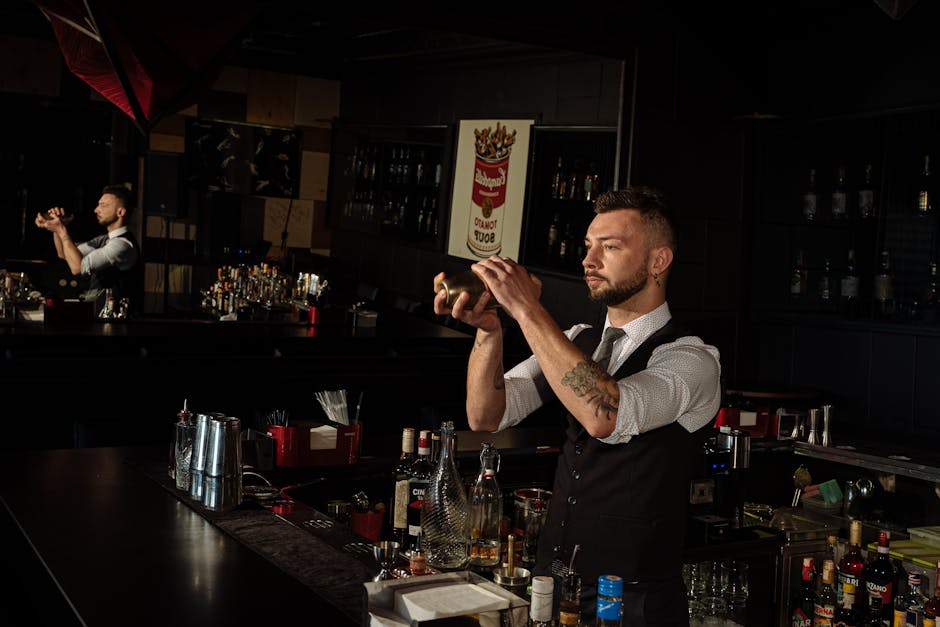
- The Craft Cocktail Bridge: Mixologists in London, New York, and Tokyo have discovered that sauce-aroma (jiangxiang) baijiu plays surprisingly well in cocktail applications — replacing Scotch or mezcal with layers of umami, dried fruit, and fermented grain complexity. The Baijiu Sling is now a fixture on cocktail competition menus worldwide.
- Chinese Diaspora as Market Seed: With an estimated 60 million overseas Chinese globally, brand-familiar demand pre-exists in virtually every major city. Diaspora communities are acting as authentic tastemakers, not just nostalgic consumers.
- Premiumization Narrative: Post-pandemic luxury appetite has made consumers more receptive to “world’s oldest” and “craft fermentation” storytelling — exactly the narrative that baijiu producers like Moutai have been crafting for decades.
- Regulatory Easing: Several EU markets and the UK updated import classifications for Chinese spirits in late 2025, reducing duty complexity that had previously made baijiu pricing non-competitive on Western shelves.
Brand-by-Brand: Who’s Actually Winning Internationally?
Not all baijiu brands are created equal when it comes to global strategy. Here’s where the real action is:
Kweichow Moutai continues to lead on prestige positioning, but it’s almost playing a different game — targeting gift-giving culture in Chinese business communities and ultra-premium on-trade placements in fine dining (think Michelin-starred restaurants in Paris and NYC offering Moutai pairing menus). Their Moutai Ice Cream pop-up partnership strategy in Asia, which went viral in 2023, has evolved into full collaborations with Western dessert brands in 2026.
Wuliangye is going broader. Their English-language campaign launched in Q1 2026 targets curious spirits enthusiasts rather than luxury buyers — a smart democratization move that mirrors how Japanese whisky expanded its base in the 2010s.
Baijiu brand MOUTAI 1935 (a sub-line launched for international consumers) is specifically engineered with a softer flavor profile intended to reduce the entry barrier for non-initiated drinkers — essentially a “gateway baijiu” strategy.
ReBlend, a Hong Kong-based startup, is worth watching: they’re blending traditional baijiu with Western botanical elements to create fusion spirits targeting the Gen Z cocktail market. Very early stage, but distributors in Amsterdam and Toronto are already knocking.
The Aroma Barrier: Baijiu’s Biggest Market Education Challenge
Let’s be honest about the elephant in the room — or rather, the aroma. Baijiu’s flavor compounds, particularly ethyl acetate in light-aroma varieties and tetramethylpyrazine compounds in sauce-aroma types, create sensory experiences that Western drinkers frequently describe as “glue,” “paint thinner,” or “soy sauce mixed with nail polish remover.” These aren’t insults — they’re genuine perceptual reactions from palates trained on whiskey, vodka, and gin.
The industry’s smartest players are addressing this head-on through education rather than flavor dilution:
- The Baijiu Academy (baijiu.com) launched a free English certification program in 2025 that has enrolled over 22,000 bartenders and hospitality professionals globally as of April 2026.
- Pairing guides for dim sum, Sichuan cuisine, and even Western cheese boards are being distributed at point-of-sale in major retail chains including Total Wine (US) and Majestic Wine (UK).
- Brand ambassadors with Western spirits backgrounds are being deployed — people who can speak the language of both worlds — at tasting events and trade shows.
Regional Nuances: Not All Asian Markets Are the Same Launchpad
While China is the origin, the Asian markets that are most effectively serving as global springboards vary considerably:
Singapore functions as baijiu’s international HQ by proxy. Its favorable duty structure, international hospitality scene, and multicultural consumer base make it the ideal test market before Western rollouts. Several brands use Singapore on-trade data as their benchmark before approaching European distributors.
Japan is a fascinating case — culturally familiar with complex fermented spirits but historically protective of its own sake and shochu industries. Yet baijiu imports into Japan grew 19% in 2025, largely in high-end izakayas targeting Chinese tourist and business traveler segments.
South Korea shows strong premium baijiu adoption, partly because its established culture of gifting premium spirits (historically dominated by Scotch) maps naturally onto Moutai’s positioning.
Investment & Risks: The Cool-Headed View
From a market analysis standpoint, the baijiu global story is compelling but not without meaningful risks. Geopolitical tensions between China and Western markets remain a structural headwind — trade policy shifts can materially affect import conditions overnight. The EU-China relations landscape in 2026, while somewhat thawed compared to 2023-2024 peaks, remains volatile.
There’s also the counterfeiting problem. Premium baijiu faces rampant counterfeit issues even in domestic markets — extending internationally multiplies that risk. Brands are investing in QR-code authentication and blockchain provenance tracking, but consumer education on verification remains nascent.
Finally, the premiumization paradox: baijiu brands want to position as ultra-luxury globally while maintaining mass-market dominance at home. These dual identities can create brand confusion that sophisticated international consumers (who increasingly research brand integrity) may find jarring.
What Should You Actually Do With This Information?
Whether you’re a spirits enthusiast, hospitality professional, or market watcher, here are realistic action points:
- Enthusiasts: Start with a light-aroma (qingxiang) baijiu like Fengjiu before jumping to the more intense sauce-aroma Moutai. Your palate needs an on-ramp.
- Bartenders & Hospitality Pros: The Baijiu Academy certification is genuinely useful and now carries recognizable credentials in Asia-Pacific markets. Get ahead of the curve before your competitors do.
- Investors & Distributors: Watch the Singapore import data as your leading indicator. Mid-tier brands (USD 50–150 price point internationally) are likely to show the fastest volume growth in the next 24 months — not the ultra-premiums.
- Retailers: Shelf placement and staff training matter enormously here. Baijiu placed next to vodka with no context will collect dust. Baijiu with a QR code linking to a pairing guide becomes a discovery experience.
The baijiu global story isn’t about replacing whiskey or tequila. It’s about carving out an authentic category position that respects its 5,000-year heritage while speaking fluently to modern global consumers. The brands that understand that balance — rather than chasing either pure heritage nostalgia or total Western assimilation — are the ones worth watching in 2026 and beyond.
Editor’s Comment : I’ll be honest — three years ago I would have skeptically filed “baijiu goes global” next to “this time the metaverse will work.” But the structural data in 2026 is genuinely different. The regulatory shifts, the cocktail culture bridge, and the diaspora demand foundation are real and measurable. That said, I’d caution against treating this as a guaranteed rocket ship — geopolitical risk is real, and the flavor barrier requires sustained consumer education investment that many brands historically haven’t committed to. The smart play is to watch Singapore trade data closely for the next two quarters and treat it as the canary in the coal mine. If premium baijiu volumes in Singapore’s on-trade continue accelerating through Q3 2026, the global story will be very hard to argue against.
📚 관련된 다른 글도 읽어 보세요
- 2026년 세계 최고 위스키 증류소 투어 완벽 가이드 | 꼭 가봐야 할 성지 7곳
- 위스키 테이스팅 노트 작성법: 초보가 3개월 만에 소믈리에 수준으로 올라간 실전 가이드 2026
- 싱글몰트 위스키 음식 페어링 추천 2026 | 맛의 조합을 완성하는 실전 가이드
태그: baijiu global market 2026, Asian spirits export trends, Chinese liquor international expansion, Kweichow Moutai global strategy, premium baijiu cocktail culture, baijiu investment analysis, Asian beverage industry trends
Leave a Reply