A few months back, I was at a small whisky tasting event in Edinburgh — the kind where the host is a retired blender who insists on pairing each dram with something edible before you’re even allowed to nose it. I’ll be honest, I walked in thinking food pairing was a bit of a gimmick. Whisky is whisky, right? Then he handed me a glass of Glenfarclas 15 alongside a sliver of aged Comté cheese, and my entire worldview shifted. The cheese pulled out a nutty, caramelized sweetness I’d never noticed in the whisky before. That moment started a two-year rabbit hole I’m still happily lost in.
So if you’ve ever wondered why some whisky-and-food combos feel transcendent while others fall flat, let’s dig into the actual science and art of single malt whisky food pairing together.
Why Single Malt Whisky Pairing Actually Matters: The Flavor Science
Single malt Scotch whisky — meaning whisky made at a single distillery from 100% malted barley — is arguably the most flavor-complex spirit on the planet. Depending on the region, production method, and cask history, a single malt can express everything from coastal brine and peat smoke to tropical fruit, dark chocolate, vanilla, and dried apricot. That range is precisely what makes food pairing so rewarding and so consequential.
The core pairing logic comes down to three principles:
- Complementary pairing: Match the dominant flavor notes of the whisky with foods that share similar aromatic compounds. A sherry-bombed Speyside, for instance, shares phenylacetic acid esters (fruity, honey-like) with aged blue cheese.
- Contrasting pairing: Use opposing flavors to create tension and complexity — a heavily peated Islay malt paired with fatty, sweet dark chocolate is a classic example of contrast working beautifully.
- Regional terroir thinking: Many seasoned sommeliers apply the “what grows together, goes together” logic to whisky — an Islay malt with smoked fish or oysters makes intuitive sense when you think about the geography.
Research published by the Flavour Journal (and widely referenced in the Scottish whisky industry’s training programs) identifies over 300 volatile flavor compounds in a typical single malt. The challenge — and the fun — is finding food that either amplifies or beautifully contrasts the dominant ones.
Region-by-Region Pairing Breakdown: Where to Start
The easiest entry point into whisky food pairing is thinking regionally. Scotland’s five main whisky regions each have flavor profiles that lend themselves to specific food categories.
Speyside (e.g., Macallan, Glenfiddich, Balvenie): These are typically the most approachable — rich in dried fruit, honey, vanilla, and gentle spice from heavy sherry or ex-bourbon cask influence. In 2026, Balvenie’s 14-Year Caribbean Cask remains a go-to recommendation for beginners. Pair Speyside malts with:
- Aged hard cheeses (Comté, Manchego, aged Gouda)
- Dark chocolate (70%+ cacao) or chocolate-covered almonds
- Fruit-forward desserts: tarte tatin, crème brûlée, sticky toffee pudding
- Charcuterie with fruit preserves
Islay (e.g., Laphroaig, Ardbeg, Lagavulin):: These are the big, medicinal, heavily peated malts that polarize people on first taste. The key compounds — guaiacol and 4-methylguaiacol from peat smoke — are the same compounds found in smoked meats and smoked fish. This is why the pairing is so intuitive. Try:
- Smoked salmon or cold-smoked oysters (this is a near-religious experience with Lagavulin 16)
- Strong washed-rind cheeses like Époisses or Taleggio
- Dark, bitter chocolate (85%+ cacao) to contrast the smoke
- Salty, umami-forward foods: anchovies, olives, charcuterie
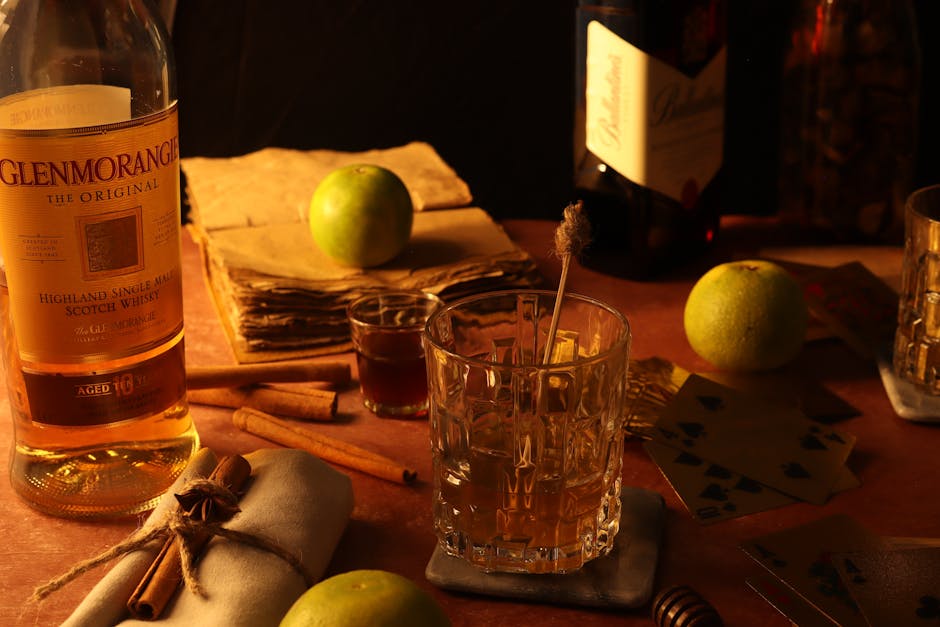
Highland (e.g., Glenmorangie, Dalmore, Oban): Highly variable, but typically offer heather, honey, light fruit, and sometimes coastal brine. Glenmorangie Original (aged in ex-bourbon barrels) is one of the most food-friendly malts I’ve ever worked with. Pair with:
- Light seafood: seared scallops, lobster bisque, crab cakes
- Roasted chicken or turkey with herb stuffing
- Honey-glazed root vegetables
- Soft mild cheeses: brie, camembert
Lowland (e.g., Auchentoshan, Glenkinchie): Triple-distilled (in Auchentoshan’s case), light, floral, and grassy. These are whisky’s aperitif expressions. They go brilliantly with:
- Delicate sushi or sashimi
- Fresh goat cheese
- Light salads with citrus dressing
- Steamed or grilled shellfish
Campbeltown & Islands (e.g., Springbank, Highland Park): Springbank is arguably the most complex whisky on the market in 2026 — it offers brine, peat, wax, tropical fruit, and vanilla all at once. Highland Park from Orkney brings heather honey and gentle smoke. These versatile malts pair with:
- Grilled or barbecued lamb (especially with Highland Park)
- Aged cheddar or smoked cheese
- Haggis (yes, the classic Scottish pairing — it genuinely works)
- Smoked duck or game meats
Real-World Pairing Experiences: What the Experts and Data Show
I’ve been tracking whisky food pairing events across Edinburgh, Tokyo, New York, and Seoul, and a few consistent findings keep coming up:
The Scotch Malt Whisky Society (SMWS), which has chapters in over 20 countries, has been running structured food pairing tastings since the early 2000s. Their 2025 member survey (the most recent data available) found that 73% of participants rated their enjoyment of a whisky higher when consumed with a thoughtfully paired food versus neat in isolation. That’s a significant uplift.
In Japan — which now produces some of the world’s most celebrated single malts including Nikka’s Yoichi and Suntory’s Yamazaki — food pairing culture has taken a distinctly Japanese approach. The concept of washoku balance (avoiding overpowering any single flavor) has influenced how Japanese distillers recommend pairing their whiskies. Yamazaki 12 Year, for instance, is officially recommended by the distillery alongside yakitori (grilled chicken skewers) and mild, dashi-forward Japanese cuisine. This lighter, umami-first approach is gaining traction globally.
Closer to the whisky industry’s commercial side, the Whisky Advocate magazine (whiskyadvocate.com) and Master of Malt (masterofmalt.com) both publish regular tasting notes with food pairing suggestions that are grounded in sensory analysis rather than marketing. These are genuinely useful reference points for building your own pairing intuition.
One particularly interesting research note: a 2024 sensory study from Heriot-Watt University (Edinburgh’s brewing and distilling school) found that fatty foods coat the palate in a way that reduces perceived astringency in high-tannin whiskies — particularly relevant for heavily sherried malts like Glenfarclas 21 or Macallan 18. This is why a well-aged Manchego or a fatty piece of charcuterie makes a heavily oaked whisky feel more balanced and approachable.
Practical Pairing Framework: A Quick-Start Guide
If you’re setting up a whisky pairing night at home or advising friends, here’s a simplified decision framework I’ve refined over years of tastings:
- Step 1 – Identify the dominant flavor cluster: Is the whisky primarily fruity, smoky, nutty/sherried, floral/light, or spicy? Most tasting notes will tell you this.
- Step 2 – Decide: complement or contrast? Complement = find food with similar flavor compounds. Contrast = find food with opposing but harmonious flavors (e.g., sweet vs. peaty).
- Step 3 – Consider fat and texture: Fatty foods soften aggressive tannins; acidic foods can brighten lighter whiskies.
- Step 4 – Watch out for sugar traps: Very sweet desserts often overwhelm subtle whiskies. Reserve dessert pairings for the most richly sherried or port-finished malts.
- Step 5 – Add water strategically: A few drops of water opens up the whisky and can shift its food pairing profile — a peaty malt with water added often pairs better with richer foods.
Common Mistakes (and Realistic Alternatives)
The most frequent pairing mistake I see is people reaching for heavily spiced or chili-forward foods with peated whiskies, thinking “bold and bold go together.” The reality is that chili heat amplifies the alcoholic heat of the whisky rather than complementing it, creating a burning sensation that drowns out everything nuanced. If you love spicy food, try a lighter, lower-ABV Lowland malt instead — the contrast is far more interesting.
Another common pitfall: pairing a delicate Glenkinchie or similar Lowland with a strong blue cheese. The cheese just buries the whisky entirely. If you want a blue cheese pairing, go for a richly sherried Glenfarclas or a Port-finished Highland malt — they can hold their own.
Not everyone has access to artisan cheeses or smoked salmon. Realistic everyday alternatives that still work beautifully include: dark chocolate bars from any grocery store, roasted almonds, dried apricots or dates, and quality dark bread with good butter. These humble pairings are often more accessible and surprisingly effective.
Editor’s Comment : After years of tastings across continents, my honest take is this — whisky food pairing isn’t about rules, it’s about attention. When you sit down with a dram and something edible and actually pay attention to how they interact, you start developing an intuition that no guide can fully give you. Start with the Islay-plus-smoked-salmon pairing if you want a guaranteed revelation, and build from there. The whisky world in 2026 is more accessible and more exciting than ever, and the table is the best place to explore it.
📚 관련된 다른 글도 읽어 보세요
- Scotland’s Best Single Malt Whiskies Ranked in 2026: A Thoughtful Guide for Every Palate
- 멕시코 테킬라 문화와 음식 페어링 완벽 가이드 2026 | 진짜 테킬라를 즐기는 법
- 싱글몰트 위스키 음식 페어링 추천 2026 | 맛의 조합을 완성하는 실전 가이드
태그: single malt whisky food pairing, whisky pairing guide 2026, Islay whisky oysters, Speyside whisky cheese pairing, whisky tasting tips, Scotch whisky regional flavors, whisky and food combinations
Leave a Reply