Picture this: you’re sitting at a trendy cocktail bar in New York’s Lower East Side, and the bartender slides over a drink made with andong soju — a traditionally distilled Korean spirit with roots stretching back to the 14th century. A few years ago, that scene would have felt almost fictional. But in 2026, it’s becoming remarkably common. Korean traditional soju, long overshadowed by its mass-market commercial cousin (you know, the green-bottle stuff), is quietly staging one of the most fascinating cultural-culinary comebacks in the global spirits industry.
So let’s think through this together — what’s actually driving this shift, how far has traditional soju really traveled, and what does the road ahead realistically look like?
📊 The Numbers Behind the Global Soju Wave
First, let’s ground ourselves in some data, because the story here is genuinely surprising. According to the Korea Customs Service and Korea Agro-Fisheries & Food Trade Corporation (aT) reports tracked into early 2026, Korean spirits exports — including both commercial and traditional varieties — surpassed $130 million USD in 2025, representing a 22% year-over-year increase. More importantly, the share attributed to jeontong soju (전통소주, traditional distilled soju) within that figure has been climbing steadily, now accounting for roughly 18–20% of premium Korean spirits exports.
What’s the difference worth knowing here? Commercial soju (think Chamisul or Jinro) is a diluted ethanol product — efficient, affordable, and wildly popular in volume. Traditional soju, by contrast, is pot-distilled from fermented grains like rice, barley, or sweet potato using a soju gori (고리, a traditional copper distillation vessel), often carrying ABV levels between 25% and 45%. It’s closer in spirit — pun intended — to whisky or artisan brandy than to the commercial version most people outside Korea know.
Global premium spirits markets are also trending in traditional soju’s favor. The craft and artisan spirits category globally grew by approximately 14% in 2025, and consumers in North America, Western Europe, and Southeast Asia are actively seeking authentic, origin-rooted products — exactly what traditional soju offers.
🌍 Where Is Traditional Soju Actually Landing?
Let’s look at real-world traction, because anecdotes only go so far.
United States: The U.S. remains the largest non-Asian export market. Brands like Hwayo (화요) and Andong Soju (안동소주) have secured shelf space in specialty liquor stores across California, New York, and Texas. Hwayo’s 41% and 53% expressions are frequently spotted in high-end Korean BBQ restaurants and now increasingly in non-Korean fine dining establishments. In 2025, Hwayo partnered with a Seattle-based craft cocktail competition, signaling intentional crossover appeal beyond the Korean diaspora.
Europe: The UK and Germany have shown particularly strong interest. London’s Soho district has seen at least three dedicated Korean spirits bars open since 2024, and traditional soju is appearing on tasting menus at Michelin-starred establishments in Paris and Copenhagen — often paired with fermented or umami-forward dishes where its clean, grain-forward profile shines.
Southeast Asia: This is arguably the most organically growing market. In Singapore, Vietnam, and Thailand, Korean cultural influence (Hallyu wave, K-drama, K-food) has created a ready audience. Duty-free channels in Singapore’s Changi Airport now dedicate dedicated premium Korean spirits sections, something unimaginable five years ago.
Japan: Traditionally complicated due to market protectionism and the dominance of shochu (Japan’s own distilled spirit), Japan has paradoxically become a growing curiosity market — particularly among younger Japanese consumers who differentiate Korean traditional soju from shochu and appreciate the cultural story behind it.
🏛️ Government & Industry Initiatives Powering the Push
This globalization isn’t happening by accident. The Korean government designated traditional soju a National Intangible Cultural Heritage, and various regional styles hold their own designations — Andong Soju, Munbaeju, Igangju, and Hongju among the most celebrated. In 2026, the Ministry of Agriculture, Food and Rural Affairs (MAFRA) expanded its “K-Food Plus” export program to include dedicated promotional budgets for traditional spirits at major international food and beverage expos, including Vinexpo and Bar Convent Berlin.
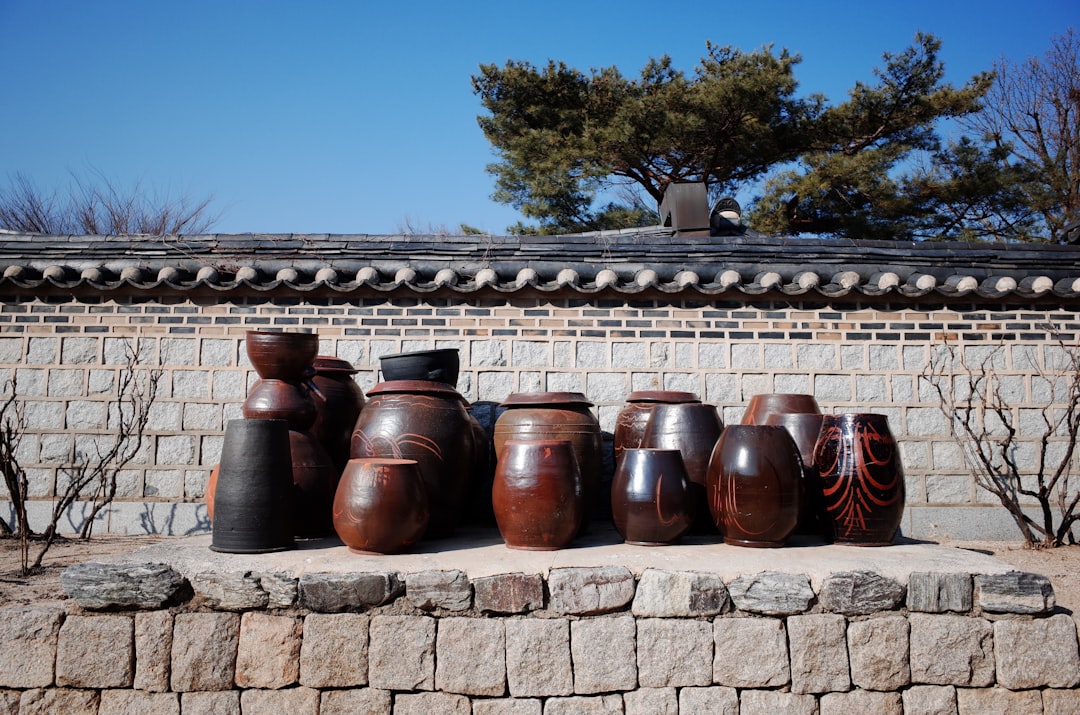
Meanwhile, craft distillers themselves are innovating thoughtfully. Several producers are now aging their soju in onggi (옹기, traditional Korean earthenware) or experimenting with oak cask maturation — bridging the gap between Korean tradition and the aged-spirits vocabulary that Western premium consumers already understand.
⚠️ Honest Challenges Worth Talking About
Let’s not paint an entirely rosy picture, because that wouldn’t be fair to you as a reader trying to understand this space realistically.
- Brand fragmentation: Unlike Scotch whisky or Cognac, which have powerful regional bodies and strict appellations, Korean traditional soju suffers from inconsistent brand awareness globally. Dozens of small producers compete without a unified international marketing identity.
- Consumer education gap: Most international consumers still conflate all soju with the sweet, low-ABV green-bottle product. Explaining the difference requires sustained education efforts that are expensive and slow.
- Price sensitivity: Premium traditional soju is genuinely expensive to produce and thus to purchase — a 500ml bottle of aged Hwayo can retail at $60–$90 USD internationally. That positions it against established Western premiums (single malt Scotch, small-batch bourbon) where brand trust is already deeply entrenched.
- Regulatory complexity: Labeling requirements for spirits vary wildly across markets, and some traditional soju producers have faced delays entering the EU and Canadian markets due to classification and documentation hurdles.
- Climate & raw material pressures: Rice and grain harvests in Korea face increasing variability due to climate shifts, affecting production volumes for artisan distillers who rely on specific local ingredients.
💡 Realistic Paths Forward — What Could Actually Work
Here’s where I think the most interesting strategic thinking lives. Rather than trying to replicate the commercial soju marketing playbook globally, traditional soju’s best competitive angle is authenticity and narrative. Think about how Japanese sake or Oaxacan mezcal broke through — not by competing on price or volume, but by making the origin story irresistible.
A few approaches that seem to be gaining real traction:
- Chef and sommelier partnerships: Getting traditional soju onto tasting menus and food pairing programs, where the conversation naturally elevates perceived value.
- Cocktail culture integration: Positioning traditional soju as a mixologist-grade base spirit — its clean distillation profile and moderate ABV range actually make it extremely versatile for high-end cocktail applications.
- Cultural tourism crossover: Korea’s growing inbound tourism market (which bounced strongly post-pandemic) offers domestic distillery tours that send international visitors home as brand ambassadors — a word-of-mouth pipeline that money can’t easily buy.
- GI (Geographical Indication) formalization: Pushing for stronger international GI protections — similar to Champagne’s AOC — would help define the category and protect premium positioning.
If you’re personally interested in exploring traditional soju, I’d genuinely suggest starting with Hwayo 41% or Andong Soju 45% as entry points — both are increasingly available internationally and offer a clear, accessible introduction to what this style is actually about. Pair them lightly chilled with something fermented or umami-rich (aged cheese, kimchi, cured fish) and you’ll understand immediately why sommeliers are getting excited.
The globalization of Korean traditional soju is real, meaningful, and still very much in its early chapters. The green bottle opened the door worldwide — now the craft distillers are walking through it, clay pot in hand.
Editor’s Comment : What strikes me most about traditional soju’s global journey in 2026 is that it’s not just a spirits story — it’s a cultural confidence story. Korea is increasingly presenting its deepest culinary traditions not as curiosities, but as equals to the world’s established premium categories. Whether that ambition fully materializes will depend less on the quality of the liquid (which is genuinely exceptional) and more on whether the industry can build the unified storytelling infrastructure that, say, French wine or Japanese whisky took decades to develop. The bones are good. The momentum is real. The next five years will be telling.
태그: [‘Korean traditional soju’, ‘soju globalization 2026’, ‘Korean spirits export’, ‘andong soju’, ‘premium Asian spirits’, ‘K-food global expansion’, ‘craft distilled spirits’]
Leave a Reply