Let me paint you a picture. It’s a rainy evening, and a friend slides two glasses across the table — one filled with a golden, delicately floral liquid, the other a deeper amber with a smoky, almost peaty promise. “Pick one,” she says. That’s the eternal dilemma whisky lovers face when choosing between Japanese whisky and Scotch whisky. I’ve been sitting with this question for years, and honestly? The more I explore it, the more fascinating the answer becomes.
Both traditions are world-class, both have fiercely loyal fans, and both have some seriously jaw-dropping bottles at wildly different price points. So instead of crowning a winner (there isn’t one, really), let’s reason through what makes each style unique — and figure out which one actually fits your lifestyle and palate.
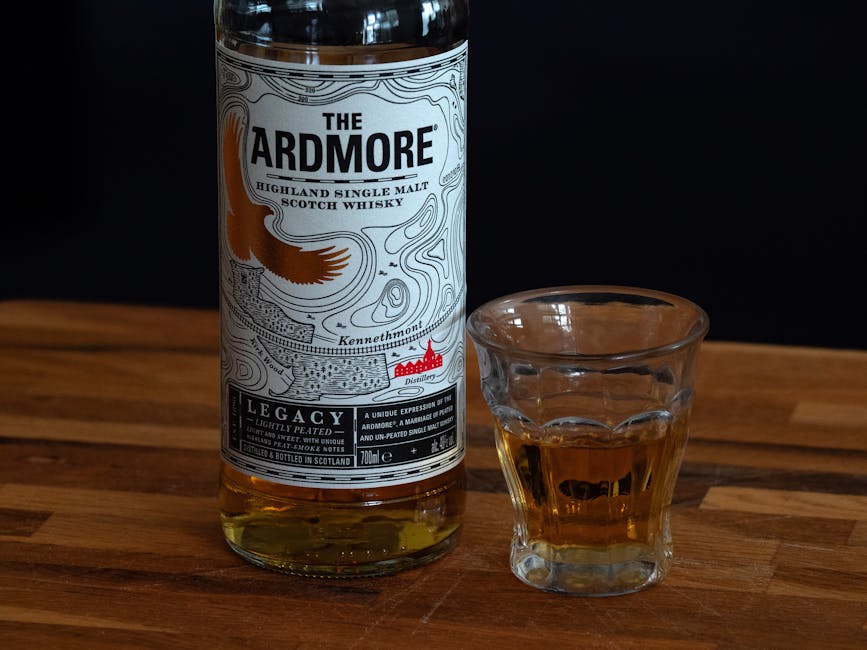
🏔️ Origins & Philosophy: Tradition vs. Adaptation
Scotch whisky has been distilled in Scotland for over 500 years. The Scots didn’t invent whisky because they wanted to — they invented it because Scottish barley and cold, damp conditions made fermentation almost inevitable. The result is a deeply terroir-driven spirit. Scotch is legally protected by the Scotch Whisky Regulations, requiring aging in oak casks for a minimum of three years in Scotland itself.
Japanese whisky, on the other hand, is a beautiful story of intentional craft. Masataka Taketsuru traveled to Scotland in 1918, studied distillation at Glasgow University, and brought the techniques home. But here’s where it gets interesting: Japanese distillers didn’t just copy Scotland — they filtered those methods through a Japanese aesthetic sensibility called monozukuri (the art of making things), prioritizing harmony, subtlety, and precision over boldness.
As of 2026, Japan has also introduced stricter labeling regulations (effective since 2024), meaning a bottle now labeled “Japanese Whisky” must be distilled, aged, and bottled entirely in Japan. This was a long time coming and actually brings Japanese standards closer to Scotch regulations in terms of authenticity.
🌊 Flavor Profiles: What’s Actually in the Glass?
This is where most people get genuinely surprised. The two styles aren’t just “different” — they’re philosophically different in how they approach flavor construction.
- Scotch Whisky (Single Malt): Bold, expressive, and regionally distinct. A Speyside Scotch like Glenfiddich 18 Year tends toward rich fruit and honey, while an Islay Scotch like Laphroaig 10 Year hits you with medicinal peat, seaweed, and smoke. There’s a robustness that says, “I’m here, pay attention.”
- Japanese Whisky (Single Malt): Think Yamazaki 12 Year — it opens with red berry, Mizunara oak spice, and a clean finish. Hakushu 12 Year leans herbal and slightly smoky but in a delicate, forest-breeze way. Japanese expressions are layered rather than loud.
- Blended Scotch: Think Johnnie Walker Black Label or Monkey Shoulder — accessible, crowd-pleasing, and excellent for cocktails. These represent the gateway category for most whisky beginners.
- Japanese Blended Whisky: Suntory Toki and Nikka From The Barrel are standout examples. They’re remarkably food-friendly and shine in a Highball (whisky + sparkling water over ice), which is practically a cultural institution in Japan.
💴 The Price Reality in 2026: Where Has All the Affordable Whisky Gone?
Let’s be honest about the elephant in the room. The global whisky boom of the 2010s hit Japanese whisky hardest. Demand far outpaced supply, and aged expressions like Hibiki 21 Year and Yamazaki 18 Year now regularly fetch $500–$1,200+ on the secondary market. Even Nikka Coffey Grain, once a $60 bottle, hovers around $90–$110 retail in most markets in 2026.
Scotch has had its own price inflation — a bottle of Macallan 18 Year Sherry Oak now retails for $300–$400 — but the sheer volume of Scottish production means there are still extraordinary value options. Consider Glencadam 10 Year (around $45), GlenAllachie 10 Year (around $55), or the criminally underrated Tamnavulin Double Cask (under $40 in many markets).
For budget-conscious whisky lovers, Scotch currently offers better bang for your buck at the entry-to-mid tier. Japanese whisky rewards you more at the premium tier — if you can find it at retail.
🌐 International & Domestic Market Trends
In the United States and Europe, Japanese whisky imports have stabilized after the post-COVID supply crunch, but allocation systems from major retailers remain common for sought-after bottles. In Japan itself, lottery systems for releases like Yamazaki 25 Year have become standard practice.
Meanwhile, Scotland’s whisky tourism industry has rebounded strongly through 2025–2026. The Scotch Whisky Experience in Edinburgh reported record visitor numbers, and distillery exclusives (bottles only available at the source) have become a growing category — think Springbank’s local barley releases or Bruichladdich’s distillery-only expressions.
Globally, the “whisky adjacent” category — Japanese-inspired craft distilleries in Taiwan (Kavalan), India (Amrut, Paul John), and Australia — has exploded, offering legitimately excellent alternatives for those priced out of both Scotch and Japanese premium tiers.

🥃 Food Pairing & Lifestyle Fit: Think Beyond the Sip
Japanese whisky, especially in Highball form, is extraordinarily food-friendly. Suntory Toki Highball pairs beautifully with ramen, grilled fish, and even sushi — something Scotch would struggle to do given its bolder flavor profile. If you’re a food-first person who loves pairing drinks with meals, Japanese whisky (or blends, in particular) fits your lifestyle better.
Scotch, on the other hand, is the undisputed king of the post-dinner contemplative sip. A peated Islay Scotch with a square of dark chocolate? A Speyside with a slice of aged cheddar? These are life’s simple pleasures.
🔍 Realistic Alternatives: For Every Budget & Preference
Not everyone can (or should) drop $300 on a bottle. Here’s how I’d honestly steer different readers:
- If you love Japanese whisky but not the prices: Try Akashi White Oak, Togouchi, or the Nikka Days expression — all under $60 and legitimately enjoyable.
- If you love Scotch but want to explore something new: Try Taiwan’s Kavalan Concertmaster or India’s Amrut Fusion — both are inspired by Scotch traditions with a tropical twist.
- If you’re a cocktail maker: Blended Scotch (Monkey Shoulder, Naked Malt) and Japanese blends (Suntory Toki) are your best friends — consistent, mixable, and affordable.
- If you want a special occasion bottle under $100: GlenAllachie 12 Year (Scotch) or Nikka Pure Malt Black (Japanese) are both stunning over-deliverers.
- If budget truly isn’t a concern: Scotch — Springbank 21 Year. Japanese — Yamazaki 18 Year. No further questions.
At the end of the day, the Japanese whisky vs. Scotch debate isn’t a competition — it’s a conversation. These two traditions push each other to be better, and we, the drinkers, are the ones who benefit. The best whisky isn’t necessarily the rarest or most expensive one. It’s the one in your hand right now, shared with someone who appreciates it as much as you do.
Editor’s Comment : If I had to choose just one bottle to bring to a dinner party in 2026, I’d probably reach for Nikka From The Barrel — it’s Japanese, it’s bold enough to surprise Scotch lovers, delicate enough to charm newcomers, and it still (barely) clears $80 retail in most markets. But honestly? The smartest move is to buy one of each and let the evening decide. Life’s too short for a single whisky tradition. 🥃
태그: [‘Japanese whisky vs Scotch’, ‘best whisky 2026’, ‘Japanese whisky guide’, ‘Scotch whisky comparison’, ‘whisky tasting notes’, ‘Yamazaki vs Glenfiddich’, ‘whisky buying guide 2026’]
Leave a Reply