A few months ago, I was at a rooftop bar in Nashville when a friend leaned over and whispered, “Wait — is bourbon the same as Scotch?” She’d been sipping her Old Fashioned with total confidence up until that moment. I laughed, not because it was a silly question, but because so many people have exactly that confusion. And honestly? The whisky world doesn’t make it easy. Between the spelling (whisky vs. whiskey), the geography, the grain bills, and the aging rules, it can feel like you need a degree just to order a drink.
So let’s slow down, pour something neat, and actually think through what separates bourbon whiskey from single malt whisky — not just in a textbook way, but in a way that changes how you taste, shop, and talk about them.
🌽 What Actually Makes Bourbon… Bourbon?
Bourbon is an American whiskey with a surprisingly strict legal definition. Under U.S. federal law, bourbon must meet all of the following criteria:
- Made in the USA — Though most comes from Kentucky, it can technically be produced anywhere in the country.
- Grain bill: at least 51% corn — This is the big one. Corn gives bourbon its characteristic sweetness and body.
- Distilled to no more than 160 proof (80% ABV) — Higher distillation strips away too much flavor.
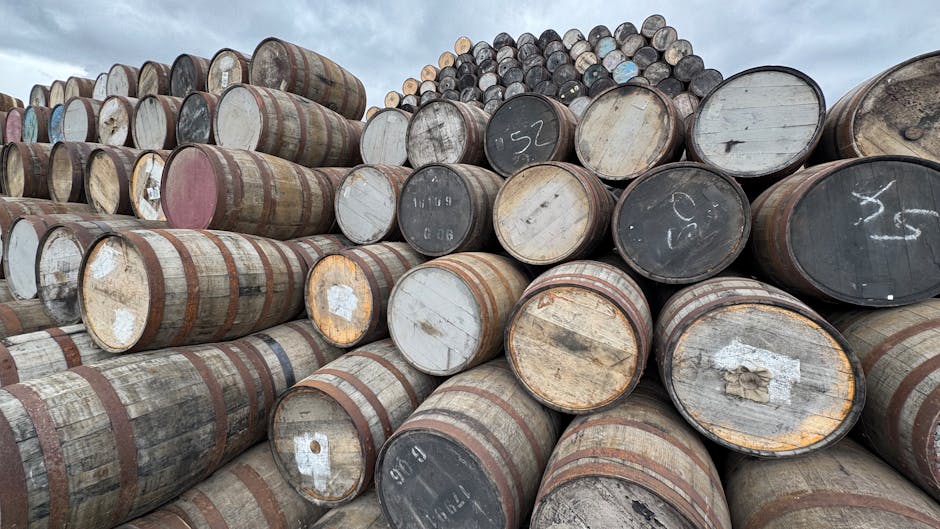
- Aged in new, charred oak barrels — And here’s the kicker: the barrels can only be used once for bourbon. This is why those barrels get exported to Scotland afterward.
- Entered into the barrel at no more than 125 proof (62.5% ABV)
- Bottled at a minimum of 80 proof (40% ABV)
- No added color, flavoring, or other spirits — What goes in is what comes out.
There’s no minimum aging requirement for standard bourbon, but straight bourbon must be aged at least two years, and if aged less than four years, the age must be stated on the label. Think of brands like Buffalo Trace, Maker’s Mark, and Wild Turkey — all playing by these exact rules.
🏴 And What Defines Single Malt Whisky?
Single malt is most commonly associated with Scotch whisky, though Ireland, Japan, and even Taiwan now produce celebrated versions. The term “single malt” breaks down like this:
- “Single” means it comes from a single distillery — not a blend of multiple distilleries’ spirits.
- “Malt” means it’s made entirely from malted barley — barley that has been soaked in water, allowed to germinate, then kiln-dried.
- Pot still distillation is used, which preserves more congeners (flavor compounds) than column distillation.
- For Scotch specifically, it must be aged a minimum of 3 years in oak casks in Scotland — most reputable expressions are aged 10, 12, 15, or 18+ years.
- The oak casks used are typically ex-bourbon barrels (yes, those once-used barrels from Kentucky!) or ex-sherry casks from Spain.
The result? A spirit that’s deeply influenced by its regional terroir, distillery character, and cask provenance. A 12-year Glenfiddich from Speyside tastes nothing like a 10-year Laphroaig from Islay — yet both are single malts.
📊 Side-by-Side: The Core Differences at a Glance
Let’s put the two head-to-head on the variables that matter most for flavor and experience:
- Primary grain: Bourbon = corn (≥51%); Single Malt = 100% malted barley
- Country of origin: Bourbon = USA; Single Malt = Scotland (most famous), Japan, Ireland, etc.
- Cask type: Bourbon = new charred American oak; Single Malt = typically used casks (ex-bourbon, ex-sherry)
- Flavor profile: Bourbon = sweeter, vanilla, caramel, oak; Single Malt = more complex, ranging from fruity and floral to smoky and peaty
- Spelling: American and Irish producers use “whiskey” (with an ‘e’); Scotch and Japanese use “whisky” (without)
- Price range in 2026: Entry-level bourbon starts around $25–$35; entry-level single malt Scotch typically $40–$60
🌍 Real-World Examples Worth Knowing
Let’s ground this in actual bottles you might encounter:
Bourbon side: Four Roses Single Barrel (Kentucky) is a fantastic gateway — high rye content gives it spice on top of that classic corn sweetness. Blanton’s Original, though increasingly hard to find, remains the gold standard conversation piece. For something accessible in 2026, Elijah Craig Small Batch offers tremendous value at around $30.
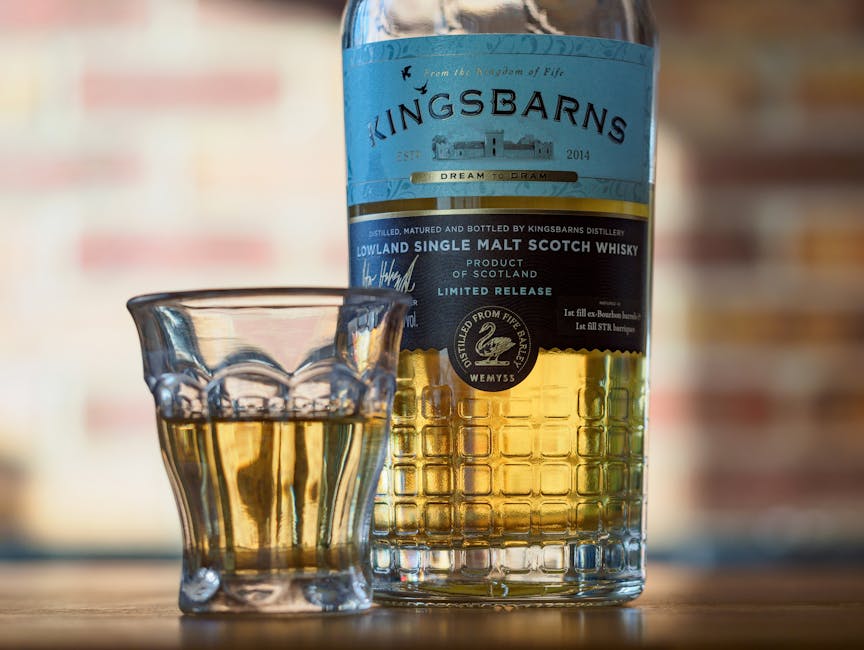
Single Malt side: Glenfiddich 12 (Speyside, Scotland) is practically the “Hello, World” of single malts — approachable, fruity, and widely available. For peat lovers, Ardbeg 10 from Islay is a smoky masterclass. On the Asian front, Nikka From The Barrel (Japan) has been turning heads globally as Japanese whisky continues its 2026 surge in popularity. Taiwan’s Kavalan Solist series has also won multiple international awards, proving this category has gone truly global.
🤔 So Which One Should YOU Start With?
This is where I want to think through your situation rather than just give a blanket recommendation. Here’s a loose decision framework:
- If you like sweeter, dessert-adjacent drinks (think vanilla lattes, caramel, brown sugar) → Start with bourbon. Something like Maker’s Mark or Buffalo Trace won’t overwhelm you.
- If you’re curious about complexity and regional variation → Single malt is your rabbit hole. Start with a Speyside (like Glenlivet 12) before going peaty.
- If budget is a concern → Bourbon gives you more bang for your buck at the entry level in 2026’s market.
- If you want to impress at a dinner party → Bring a Japanese single malt. It’s a guaranteed conversation starter right now.
- If you’re mixing cocktails → Bourbon wins easily. Its sweetness and robustness hold up beautifully in an Old Fashioned or Manhattan.
💡 Realistic Alternatives If Neither Feels Right Yet
Not everyone falls in love with either style immediately — and that’s perfectly fine. Here are some bridge options worth exploring:
- Irish Whiskey (like Jameson or Redbreast 12) — typically triple-distilled, smoother, and approachable. A great middle ground.
- Blended Scotch (like Monkey Shoulder or Johnnie Walker Black) — more affordable, less intimidating, and still introduces you to malt character.
- Tennessee Whiskey (like Jack Daniel’s) — technically not bourbon due to the Lincoln County Process (charcoal filtering), but very close in style and palate-friendly.
- American Single Malt — yes, this is a growing category! Distilleries like Westland (Washington State) are producing 100% malted barley American whiskies that bridge both worlds beautifully.
The whisky world in 2026 is more exciting and accessible than ever. Craft distilleries are experimenting with heritage grains, alternative cask finishes, and cross-cultural production methods that blur the traditional lines between these categories. The “rules” are worth knowing — but they’re also just the starting point for a much more interesting conversation.
Whatever you pour next, I hope you taste it a little differently now.
Editor’s Comment : Don’t let whisky snobbery intimidate you into a corner. Whether you reach for a $28 bourbon or a $65 single malt, the goal is always the same — to find something that genuinely delights your palate. Start curious, taste widely, and never feel bad about liking what you like. The best whisky is always the one in your glass.
태그: [‘bourbon vs single malt’, ‘bourbon whiskey guide’, ‘single malt scotch whisky’, ‘whiskey types explained’, ‘best whisky for beginners 2026’, ‘bourbon vs scotch differences’, ‘whisky tasting guide’]
Leave a Reply