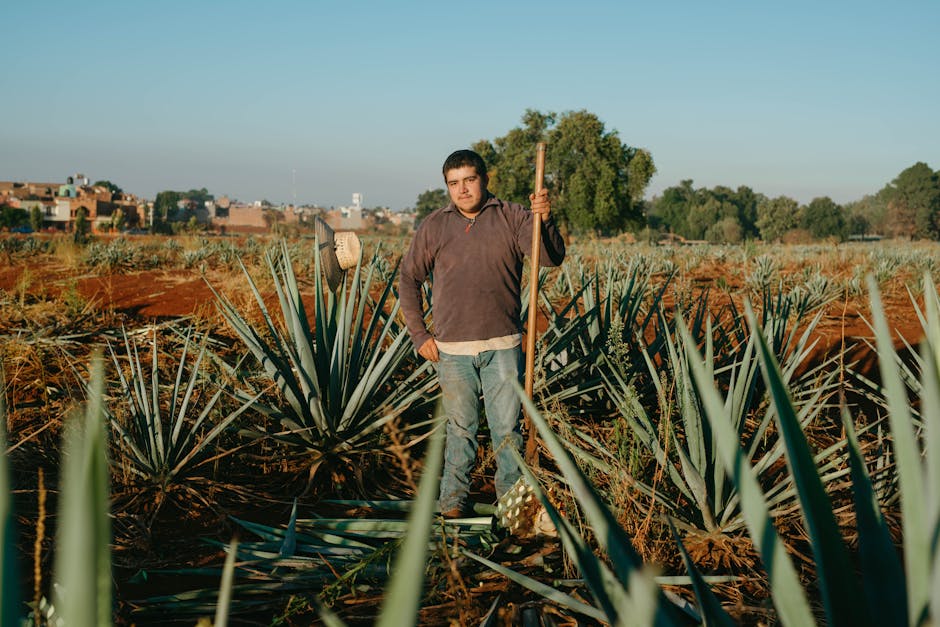
Picture this: It’s a warm evening in the highlands of Jalisco, Mexico. The sun is melting into shades of amber and violet over endless rows of blue agave plants — their spiky silhouettes looking almost alien against the fading sky. A jimador (a skilled agave harvester) swings his coa de jima, a razor-sharp circular blade, with practiced precision, separating the massive piña from its roots. He’s been doing this since he was a teenager, just like his father and grandfather before him. That single act — repeated millions of times across the Tequila Valley — is the heartbeat of one of the world’s most culturally rich and misunderstood spirits.
Most of us in 2026 know tequila through shots with lime and salt at a bar, or perhaps through a carefully crafted margarita. But tequila is so much more than that. It’s a UNESCO-recognized cultural heritage, a booming global industry worth over $12 billion USD, and a living artifact of Mexican civilization stretching back thousands of years. Let’s dig in — together.
🌵 The Ancient Roots: From Pulque to Proto-Tequila
Before the first drop of tequila was ever distilled, the agave plant was already sacred. The indigenous Nahua people of pre-Columbian Mexico revered the agave — calling it metl — as a gift from the goddess Mayahuel, a deity with 400 breasts who suckled 400 rabbit gods, each one representing a different level of intoxication. (Yes, ancient mythology was wonderfully creative.)
These early civilizations fermented the sap of the agave plant into a milky, slightly sour beverage called pulque. Pulque was far more than a casual drink — it was ceremonial, medicinal, and deeply embedded in social ritual. Aztec priests consumed it during religious rites, and elderly citizens were sometimes permitted to drink it freely as a social perk of aging.
Fast forward to the 16th century. Spanish conquistadors arrived in Mexico and, running low on their brandy supplies, began experimenting with distillation techniques applied to the agave plant. The result? A rough, smoky precursor to what we now know as tequila, sometimes called mezcal de tequila — named after the town of Tequila in the state of Jalisco.
📜 The Birth of Modern Tequila: The 1700s and the First Official Distilleries
The story of tequila as a formal industry begins with one family name that’s impossible to avoid: Cuervo. In 1758, King Ferdinand VI of Spain granted José Antonio de Cuervo the rights to cultivate agave in Jalisco. By 1795, his son José María Guadalupe de Cuervo received the first official license to produce vino mezcal de tequila commercially — making Jose Cuervo the world’s oldest continuously operating tequila distillery, a title it still proudly holds today.
Not far behind was the Sauza family. Don Cenobio Sauza, a savvy entrepreneur, founded his distillery in 1873 and made a revolutionary observation that’s now tequila law: only the Agave tequilana Weber variety — better known as Blue Weber Agave — produces true tequila. This distinction is what separates tequila from mezcal (which can be made from over 30 agave species).
- 1758: Cuervo family granted agave cultivation rights in Jalisco
- 1795: First official tequila production license issued
- 1873: Sauza identifies Blue Weber Agave as the key ingredient
- 1974: Mexico declares “Tequila” a protected designation of origin (DO)
- 1994: The Tequila Regulatory Council (CRT) is officially established
- 2006: UNESCO recognizes the Agave Landscape and Ancient Tequila Distilleries as a World Heritage Site
- 2026: Global tequila exports surpass $5.3 billion USD, with premiumization driving double-digit growth
🏔️ The Geography of Flavor: Why Jalisco Is Non-Negotiable
Here’s something that surprises a lot of people: not all of Mexico can make tequila. By law, tequila can only be produced in five specific Mexican states — Jalisco, Nayarit, Guanajuato, Michoacán, and Tamaulipas. Of these, Jalisco dominates, accounting for roughly 95% of all tequila production.
Within Jalisco, there are two distinct terroir zones (yes, just like wine!) that produce noticeably different flavor profiles:
- The Highlands (Los Altos): Higher elevation, richer iron-red soil, cooler temperatures. Agaves here grow larger and sweeter, producing tequilas with fruity, floral, and slightly sweeter notes. Think brands like El Tesoro and Siete Leguas.
- The Valley (Tequila Valley / Los Valles): Lower elevation, volcanic soil, warmer climate. Agaves are leaner and earthier, producing tequilas with more herbaceous, peppery, and mineral-driven flavors. Think Jose Cuervo Tradicional and Olmeca.
This terroir distinction is a relatively recent conversation in the tequila world — the industry spent decades treating agave like a commodity crop. But by 2026, serious tequila producers and enthusiasts have embraced terroir as central to the spirit’s identity, much like the wine world did with Burgundy and Bordeaux decades ago.
🔬 How Tequila Is Actually Made: A Logical Walkthrough
Understanding production demystifies tequila tasting enormously. Let’s walk through it step by step, because each stage genuinely affects flavor:
- Harvesting (8-12 years): Blue Weber Agave takes 8 to 12 years to mature. The jimador harvests the piña (the core, resembling a giant pineapple, weighing 40–90 kg). The timing matters — harvesting too early produces thinner, less complex spirits.
- Cooking: Piñas are cooked to convert starches into fermentable sugars. Traditional producers use hornos (stone/brick ovens) for 24–72 hours. Industrial producers use stainless steel autoclaves for as little as 7 hours. Hornos = earthier, more complex. Autoclaves = cleaner, faster, less nuanced.
- Extraction: Cooked agave is crushed to extract the aguamiel (honey water). Traditional method: a stone wheel called a tahona pulled by a horse or mule. Modern method: mechanical roller mills. Tahona-produced tequilas tend to have a more textured, mineral mouthfeel.
- Fermentation: Extracted juice (mosto) is fermented with yeast. Wild/ambient yeast fermentation = longer process (days to weeks), more complex flavors. Commercial yeast = faster, more predictable, cleaner profile.
- Distillation: Tequila must be distilled at least twice. Most producers use copper pot stills or stainless column stills. Copper contributes to smoother texture; column stills produce a lighter, cleaner spirit.
- Aging: This determines the category (see below).
🥃 Decoding the Categories: Blanco, Reposado, Añejo, and Beyond
One of the most practical things any tequila enthusiast can learn is the official aging classification system. These aren’t just marketing labels — they reflect genuine differences in flavor, production time, and intended use:
- Blanco (Silver/Plata): Unaged or rested less than 2 months in stainless steel. The purest expression of agave character. Bright, crisp, herbaceous. Best for cocktails or sipping if the base agave quality is exceptional.
- Joven (Gold): Usually a Blanco tequila mixed with caramel coloring or other additives to appear aged. Often the least premium option — approach with mild skepticism unless it’s an estate blend.
- Reposado (“Rested”): Aged 2 months to 1 year in oak barrels. The agave soul is still present, but now softened and complemented by vanilla, light caramel, and subtle spice. The most versatile category — great for sipping and cocktails.
- Añejo (“Aged”): 1–3 years in barrels (max 600L). Deeper wood influence — dried fruit, chocolate, toasted nuts. Best sipped neat, like a fine whisky or cognac.
- Extra Añejo (“Extra Aged”): Aged over 3 years. Introduced as a category in 2006. Rich, complex, often challenging to distinguish from aged whisky or brandy. A meditation in a glass.
- Cristalino: A newer style (growing dramatically by 2026) — typically an Añejo that’s been filtered through activated charcoal to remove color while retaining aged complexity. Controversial among purists but enormously popular commercially.
🌍 Global Tequila Boom: The Numbers Telling the Real Story in 2026
Let’s talk data, because the tequila industry’s trajectory is genuinely remarkable and tells us a lot about where consumer culture is heading globally.
In 2026, tequila is the fastest-growing premium spirits category worldwide. According to the Consejo Regulador del Tequila (CRT), over 500 million liters of tequila were certified for production in 2025, with projections for 2026 running even higher. The United States remains the dominant market, absorbing approximately 80% of all tequila exports — a cultural integration so deep that tequila now outsells American whisky in several U.S. states.
The premiumization trend is the defining narrative. While total volume grows at around 5–7% annually, the premium and ultra-premium segments (bottles priced above $50 USD) are growing at 15–20% annually. Consumers in 2026 are willing to pay more, but they want authenticity, terroir story, and artisanal production — the same values driving specialty coffee, craft beer, and natural wine.
Celebrity-owned tequila brands have played a fascinating (if complicated) role in this boom. George Clooney’s Casamigos (sold to Diageo for $1 billion in 2017) essentially proved that a celebrity-backed premium tequila could scale globally. By 2026, we’ve seen Dwayne Johnson’s Teremana, Nick Jonas’s Villa One, and a dozen others follow suit. Tequila purists debate whether this dilutes authenticity — but the undeniable effect has been bringing millions of new consumers into the category, many of whom then seek out more traditional expressions.
🇲🇽 Tequila as Living Culture: The Human Side That Gets Overlooked
Data and history aside, it’s worth pausing to appreciate what tequila represents at street level in Mexico. The Tequila Valley — now a UNESCO World Heritage Site — is a landscape shaped over 2,000 years of human-agave coevolution. The town of Tequila itself (population ~40,000) is essentially a living museum of the spirit’s culture, complete with the National Tequila Museum (Museo Nacional del Tequila) and a growing agritourism industry.
The jimadores remain a deeply respected, highly skilled profession. Master jimadors can identify the precise moment of agave maturity by observing the plant’s behavior — the way leaves pull inward, the sweetness of the scent — skills passed down through generations that no algorithm can replicate. In an era when automation threatens countless traditional crafts, the art of the jimador is still fundamentally human.
There’s also a growing mezcal vs. tequila identity debate within Mexico itself. Many artisanal producers and cultural advocates argue that tequila’s industrialization (particularly the acceptance of mixto tequila — which only needs to be 51% agave sugar — and diffuser extraction) has compromised its cultural integrity. This debate is healthy and important: it’s pushing the premium end of the market toward greater transparency and tradition.
🍹 Realistic Ways to Explore Tequila Without Breaking the Bank
Okay, so you’re inspired — but maybe you’re not ready to book a flight to Jalisco or drop $200 on an Extra Añejo. Let’s be realistic about how to meaningfully engage with tequila culture from wherever you are in 2026:
- Start with a quality Blanco for tasting: Brands like Olmeca Altos, Espolòn, or Cimarron offer genuine 100% agave tequila at accessible price points ($20–$35 USD). These let you taste pure agave character without the distraction of heavy oak.
- Ditch the salt-and-lime ritual for sipping: Try your next quality Blanco neat at room temperature, then with a single ice cube. You’ll discover layers of flavor that the lime completely masks. Salt was originally used to mask poor-quality tequila — great tequila doesn’t need it.
- Compare a Valley vs. Highlands Blanco side-by-side: This is genuinely one of the most educational tequila experiences you can have at home. Try Olmeca Altos (Valley) alongside Siete Leguas Blanco (Highlands) and notice the contrast in sweetness and earthiness.
- Visit a local agave or mezcal bar: By 2026, most major cities globally have at least one dedicated agave spirits bar. The staff at these venues are often deeply knowledgeable and love sharing the story — tap into that resource.
- Look for “100% Agave” on the label: This is non-negotiable if you want to understand real tequila. Avoid anything that doesn’t specify this — you’re likely getting a mixto with artificial additives.
- Explore mezcal as a gateway to deeper appreciation: Mezcal’s smokier, wilder character often illuminates what tequila is and isn’t. The contrast builds your palate vocabulary dramatically.
Editor’s Comment : Tequila is one of those rare subjects where the deeper you go, the more genuinely fascinating it becomes — because it’s not just about a drink. It’s about geology, biology, indigenous cosmology, colonial history, global economics, and the stubborn persistence of human craft against industrial pressure. Whether you’re approaching this as a casual drinker curious about what’s actually in your glass, or a serious spirits enthusiast building a cellar, tequila rewards attention in ways few spirits can match. In 2026, with premiumization accelerating and authenticity becoming the premium’s real currency, there’s never been a better moment to start paying that attention. Go slowly, taste thoughtfully, and respect the jimador’s hands that made it possible.
태그: []
Leave a Reply