A friend of mine — seasoned traveler, been to 40+ countries — nearly missed a connecting flight at Incheon last spring. Not because of traffic. Not because of a delayed train. Because he trusted a popular travel blog that hadn’t been updated since the terminal expansion, and he showed up at the wrong concourse entirely. That story stuck with me, and honestly, it pushed me to put together what I wish existed: a genuinely current, street-level walkthrough of navigating Incheon International Airport in 2025.
Incheon isn’t just ‘big.’ It’s a small city disguised as an airport. Two passenger terminals, underground transit connecting them, multiple concourses labeled in ways that confuse even frequent flyers — and in 2025, new retail zones and updated security layouts have shifted things enough that old guides genuinely mislead you. Let’s walk through this together.
Terminal 1 vs. Terminal 2: The Mistake That Costs You an Hour
This is where most international visitors go wrong. Incheon has two completely separate terminals — Terminal 1 (T1) and Terminal 2 (T2) — and they are not walking distance from each other. The free shuttle bus between them takes approximately 18–20 minutes, and it runs every 5–7 minutes from 5:30 AM to midnight. After midnight, the frequency drops significantly.
- Terminal 2 carriers (2025): Korean Air, Delta, Air France, KLM, and SkyTeam alliance partners. Note that Garuda Indonesia moved to T2 as of late 2024.
- Terminal 1 carriers: Asiana, Jeju Air, Jin Air, most LCCs, United, American, British Airways, Emirates, and the majority of non-SkyTeam international carriers.
- Pro tip: Always verify your terminal on your e-ticket — not on a third-party app. The IATA booking confirmation will say T1 or T2 explicitly.
- Wrong terminal penalty: If you show up at the wrong terminal with under 90 minutes to departure, you’re in a very uncomfortable situation. The shuttle is free, but the anxiety is not.
The Airside Train Nobody Mentions in Travel Blogs
Inside Terminal 1, there’s an underground Concourse Train (also called the Automated People Mover) that connects the main terminal building to Concourses A, B, and the satellite terminal area. This is free, runs every 3 minutes during peak hours, and is the fastest way to reach gates 101–132. Yet a shocking number of travelers don’t know it exists and exhaust themselves walking — sometimes 15+ minutes on foot for the same distance the train covers in 90 seconds.
In 2025, the concourse signs were updated to include QR codes linking to real-time gate maps, which is genuinely useful. Look for the orange train icons on the floor-level signage in T1 after clearing immigration.
Immigration & Security Timing: Real 2025 Numbers
Based on current data from the Korea Airports Corporation and traveler reports compiled through early 2025, here’s what you’re actually looking at for wait times:
- Arrival immigration (peak hours 9 AM–12 PM, 6 PM–9 PM): 25–45 minutes for non-Korean passport holders without Smart Entry registration.
- Smart Entry Service (SES): Available to nationals of 22 countries including the US, UK, Japan, and most EU states. Registration takes 10 minutes at the kiosks near baggage claim on your first visit. After that, you clear immigration in under 5 minutes consistently.
- Departure security (T1, post check-in): 10–20 minutes standard, up to 35 minutes during morning rush (7–9 AM). T2 security tends to move 15–20% faster due to newer scanner arrays installed in the 2023 expansion.
- Recommended buffer: International departures — arrive 3 hours before peak hours, 2.5 hours off-peak. Domestic connections — 90 minutes minimum.
Transit Without Visa (TWOV): What’s Changed in 2025
Incheon remains one of Asia’s best airports for layover travelers, and the Transit Hotel and Korean Culture Street airside attractions are genuinely worth using if you have a 6+ hour layover. However, TWOV rules tightened for certain passport holders beginning in early 2025 — specifically for nationals of countries added to Korea’s enhanced screening list. If your layover is under 24 hours and you’re not entering Korea proper, you generally don’t need a visa, but the exact list changes. Always verify at the Korean e-Visa portal (evisa.mofa.go.kr) within 72 hours of departure — not from a travel blog, not from an airline chat bot.
Connectivity, Lounges & Practical Costs (2025 Pricing)
Free Wi-Fi at Incheon is fast and reliable — consistent speeds of 50–80 Mbps in most terminal zones during testing. For SIM cards, the arrival hall kiosks (KT, SKT, LG U+) sell tourist SIMs starting at approximately ₩15,000 (~$11 USD) for 10 days of data. This is genuinely better value than airport roaming packages from most Western carriers.
- Priority Pass lounges: T1 has 3 accessible lounges including the Matina Lounge (solid food spread, shower access ₩10,000 surcharge). T2’s Korean Air Lounge is business-class only without status.
- Shower facilities (public): Available airside in both terminals for ₩7,000–₩9,000 including towel. Clean, well-maintained, and usually available within a 20-minute wait.
- Currency exchange: Bank booths past immigration offer better rates than pre-immigration kiosks by roughly 2–4%. If you need won, wait until you’re past passport control.
- Storage lockers (baggage): Available at both terminals, ₩3,000–₩6,000 per hour depending on size. Useful if you want to explore the transit zone without luggage.
The AREX Train: Airport to Seoul City
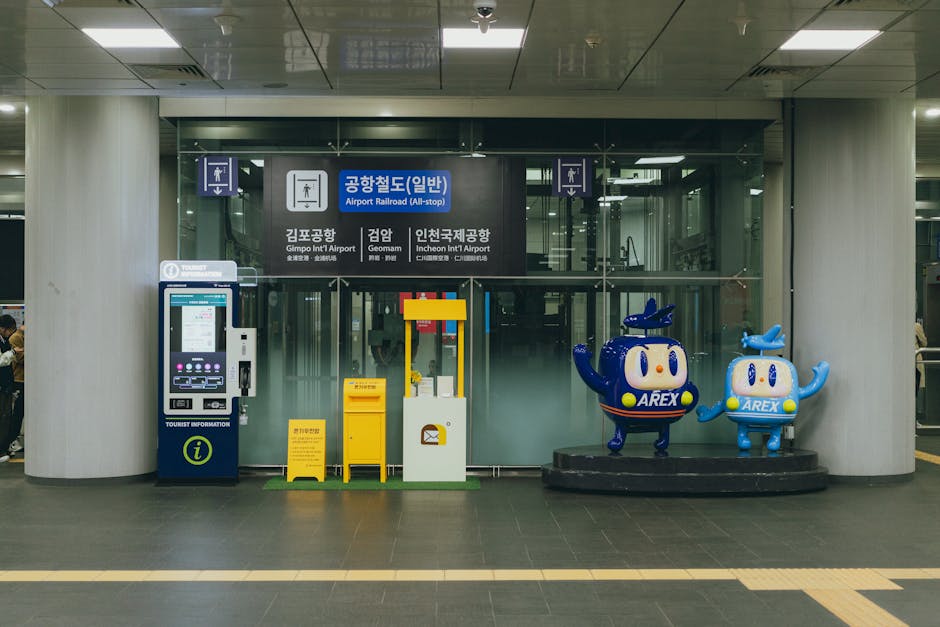
The Airport Railroad Express (AREX) remains the cleanest and most reliable way to reach central Seoul. In 2025, the all-stop train takes about 66 minutes to Seoul Station and costs ₩4,950. The direct express train (dedicated seats, no stops) takes 43 minutes and costs ₩11,000 one-way. The express runs every 30 minutes; the commuter train runs every 6–12 minutes. For most travelers, the commuter train is perfectly comfortable and the cost savings are real over a trip with luggage.
Taxis from Incheon to central Seoul now run ₩65,000–₩85,000 depending on destination and traffic. With the 2025 fuel surcharge adjustment, expect the higher end during peak hours. Rideshare apps (Kakao T) work at Incheon but designated pickup zones are strictly enforced — follow the signage or you’ll be walking 10 minutes back to where your driver can legally stop.
Where First-Timers Actually Get Stuck
Pulling from forums, recent Reddit threads on r/solotravel and r/korea, and my own conversations with travelers, here are the friction points that come up repeatedly in 2025:
- Assuming T1 and T2 share the same check-in hall — they don’t, and the buildings are physically separate.
- Not activating the Korail/AREX T-money card before getting in line — buy and load at the machine, not at the gate turnstile.
- Underestimating the walk from security to remote gates in T1 — gates 130+ require the train, and some travelers miss this.
- Trying to use Google Maps for airside navigation — it doesn’t map inside terminals accurately. Use the Incheon Airport official app or the floor maps at every intersection.
- Forgetting that duty-free pickup for pre-ordered items has a separate counter from walk-in purchases — the queues and locations are different.
None of these are catastrophic on their own, but in a tight connection window, any one of them can cascade quickly. The fix is simple: build in buffer time and download the Incheon Airport official app (available iOS and Android, updated for 2025 terminal layouts) before you land.
Incheon is genuinely one of the best-run airports in the world — it’s won the ACI Airport Service Quality award multiple times for good reason. But ‘best-run’ doesn’t mean ‘impossible to get lost in.’ It’s big, it’s layered, and it rewards people who do 10 minutes of homework before arriving.
Editor’s note: If you’re transiting Incheon for the first time and have more than 5 hours, seriously consider the free Seoul Stopover Program run by Korea Tourism Organization — it includes guided city tours departing from the airport and returns you with enough buffer for international departures. It’s an underused gem, and in 2025 they’ve added two new routes covering Hongdae and Gyeongbokgung. Check the KTO desk in the arrival hall before you assume you’re stuck in the terminal all day.
📚 관련된 다른 글도 읽어 보세요
- Why I Almost Gave Up on Keto — The Real 2025 Guide That Actually Works
- ETF 사자마자 이것 모르면 수익은 없고 세금만 남는다 — 2026년 기준 ETF 투자 완전 정복
- 무조건 사면 후회? 2026년 기준 전기차 진짜 유지비 계산해봤습니다
태그: Incheon Airport guide, ICN terminal tips, Korea travel 2025, AREX train Seoul, Incheon transit tips, airport navigation, Korea stopover
Leave a Reply