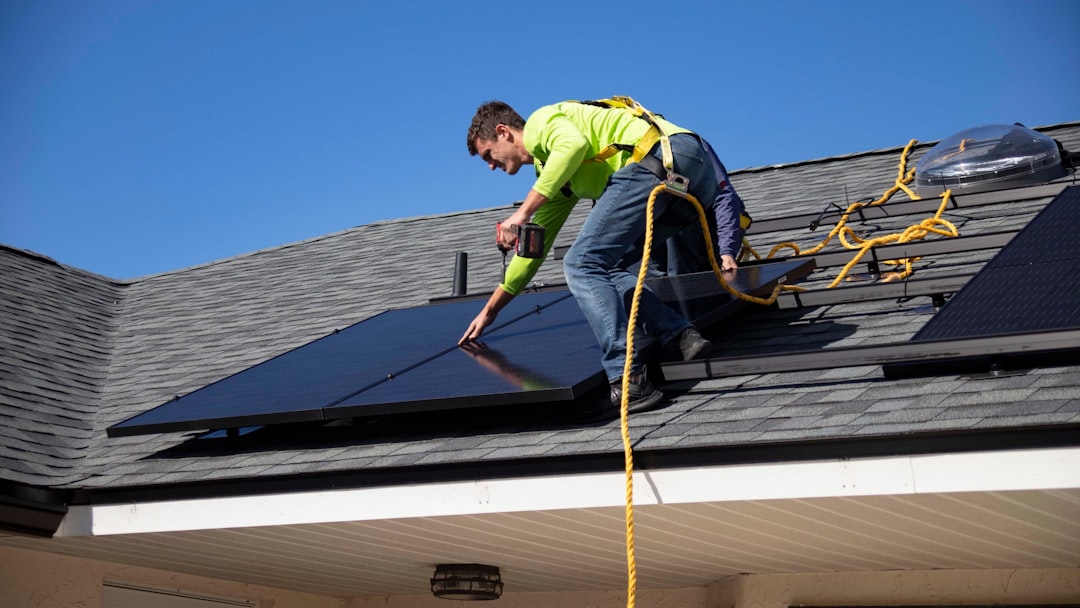
A friend of mine spent three weekends on his roof last spring, convinced he’d save a fortune by wiring up a small off-grid solar array himself. By Sunday of the third weekend, he had a charge controller throwing error code E04, panels producing half the rated wattage, and a deep-cycle battery that wouldn’t hold charge past noon. Sound familiar? That story is exactly why I wanted to dig into what a solar panel system for home actually involves in 2025 — not the glossy brochure version, but the real, sweat-on-your-forehead version.
What Does a Home Solar Panel System Actually Consist Of?
Let’s start from the ground up, because skipping this is where most DIY disasters begin. A residential solar setup has four core components working together:
- Solar panels (PV modules): Convert sunlight into DC electricity. In 2025, mainstream residential panels range from 400W to 700W per panel, with monocrystalline PERC and TOPCon designs dominating the market. Efficiency ratings have crept up to 22–24% for premium units like the Jinko Tiger Neo or LONGi Hi-MO 6.
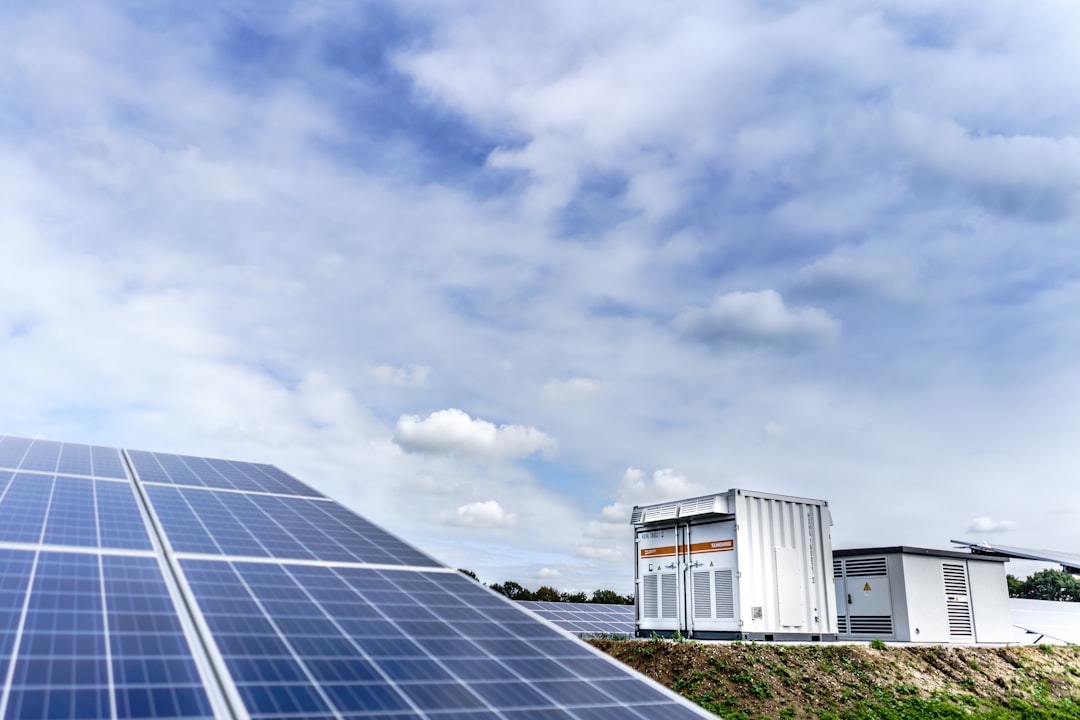
- Inverter: Converts DC power from panels into AC power your home can use. String inverters are cheapest; microinverters (like Enphase IQ8) work panel-by-panel and handle shading better but cost 30–40% more.
- Charge controller (for off-grid/hybrid): Manages battery charging. MPPT controllers are the current standard — a Victron SmartSolar MPPT 100/30 runs about $120–$150 and is far more efficient than older PWM types.
- Battery storage (optional but increasingly common): Tesla Powerwall 3 (13.5 kWh, ~$9,500 installed) and the BYD Battery-Box Premium HVS are the 2025 go-to options for grid-tied homes. For off-grid, lithium iron phosphate (LiFePO4) banks from brands like EG4 or Epoch are popular DIY choices.
The Numbers You Actually Need Before Buying Anything
Here’s where most beginner guides wave their hands and say “calculate your energy needs!” without telling you how. Let’s be concrete. The average U.S. home uses around 10,500 kWh per year — roughly 29 kWh per day. If you’re in Phoenix, Arizona, you get about 5.5 peak sun hours daily. If you’re in Seattle, that drops to around 3.5. This matters enormously for sizing.
Quick back-of-napkin formula: Daily kWh needed ÷ peak sun hours ÷ system efficiency (use 0.80 as a realistic figure) = required panel wattage. So for a 29 kWh/day home in Seattle: 29 ÷ 3.5 ÷ 0.80 = ~10.4 kW of installed panels. At 430W per panel, that’s roughly 24 panels. At $0.80–$1.10 per watt for panels alone in 2025, you’re looking at $8,300–$11,400 just in hardware before labor, racking, inverters, or wiring.
The federal Investment Tax Credit (ITC) still sits at 30% in 2025, which meaningfully changes ROI calculations. A $25,000 fully installed system nets a $7,500 tax credit — bringing your real out-of-pocket closer to $17,500. At an average electricity rate of $0.16/kWh nationally, that 10.4 kW system could generate roughly $1,680/year in avoided utility cost, giving you a payback period of around 10–11 years without battery storage.
Where DIY Goes Wrong: Real Error Scenarios
Back to my friend’s E04 error on his Renogy Wanderer controller — that code specifically means battery overvoltage. He had a 24V nominal LiFePO4 battery wired to a controller configured for a flooded lead-acid profile. LiFePO4 charges to 29.2V at full; lead-acid profiles push to 29.4V but with different absorption curves that confuse BMS protection circuits. One configuration change in the app fixed it, but he’d already stressed the BMS twice. Lesson: always set your controller’s battery type profile before connecting.
Other common failure patterns in 2025 installs include:
- Undersized wire gauge: Running 10 AWG wire on a 40A circuit causes resistive losses and fire risk. Use a voltage drop calculator — aim for under 2% drop on DC runs.
- No rapid shutdown compliance: NEC 2020/2023 requires rapid shutdown systems on rooftop arrays. Missing this fails inspection and voids some homeowner insurance policies.
- Shading miscalculation: A single shaded cell can drop an entire string’s output by 30–70% if you’re using string inverters without optimizers. This is where the Enphase microinverter premium sometimes genuinely pays off.
- Incorrect tilt angle: Panels should be tilted at roughly your latitude in degrees for year-round optimization. In a flat-mount scenario (common in HOA neighborhoods), you lose 10–15% annual production compared to optimal tilt.
Grid-Tied vs. Off-Grid vs. Hybrid: Choosing Your Path
This decision shapes everything else, so let’s be direct about trade-offs in 2025.
Grid-tied (most common for suburban homes): You sell excess power back through net metering. Simpler, lower cost, no battery required. Downside: if the grid goes down, your system shuts off automatically (a safety requirement called anti-islanding). Net metering policies have gotten worse in California (NEM 3.0 slashed export rates by ~75%), which dramatically changed the math for pure grid-tied systems in that state.
Off-grid: Total energy independence. Requires significantly more battery capacity and panel capacity to cover cloudy periods. A realistic small off-grid cabin setup (30 kWh/day) might need $40,000–$60,000 in equipment. This path makes sense in rural areas where grid connection costs $15,000–$50,000+ for line extension.
Hybrid: Grid-connected but with battery backup. The sweet spot in 2025 for most homeowners worried about outages. Systems like the SolarEdge Energy Hub or Enphase IQ System Controller let you prioritize battery charging from solar, discharge during peak rate hours (time-of-use arbitrage), and still export to the grid. In states with high time-of-use rate spreads — like California’s PG&E with $0.48/kWh peak vs. $0.27/kWh off-peak — the battery ROI math actually starts to work.
Brand Landscape in 2025: What’s Actually Worth Buying
The solar hardware market has consolidated significantly. Here’s where things stand:
- Panels: Jinko Solar, LONGi, and Canadian Solar dominate volume. For premium efficiency, SunPower Maxeon 7 (22.8% efficiency) remains best-in-class but costs ~40% more per watt. REC Alpha Pure RX series is a strong mid-premium option.
- String inverters: SolarEdge and Fronius are the reliability gold standard. SMA is strong in Europe. Hoymiles has gained serious market share in the DIY/prosumer segment with competitive micro and module-level power electronics.
- Batteries: Tesla Powerwall 3 streamlined installation (AC-coupled, handles up to 11.5 kW continuous). Franklin Electric aPower 2 is a newer challenger with a 10-year warranty and competitive pricing around $8,200 installed. Enphase IQ Battery 5P is excellent for homes already running Enphase microinverters.
- Monitoring: Don’t sleep on this. Sense Energy Monitor or the built-in monitoring from Enphase Enlighten/SolarEdge mySolarEdge app gives you real production vs. consumption visibility. You cannot optimize what you can’t measure.
Getting Permits and Working With Installers
If you’re going the professional installation route — and for grid-tied systems above 3–4 kW, it’s genuinely the lower-risk path — the process in 2025 typically runs: site assessment → design and permit application (2–8 weeks depending on jurisdiction) → installation (1–3 days for most residential systems) → utility interconnection application (2–12 weeks, this is often the longest step) → final inspection and Permission to Operate (PTO).
Getting three quotes is not just advice — it’s essential. The price spread between installers for the same equipment can be 20–35%. Use EnergySage’s online marketplace to get standardized quotes, which makes comparison much easier. Average fully-installed cost in 2025 sits around $2.80–$3.50 per watt before the ITC, depending on your region and system complexity.
If you do want to DIY legally, look into your local permit requirements carefully. Some jurisdictions allow homeowner-permitted installs; others require a licensed electrician to at minimum sign off on the final connections. The permit and inspection process is not the enemy — it’s what keeps your roof from catching fire and keeps your homeowner’s insurance valid.
Is Solar Right for You Right Now?
Solar makes strong financial sense in 2025 if: your electricity rate is above $0.13/kWh, your roof has south/southwest/southeast-facing sections with less than 20% shading, your roof has 10+ years of life left, and you plan to stay in the home for 7+ years. It makes less sense if you’re renting, facing a roof replacement in 2–3 years, or live in a jurisdiction with poor net metering policies and no battery incentives.
If the full system cost is prohibitive, consider starting with a smaller 3–4 kW system to offset your highest-consumption circuits, then expand later. Or explore community solar subscriptions in your utility territory — you subscribe to a share of an off-site solar farm and get bill credits without any rooftop hardware. It’s not as glamorous as your own panels, but it delivers real savings with zero installation headache.
💡 One last thought from me: Solar is genuinely one of the best long-term investments a homeowner can make in 2025 — but only when sized correctly, installed with proper permits, and paired with realistic expectations about payback timelines. Don’t let the complexity scare you off entirely, but don’t let enthusiasm rush you into undersized wiring or misconfigured charge controllers either. Take the time to run your own numbers, get multiple quotes, and if you’re DIYing, invest in the right tools and a good multimeter before you touch a single wire.
📚 관련된 다른 글도 읽어 보세요
- 렌터카 없이 제주도 여행? 2026년 기준 대중교통으로 제주 완전정복 꿀팁
- Why I Almost Missed My Flight Trusting Google Maps — Real 2025 Guide to Incheon Airport Terminal 1 vs Terminal 2
- 싸게 산다고 다 이득? 2026년 기준 중고 맥북 사기 전에 제발 이것만 확인하세요
태그: []
Leave a Reply