Picture this: It’s a humid summer evening in Louisville, Kentucky. A weathered oak barrel sits in a rickhouse — a warehouse specifically built for aging whiskey — and inside it, amber liquid is slowly transforming. The wood breathes in the heat, expanding and contracting, coaxing flavor from charred oak into every drop. That process, repeated millions of times across the American South, is more than distillation. It’s identity.
Bourbon whiskey isn’t just a drink — it’s a living, breathing artifact of Southern American culture. And in 2026, with craft distilleries booming and global demand soaring, there’s never been a better time to dig into where this spirit came from, what it means, and why it resonates so deeply with people around the world. Let’s explore it together.
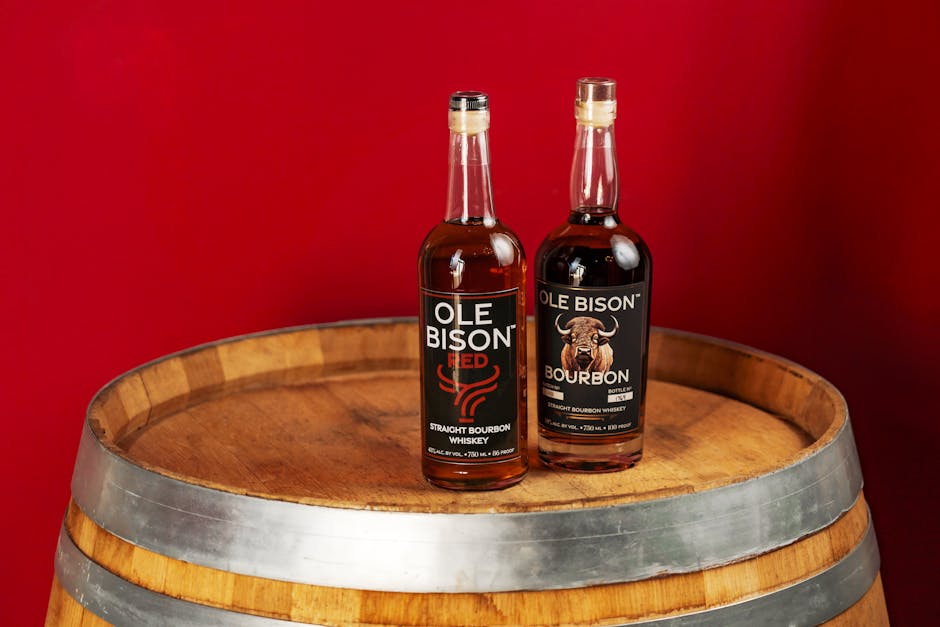
What Exactly Makes a Bourbon a Bourbon?
Before we go time-traveling through history, let’s get the basics straight — because bourbon has strict legal rules that set it apart from other whiskeys. Under U.S. federal law, a whiskey can only be called bourbon if it meets all of the following criteria:
- Made in the USA — Bourbon can technically be produced anywhere in the country, but roughly 95% still comes from Kentucky.
- Grain mash of at least 51% corn — Corn gives bourbon its signature sweetness. The remaining grain bill usually includes rye (for spice) or wheat (for softness), plus malted barley.
- Distilled to no more than 160 proof (80% ABV) and entered into the barrel at no more than 125 proof (62.5% ABV).
- Aged in new, charred oak containers — This is the big one. Unlike Scotch whisky, which can reuse barrels, bourbon demands virgin charred oak every time. This is what creates those deep vanilla, caramel, and toasted wood notes.
- Bottled at a minimum of 80 proof (40% ABV).
- No added coloring, flavoring, or spirits — What’s in the glass is purely what came from the grain and the barrel.
Here’s the thing most people miss: there’s no minimum aging requirement for regular bourbon (though “Straight Bourbon” must be aged at least two years, and anything under four years must display an age statement). That means a technically legal bourbon could be bottled after a single day in the barrel — though you’d never want to drink it.
Tracing the Roots: How Bourbon Was Born in the American South
The origin story of bourbon is beautifully messy — exactly like the frontier culture that produced it. In the late 18th century, European settlers (primarily Scots-Irish and German immigrants) poured into the frontier lands of what is now Kentucky, then part of Virginia. They brought their distilling traditions with them, but they adapted to what the land offered.
Corn was everywhere. The limestone-filtered water of Kentucky was unusually pure and iron-free — perfect for distilling. And the dense forests provided plenty of white oak for barrel-making. The conditions were almost suspiciously perfect for whiskey-making.
The name “bourbon” itself is widely believed to derive from Bourbon County, Kentucky — named after the French royal House of Bourbon to honor France’s support during the American Revolution. Some historians point to Bourbon Street in New Orleans as the naming origin, arguing that barrels shipped down the Ohio and Mississippi Rivers were labeled with their port of origin. The debate continues in academic circles today, and honestly, the ambiguity is part of the charm.
By the early 1800s, Kentucky whiskey was already being traded as currency on the frontier. Dr. James Crow — a Scottish-born physician who settled in Kentucky in the 1820s — is often credited with refining the sour mash process, a technique where a portion of previously fermented mash is added to new batches to ensure consistency and control acidity. This was a genuinely scientific innovation in an era when most distillers operated largely on intuition.
Bourbon and the Soul of the American South
To understand bourbon’s cultural weight, you have to understand the American South’s complicated and layered identity. The region has always been shaped by tension — between agrarian traditions and industrial ambition, between isolation and hospitality, between hardship and celebration. Bourbon sits right at the intersection of all of it.
In the antebellum South, whiskey production was deeply tied to plantation agriculture — and here, we have to be honest about the fact that enslaved African Americans played a substantial, often uncredited role in the bourbon industry. Recent historical research, including the work being done at distilleries like Nearest Green Distillery in Tennessee (celebrating its history in 2026 with a new visitor center), has brought this reckoning to the forefront. Nathan “Nearest” Green, an enslaved man who taught Jack Daniel himself to distill, is perhaps the most famous example of erased Black contributions to American whiskey culture.
After the Civil War and through Prohibition (1920–1933), bourbon’s story became one of resilience. The Volstead Act nearly killed the industry, but a handful of distilleries were granted permits to produce “medicinal whiskey” — a delightfully absurd legal carveout that kept places like Stitzel-Weller alive. When Prohibition ended, the survivors rebuilt an industry, and the post-WWII bourbon boom made it America’s spirit.
The Modern Bourbon Renaissance: Data and Trends in 2026
The numbers tell an exciting story. According to the Distilled Spirits Council of the United States (DISCUS), American whiskey exports surpassed $1.4 billion in 2025, with bourbon representing the lion’s share. The Kentucky Distillers’ Association reports that as of early 2026, Kentucky alone is home to over 100 distilleries — up from just 19 in 2009. That’s a more than five-fold increase in under two decades.
What’s driving this? A few interconnected forces:
- The craft movement: Consumers in 2026 want to know the story behind what they’re drinking. Small-batch and single-barrel offerings from distilleries like Wilderness Trail, Castle & Key, and Bardstown Bourbon Company have captured a premium market willing to pay $60–$200+ per bottle for provenance and craftsmanship.
- Global demand: Japan, the UK, and increasingly South Korea and India have developed sophisticated bourbon cultures. Japanese whisky connoisseurs, already trained to appreciate nuanced barrel aging, have taken to high-rye bourbons with particular enthusiasm.
- Tourism: The Kentucky Bourbon Trail now attracts over 2 million visitors annually. The trail functions almost like a wine route, with passport stamp programs encouraging people to visit dozens of distilleries across the state. It’s a significant economic engine — bourbon tourism contributed an estimated $2.5 billion to Kentucky’s economy in 2025.
- The secondary market: Allocated bottles of Pappy Van Winkle, Buffalo Trace Antique Collection, and George T. Stagg regularly fetch 10–20x their retail price on secondary markets. This has created both excitement and frustration in the bourbon community.
Regional Variations: It’s Not All Kentucky
While Kentucky dominates, the bourbon landscape in 2026 is genuinely national. Texas distilleries like Garrison Brothers and Balcones have leveraged extreme heat cycles in their aging warehouses to accelerate maturation — producing intensely flavored bourbons in 3–4 years that might take 8–10 years in Kentucky’s milder climate. Colorado’s Stranahan’s (technically a Colorado whiskey, not bourbon) and Wyoming Whiskey show how terroir — the concept borrowed from wine about how geography shapes flavor — applies to American spirits too.
Even New York, Indiana, and Colorado now have notable distilling scenes. Indiana, in particular, is an interesting case: MGP Ingredients (Midwest Grain Products) in Lawrenceburg is one of the largest bourbon producers in the country, supplying whiskey to dozens of brands that then bottle and label it as their own. This “sourced whiskey” practice is legal but has sparked considerable debate about authenticity and transparency in labeling.
How to Actually Taste and Appreciate Bourbon (Without Pretension)
Here’s where we make this practical. You don’t need to be a connoisseur to enjoy bourbon — and you absolutely don’t need to spend $100 a bottle. Here are some realistic entry points:
- Start with a wheated bourbon: Brands like Maker’s Mark or Larceny use wheat as the secondary grain instead of rye, producing a softer, sweeter flavor profile. These are forgiving and approachable for newcomers.
- Use a Glencairn glass: The tulip shape concentrates aromas and genuinely changes the experience compared to a rocks glass. They cost about $10–$15 each and are worth every penny.
- Add a few drops of water: This is not cheating. A small amount of water (especially with higher-proof bourbons above 50% ABV) opens up aroma compounds and can reveal flavors that were hidden.
- Nose before you sip: Hold the glass a few inches from your nose and breathe gently. Look for vanilla, caramel, oak, fruit, spice, and grain notes. Take your time — the first impression matters.
- Try a flight at a reputable bar: Many craft cocktail bars in 2026 offer curated bourbon flights for $20–$35. This is an efficient way to compare styles (high-rye vs. wheated, young vs. aged, single barrel vs. small batch) without committing to full bottles.
Realistic Alternatives for Every Type of Enthusiast
Not everyone can or wants to spend big on allocated bottles, and that’s completely fine. Let’s think through this logically based on different situations:
If you’re budget-conscious: Wild Turkey 101, Buffalo Trace (when you can find it at retail), and Evan Williams Single Barrel consistently over-deliver for their price points ($20–$35). These are not consolation prizes — they’re genuinely excellent whiskeys.
If you’re bourbon-curious but not sure yet: Start with bourbon-based cocktails like an Old Fashioned or a Whiskey Sour before committing to neat sipping. Many people discover they love bourbon’s flavor in a cocktail context before they’re ready to appreciate it straight.
If you’re interested in the history but not the alcohol: Visit the Oscar Getz Museum of Whiskey History in Bardstown, Kentucky, or explore the growing number of distillery tours that include non-alcoholic tasting options. The craftsmanship and heritage are genuinely fascinating regardless of whether you drink.
If you’re outside the U.S.: Import availability varies significantly. In the UK, Master of Malt and The Whisky Exchange carry extensive bourbon selections. In Japan, dedicated whisky shops in Tokyo’s Nakameguro and Ginza neighborhoods often stock American bottles that are hard to find stateside. Online import communities have also grown significantly in 2026, though always check local regulations.
Bourbon’s story is ultimately a story about transformation — of grain into spirit, of frontier hardship into cultural pride, of a regional tradition into a global phenomenon. Every bottle carries that history in its amber depths, whether it costs $25 or $250. The beauty of it is that the exploration never really ends.
Editor’s Comment : What strikes me most about bourbon in 2026 is how it manages to be simultaneously democratic and aspirational. You can have a genuinely excellent experience for $30, or you can chase rare bottles for years. But the most meaningful bourbon moments I’ve encountered aren’t about price — they’re about the stories that get told around the glass. Whether you’re a seasoned enthusiast or someone who’s never thought twice about whiskey, the rabbit hole of bourbon history and culture is one worth tumbling into. Start simple, drink curiously, and let the story unfold.
태그: [‘bourbon whiskey history’, ‘American South culture’, ‘Kentucky bourbon trail’, ‘craft distillery 2026’, ‘bourbon tasting guide’, ‘American whiskey heritage’, ‘bourbon culture and tradition’]
Leave a Reply