A friend of mine recently moved into a smaller apartment after downsizing, and the first thing she asked me was: “Are bunk beds actually worth it, or are they just for kids?” Honestly, that question hit differently than I expected, because I’d been going back and forth on the same thing for a shared guest room renovation. So let’s dig into this together — because the answer is way more nuanced than the furniture store salespeople let on.
The Real Reason People Buy (and Regret) Bunk Beds
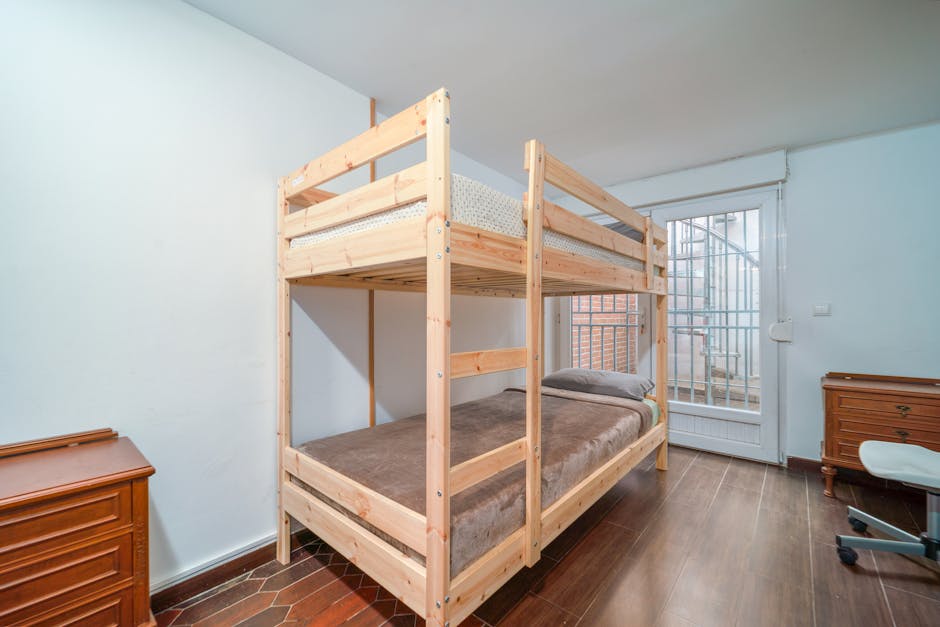
The appeal is obvious: bunk beds can effectively halve the floor footprint of a sleeping setup. A standard twin-over-twin bunk bed occupies roughly 38–42 square feet of vertical space versus 56–70 square feet if you place two separate twin beds in the same room. That’s a 30–40% floor-space saving — and in apartments where every square foot costs real money, that matters.
But here’s the thing nobody tells you upfront: the regret usually comes from ceiling height miscalculation and mattress thickness oversights. Most standard bunk beds are designed for a ceiling clearance of at least 33–36 inches above the top bunk. If your ceiling is under 8 feet and your mattress is thicker than 6 inches, the person on top will basically be sleeping inside the ceiling. I’ve seen this mistake made more times than I care to admit.
Breaking Down the Numbers: What You Actually Pay For
Let’s talk price tiers, because the range is genuinely wild in 2026:
- Budget range ($150–$350): Usually MDF or particle board construction. Fine for kids under 100 lbs, but expect wobble and noise within 12–18 months. Weight capacity often tops out at 175–200 lbs per bunk.
- Mid-range ($400–$900): Solid pine or rubberwood frames. Weight capacity jumps to 250–300 lbs per bunk. Brands like DHP, Zinus, and Max & Lily live here. This is the sweet spot for most families.
- Premium range ($1,000–$3,000+): Steel-frame industrial styles (think Urban Outfitters Home, Pottery Barn Teen) or custom-built hardwood units. Weight ratings of 400+ lbs per bunk, often convertible to two separate beds. THUKA and Lifetime are worth researching here.
One underrated cost people forget: ladder safety rails and guardrails. The cheapest bunk beds include flimsy 3-inch rails that barely qualify as safety features. Guardrails should be at least 5 inches above the mattress surface — that’s the Consumer Product Safety Commission (CPSC) guideline, and it’s a non-negotiable if children under 6 are involved.
Adult Bunk Beds: Not Just a College Dorm Relic
This category has genuinely exploded in 2026. The rise of co-living spaces, Airbnb-style bunk rentals, and smaller urban apartments has pushed manufacturers to take adult bunk beds seriously. Key specifications to filter for:
- Weight capacity per bunk: Minimum 300 lbs for adults; 400 lbs if larger adults will use it
- Slat spacing: No more than 3 inches apart to support adult body weight without a box spring
- Frame material: Steel or hardwood (oak, maple) — avoid pine if two adults will occupy the bed long-term
- Mattress compatibility: 6–8 inch mattresses work best on the top bunk; anything thicker risks the ceiling clearance issue mentioned above
- Ladder angle: Vertical ladders save space but are harder to climb; angled ladders (at roughly 70°) are significantly more comfortable for daily use

Case Study: What Airbnb Superhosts Are Actually Installing
I spent some time in short-term rental forums and found a consistent pattern among high-rated Airbnb hosts who use bunk beds. The top performers in cities like New York, Tokyo, and Amsterdam tend to go with metal loft-style bunks with privacy curtains — borrowing from the Japanese capsule hotel model. Brands like Walker Edison and Homfa are frequently cited, and hosts report that adding a simple USB charging port near each bunk increases review scores noticeably.
One host in Seattle shared that switching from two twin beds to a twin-over-twin bunk (with a full-size bed elsewhere) allowed her to list the room as sleeping 3 instead of 2 — a change that increased her nightly rate by approximately 22% with no structural renovation required. That’s a compelling ROI argument for the right context.
When Bunk Beds Are the Wrong Answer
Let’s be honest about failure conditions, because that’s where most buying guides let you down:
- If ceiling height is under 8 feet: You’re fighting physics. Consider a low-profile loft bed (single elevated bed with desk underneath) instead.
- If the primary user has mobility issues: Climbing a ladder multiple times a day becomes a genuine safety risk. A daybed with a trundle is a far better solution.
- If you need it for a child under 6: The CPSC recommends against top bunks for children under 6. Full stop.
- If the room is narrow (under 10 feet): An L-shaped bunk or twin-over-full might actually create more usable space than a standard stacked configuration.
Alternatives Worth Considering
If a traditional bunk bed doesn’t fit your situation, these options are worth a serious look:
- Trundle beds: One bed rolls under another. Great for occasional guests, almost no ceiling restriction. Brands like DHP offer decent quality around $250–$500.
- Murphy beds (wall beds): Folds into the wall when not in use. More expensive upfront ($800–$3,000 installed) but genuinely transforms a room. IKEA’s MURBO series is the most accessible entry point.
- Loft beds with workstation: A single elevated sleeping surface with a desk or storage underneath. Perfect for solo rooms where you want sleeping AND working in the same footprint.
The bottom line is this: bunk beds are genuinely excellent tools when the physical conditions support them — correct ceiling height, appropriate user weight and age, and a quality frame that won’t creak into oblivion by year two. But they’re often purchased impulsively and regretted slowly. Measure twice, read the weight ratings carefully, and don’t let a $200 price difference push you into a frame that’ll wobble under a grown adult.
💬 Drop a comment below: Are you looking at bunk beds for kids, adults, or a rental property? Share your ceiling height and room dimensions — happy to help you figure out which configuration actually makes sense for your specific setup.
📚 관련된 다른 글도 읽어 보세요
- 2026년 가성비 쩌는 싱글몰트 위스키 Top3 — 10만원대에서 이거 놓치면 진짜 손해
- Why I Almost Missed My Flight Trusting Reddit — The Real 2025 Carry-On Luggage Guide
- 혼자 세팅하다 3번 날려먹은 사람이 알려주는 — Proxmox VE 2026 기준 한번에 성공하는 실제 세팅법
태그: bunk beds, space saving furniture, adult bunk beds, bunk bed buying guide, small bedroom ideas, loft beds, kids bedroom furniture
Leave a Reply