A colleague of mine nearly had a heart attack last spring. She arrived at Incheon Airport with two hours to spare — plenty of time, she thought — only to realize she was standing in the wrong terminal. Her airline had quietly shifted operations, and the inter-terminal transfer ate up 45 minutes she absolutely could not afford. She made the flight, but just barely, and with zero time for the duty-free run she’d been planning for weeks. That story stuck with me, and honestly, it’s what pushed me to put together this breakdown for anyone flying out of Incheon in 2025.
Let’s think through this together, because the Terminal 1 vs Terminal 2 question is genuinely more complicated than most travel sites make it sound.
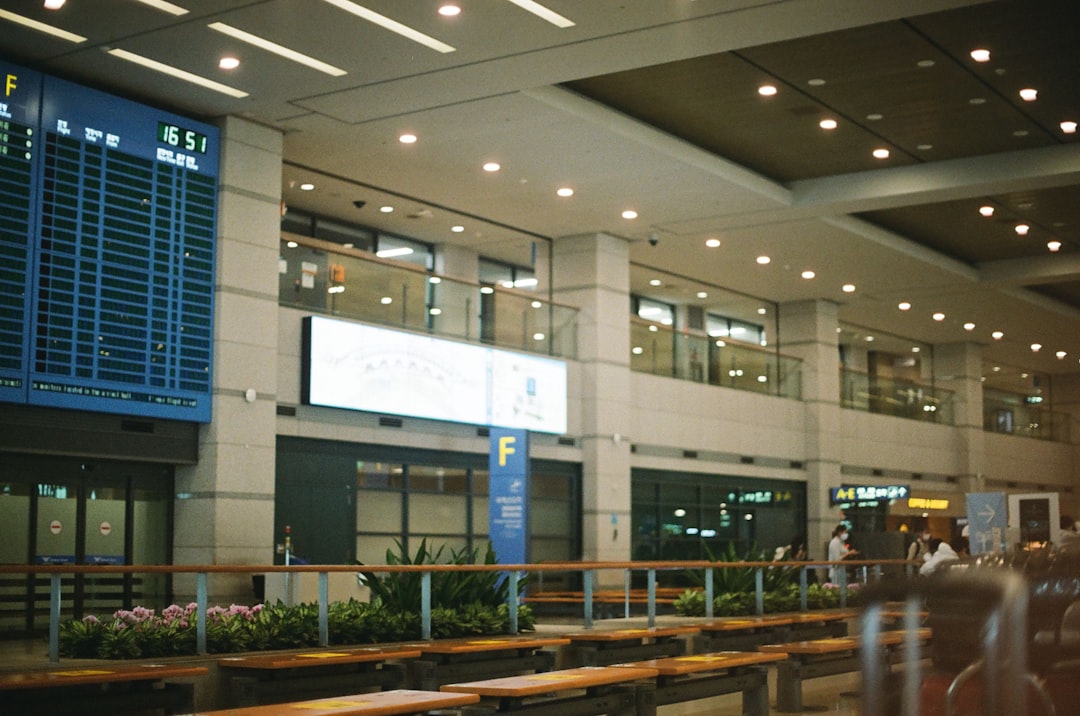
The Core Difference: It’s Not Just a Building, It’s a Whole Ecosystem
Incheon International Airport opened Terminal 2 (T2) in January 2018, and it was built specifically to serve Korean Air, Delta Air Lines, Air France, and KLM — all SkyTeam alliance members. Terminal 1 (T1), the original structure, handles virtually everyone else: Asiana Airlines, most low-cost carriers (LCC) like Jeju Air, Jin Air, and T’way, plus a massive roster of international carriers from United to Singapore Airlines.
Here’s the data that matters in 2025:
- Terminal 1: ~50 million passenger capacity annually, 3 concourses (A, B, C), Gates 1–132
- Terminal 2: ~18 million capacity, expanded to include Gates 230–270 after the 2023 expansion phase
- Inter-terminal transfer time: 18 minutes by dedicated free shuttle bus (runs every 5–8 minutes, 24 hours)
- Walking distance inside T2 (check-in to gate): Typically 12–20 minutes depending on your gate assignment
- T1 worst-case walk: Concourse A to far end of Concourse C can be 25+ minutes without the internal transit system
The shuttle bus between terminals sounds convenient, but factor in: waiting time, boarding, the ride itself, and then navigating the second terminal from scratch. On a tight connection, that 18-minute estimate can balloon to 35–40 minutes in real-world conditions, especially during peak hours (7–10 AM and 5–9 PM KST).
How to Actually Confirm Your Terminal Before You Leave Home
This is where most travelers go wrong. Google Maps and even some airline apps default to showing “Incheon Airport” as a single pin. Here’s the reliable 2025 process:
- Step 1: Check your e-ticket or booking confirmation — it should list “ICN T1” or “ICN T2” in the departure airport field. If it just says “ICN,” call or check online.
- Step 2: Go directly to your airline’s official website and look up the specific flight number. Korean Air flights (KE-xxx) and Delta codeshares operating out of Incheon will be T2. Asiana (OZ-xxx) is always T1.
- Step 3: Cross-reference with the official Incheon Airport website (airport.kr) — their flight search tool is updated in real time and will confirm your terminal.
- Step 4: If you’re on a codeshare flight (e.g., you booked through United but the operating carrier is Asiana), the operating carrier’s terminal assignment applies, not the marketing carrier’s.
That last point trips up a surprising number of experienced travelers. Codeshare confusion is arguably the #1 cause of wrong-terminal arrivals at Incheon.
Facilities & Experience: Where Each Terminal Actually Wins
In terms of pure passenger experience, T2 consistently scores higher in international airport rankings — and having spent time in both, I get why. It feels less chaotic. The duty-free zone is more navigable, the food hall on the departures level has better options (look for the Tosokchon Samgyetang outpost — solid for a pre-flight meal), and security queues tend to move faster because the volume of passengers is lower.
T1, on the other hand, has a broader range of everything — more shops, more restaurants, more lounge options. The KAL Lounge and Asiana Lounge in T1 are widely considered among the best airport lounges in Asia. The T1 transit hotel (run by Walkerhill) is also a practical option if you have a long layover.
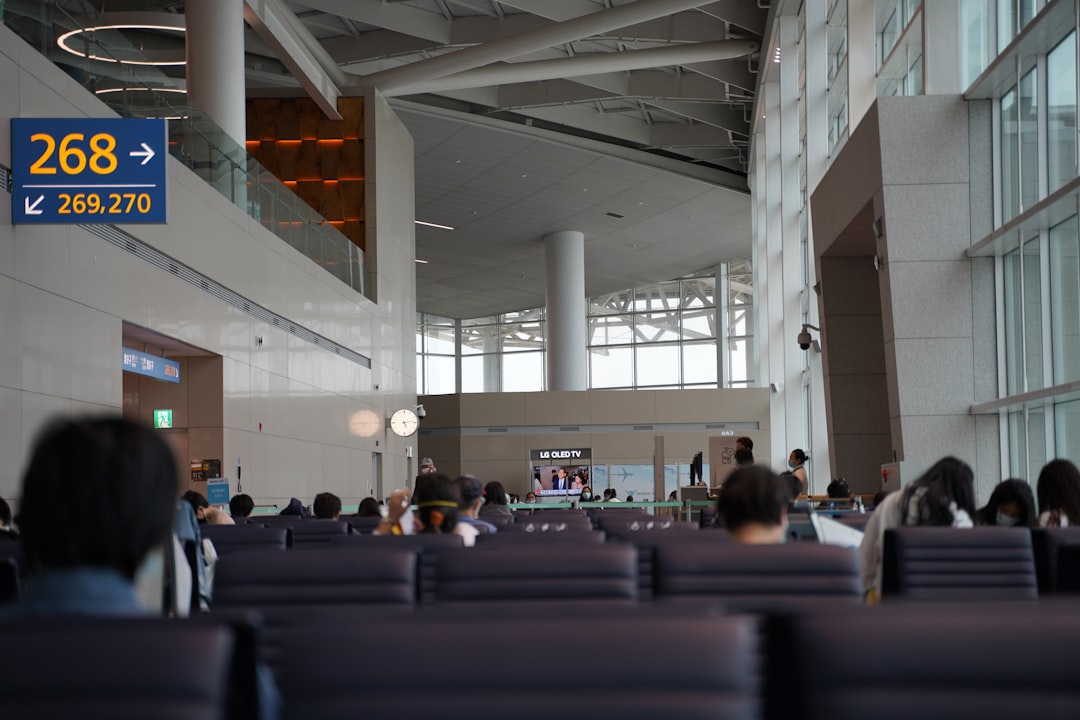
For 2025 specifically, note that T1’s Concourse B underwent partial renovation in late 2024 — some gates in the 100–115 range have updated seating and charging infrastructure. If you’re assigned one of these gates, the experience is noticeably improved over what you might remember from previous trips.
Real-World Scenarios: Which Terminal Is Your Situation?
- Flying Korean Air (KE) to anywhere: Terminal 2, always. Budget 15 extra minutes — T2 check-in counters are efficient but the security screening can queue up fast for early morning long-haul departures.
- Flying Asiana (OZ) or any LCC (Jeju Air, Jin Air, T’way, Air Seoul): Terminal 1. LCC check-in closes earlier — usually 40 minutes before departure, not 30.
- Connecting through Incheon on separate tickets (e.g., arriving on Korean Air, departing on Asiana): You will need to transfer terminals AND go through immigration. Build in a minimum of 3 hours for this scenario.
- Flying Delta (DL) transiting through Incheon on a SkyTeam itinerary: Terminal 2. Delta’s Incheon flights are all T2-based in 2025.
- Flying Air France or KLM through Incheon: Terminal 2. Same SkyTeam logic applies.
Getting to the Right Terminal: Transport Breakdown
AREX (Airport Railroad Express) is the go-to for most travelers from Seoul. The direct express from Seoul Station takes about 43 minutes and costs ₩9,500 (as of early 2025). Here’s the critical detail: AREX stops at Terminal 1 first, then Terminal 2. If you’re heading to T2, stay on the train for one more stop (roughly 6 additional minutes). Missing this and hopping off at T1 when you need T2 is an incredibly common and easily avoidable mistake.
By taxi or KakaoTaxi, always specify your terminal explicitly in Korean (“제1여객터미널” for T1, “제2여객터미널” for T2) or show the driver your booking confirmation. GPS systems for drivers sometimes default to T1 if the destination isn’t specified clearly.
If you’re driving yourself and using the connected parking structures, T1 parking (P1–P4) and T2 parking (P5–P7) are separate facilities with different pricing tiers. Long-term rates as of 2025 run approximately ₩9,000–12,000 per day for economy lots.
The Layover Scenario: Can You Explore Both Terminals?
Short answer: yes, if you have 6+ hours and your itinerary keeps you airside (no need to clear immigration). The free inter-terminal shuttle runs 24 hours and is genuinely easy to use. The Incheon Transit Hotel, spa facilities, and cultural experience zones (there’s a Korean cultural street in T1 that’s actually worth a slow walk) make layovers here more bearable than most airports globally.
For layovers under 4 hours, stay in your terminal. For overnight layovers, T1’s transit hotel books up faster, so reserve in advance through the airport’s official site.
2025 Updates Worth Knowing
Incheon Airport Authority has been pushing its biometric fast-track system more aggressively this year. If you’re a frequent traveler through Incheon, enrolling in the Smart Pass biometric program (available at designated kiosks in both terminals) can shave 8–12 minutes off your security and boarding process. It’s free to enroll and the data retention policy is relatively transparent — worth looking into if you pass through more than twice a year.
Also: the T2 landside food court area got a meaningful expansion in Q1 2025, so if you’re arriving to drop someone off or picking up arriving passengers, the waiting experience on the landside is now much less grim than it used to be.
여기서 한 마디 드리자면 — the single best thing you can do before any Incheon departure is spend two minutes confirming your terminal the night before. Not the morning of, not at the train station. The night before. Screenshot it, write it down, tell your travel companions. It’s such a small habit that eliminates a genuinely stressful category of airport problem. And if you do end up in the wrong terminal? Don’t panic — the shuttle is fast, it runs constantly, and Incheon’s staff are remarkably helpful at directing confused passengers. You’ve got more buffer than the anxiety makes it feel like.
📚 관련된 다른 글도 읽어 보세요
- 2026년 가성비 쩌는 싱글몰트 위스키 Top3 — 이것 모르고 비싼 거 사면 호구됩니다
- Why I Almost Gave Up on Forex — And What Actually Turned It Around in 2025
- AI 코딩 도구 쓰다가 팀 전체 코드베이스 날릴 뻔했어요 — 2026년 기준 실제로 쓸 만한 AI 코딩 어시스턴트 비교
태그: []
Leave a Reply