Picture this: it’s a rainy Tuesday evening in Seoul, and you’re ducking into a pojangmacha — one of those beloved street-side tented stalls — where a middle-aged woman ladles out a milky, swirling cup of makgeolli alongside a plate of pajeon. Now rewind that scene to Kyoto, where a sommelier in a quiet izakaya lifts a small ceramic tokkuri of chilled junmai daiginjo toward a paper lantern, explaining its floral nose with quiet reverence. Both moments involve fermented rice and a deep cultural ritual — yet they feel like they belong to entirely different universes. So what exactly separates Japanese sake culture from Korean makgeolli culture? Let’s think through this together, because the differences go way deeper than the drink itself.
The Fermentation Science: Same Rice, Completely Different Philosophies
Both beverages start with fermented rice, but the similarity ends there pretty quickly. Sake is a parallel fermentation brew — meaning saccharification (converting starches to sugars) and alcoholic fermentation happen simultaneously, which is actually a pretty rare process globally. Brewers use a mold called Aspergillus oryzae (koji) to kick-start this dual process. The result? A clear, refined liquid with alcohol content typically ranging from 14% to 16% ABV.
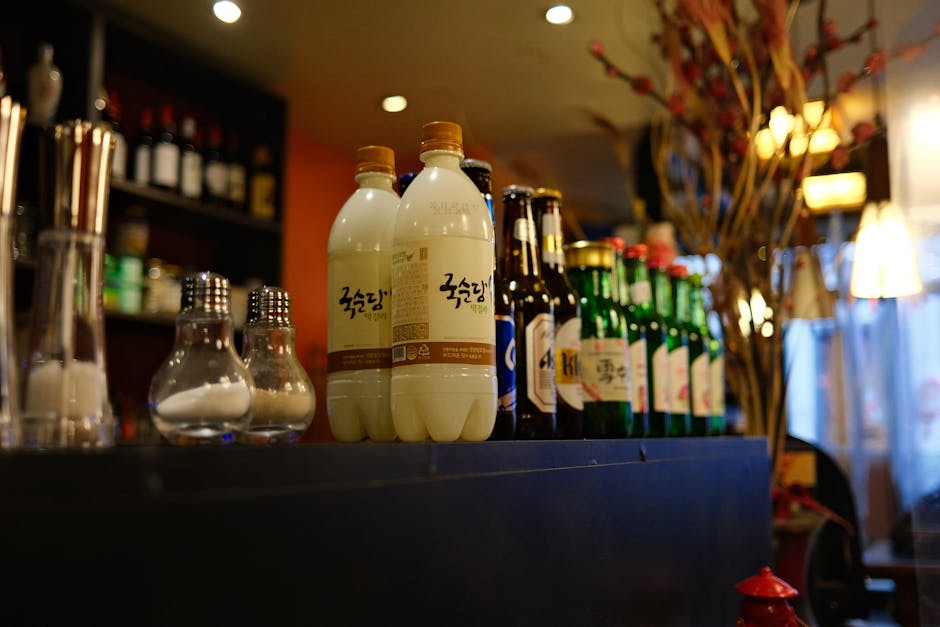
Makgeolli, on the other hand, uses nuruk — a wild fermentation starter packed with multiple microorganisms including yeast, lactic acid bacteria, and various molds all competing in a gloriously chaotic ferment. This produces a cloudy, lightly carbonated beverage sitting at a modest 5% to 8% ABV. The cloudiness isn’t a flaw; it’s the whole point. That milky suspension contains live probiotics and unfiltered rice solids that give makgeolli its distinctive tangy-sweet flavor.
Here’s a useful way to think about it: sake culture prioritizes refinement through control, while makgeolli culture embraces vitality through wildness. These aren’t just brewing choices — they’re philosophical statements about what drinking is supposed to be.
Historical Roots and Social Context: Who Drinks This, and Why?
Sake’s history stretches back roughly 2,000 years in Japan, and for much of that history, it was closely tied to Shinto religious ceremony. The word itself is believed to derive from sakeru (to prosper) or connections to ritual purification. High-grade sake was literally offered to the gods at shrines. This sacred association elevated sake into an aspirational, prestige product — a beverage that demanded ceremony, proper glassware, appropriate temperature, and a knowledgeable server.
Makgeolli’s story runs in almost the opposite social direction. Historically known as nongju (farmers’ liquor), it was the everyday drink of the working class — consumed in the fields, shared between neighbors, brewed at home by grandmothers with generations of passed-down recipes. During the Joseon Dynasty, home brewing was actually widespread before colonial-era Japanese policies in the early 20th century tried to standardize and tax alcohol production, pushing traditional home brewing underground. That rebellious, grassroots origin is baked into makgeolli’s DNA even today.
The Market Numbers Tell a Fascinating Story
Let’s look at where both beverages stand in 2026. According to industry tracking from the Japan Sake and Shochu Makers Association, sake exports hit a record high through 2025, with the United States, China, and Singapore leading as top markets. Premium ginjo and daiginjo categories now account for over 35% of export revenue, reflecting how the global market gravitates toward sake’s luxury positioning.
Meanwhile, makgeolli has been undergoing its own fascinating renaissance. The Korean Ministry of Food and Agriculture reported that premium craft makgeolli producers — particularly those using heirloom rice varieties like heuk미 (black rice) and flavored varieties incorporating omija berries or chrysanthemum — grew by over 40% in the domestic craft segment between 2023 and 2025. Internationally, K-culture’s continued global influence through K-dramas and K-food tourism has pushed makgeolli into specialty Korean restaurants from London to Los Angeles.
Drinking Rituals: Ceremony vs. Communal Joy
The social rituals around each drink are where the cultural personality really shines through. Consider these contrasts:
- Temperature ritual: Sake can be served chilled (reishu), room temperature (hiya), or warmed (kanzake), and the choice signals the grade of the sake and the season. Warming a premium daiginjo is considered a serious faux pas. Makgeolli is almost always served cold or at room temperature — temperature formality simply isn’t part of the conversation.
- Vessel culture: Sake is served in a tokkuri (flask) and poured into small ochoko cups or elegant masu boxes. The smallness of the vessel slows consumption and encourages mindful sipping. Makgeolli arrives in a large communal bowl (donglee) or a simple tin cup — the implicit message is “share freely and drink heartily.”
- Food pairing: Sake pairing has become an entire professional discipline, with sommeliers trained to match specific sake grades to courses. Makgeolli’s traditional pairing is beautifully simple: pajeon (savory pancakes), kimchi, or dubu kimchi. There’s even a Korean saying that rain makes you crave makgeolli and pajeon — a cultural reflex encoded into daily life.
- Pouring etiquette: In Japanese sake culture, you pour for others, never yourself — a gesture of respect and attentiveness. Korean drinking culture shares this norm but adds the dimension of seniors pouring for juniors as an expression of warmth, and the two-handed receiving gesture as a sign of gratitude.
- Brewery visits: Japanese sake breweries (kura) have developed sophisticated tourism infrastructure, with tasting rooms and educational experiences. Korean makgeolli breweries are increasingly following suit — the Gyeonggi-do region, historically the heartland of makgeolli production, now features dedicated makgeolli tasting routes attracting domestic and international visitors.
Global Reception and the Craft Movement in 2026
Both beverages have found themselves caught in the global craft alcohol wave, but their trajectories differ interestingly. Sake rode the wave of fine dining culture — Michelin-starred restaurants from New York to Paris now maintain thoughtful sake lists, and the “sake sommelier” (kikizakeshi) certification has gained international recognition. This has been powerful for premium positioning but risks making sake feel intimidating or inaccessible to casual drinkers.
Makgeolli’s craft resurgence has leaned into approachability and novelty. In Seoul right now, you’ll find makgeolli bars serving sparkling versions, barrel-aged variants, and fruit-infused seasonal releases that read almost like a natural wine bar menu. International craft breweries in New York, Berlin, and Melbourne have begun experimenting with nuruk-based fermentation — attracted by the wild, complex microbial ecosystem it produces. The probiotic health angle has also made makgeolli particularly interesting to the wellness-oriented drinking demographic that has exploded since the mid-2020s.
Realistic Alternatives: Which One Should You Explore First?
If you’re new to both and trying to decide where to start, here’s honest, practical guidance rather than a blanket recommendation:
Choose sake first if: you enjoy wine culture, appreciate nuanced flavor gradations, and want a beverage that rewards slow, attentive sipping. Start with a junmai (pure rice sake) at room temperature before diving into the premium grades — it’s more forgiving and gives you a genuine baseline flavor profile.
Choose makgeolli first if: you prefer lower-alcohol communal drinks, enjoy tangy or lightly sour flavor profiles (think: natural wine, kefir, kombucha), and want something that pairs effortlessly with food without overthinking it. A chilled bottle of craft makgeolli with some Korean fried chicken on a weekend evening is honestly one of the most joyful, low-pressure drinking experiences available right now.
And if you’re feeling adventurous? Host a comparison tasting at home with both. Pour a light junmai alongside a traditional makgeolli, use the same rice cracker as a palate cleanser, and let the contrast do the talking. You’ll understand centuries of cultural difference in about fifteen minutes.
Editor’s Comment : What strikes me most after thinking through these two cultures is that sake and makgeolli aren’t really competing — they’re answering entirely different human needs. Sake asks you to slow down, pay attention, and appreciate craft as a kind of quiet luxury. Makgeolli invites you to sit down, loosen up, and connect with whoever’s sitting across the table. In a world where drinking culture is increasingly polarized between ultra-premium experiences and mindless consumption, both of these traditions offer something genuinely valuable: intentionality. Whether that intentionality looks like a sommelier’s careful pour or a grandmother’s ladle into a shared bowl, it’s worth savoring either way.
태그: [‘Japanese sake culture’, ‘Korean makgeolli’, ‘sake vs makgeolli’, ‘Asian fermented beverages’, ‘craft alcohol 2026’, ‘Korean drinking culture’, ‘Japanese food culture’]
Leave a Reply