Picture this: it’s a rainy Thursday evening in Dublin, and a small distillery tucked between limestone hills just shipped its first batch to a bar in Tokyo. Meanwhile, a craft spirits shop in Nashville has a six-month waitlist for a single-cask Connemara expression. What’s going on? Irish whiskey — once overshadowed by Scotch and Bourbon — has quietly become one of the most exciting spirits categories on the planet in 2026, and the numbers are starting to catch up with the buzz.
Let’s think through this together, because the story isn’t just about bottles and barrels. It’s about shifting consumer tastes, smart branding, and a global appetite for something that feels both authentic and approachable.
📊 The Numbers Don’t Lie: Irish Whiskey Market Data in 2026
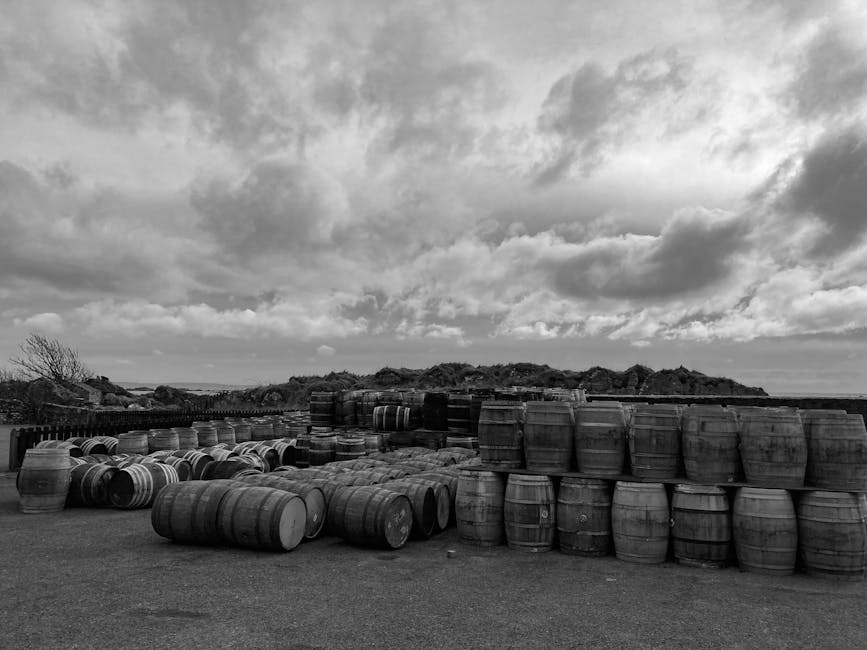
The Irish whiskey category has been on a consistent upward trajectory for over a decade, but 2026 marks a genuine inflection point. According to projections from the Drinks Ireland trade body and corroborating reports from IWSR (International Wine & Spirits Research), the global Irish whiskey market is expected to surpass $6.5 billion USD in retail value by the end of 2026 — a figure that would have seemed wildly optimistic just five years ago.
- Export volume growth: Irish whiskey exports grew approximately 14% year-over-year entering 2026, with the United States still commanding the largest share at roughly 42% of total exports.
- Distillery count: Ireland now hosts over 50 active distilleries — a staggering leap from the mere three that existed in 2010. This democratization of production is injecting serious creative energy into the category.
- Premiumization trend: The super-premium and ultra-premium segments (bottles priced above $75 USD) are growing at nearly twice the rate of standard expressions, signaling that consumers are trading up.
- Asia-Pacific surge: Markets like Japan, South Korea, and Singapore have registered double-digit growth rates, with Korean consumers in particular gravitating toward single pot still expressions for their distinctive creamy, spicy profile.
- Age statement comeback: After years of NAS (No Age Statement) dominance, 2026 is seeing a resurgence in aged statement bottles as distilleries founded in the early 2010s finally have mature stock to work with.
🌍 International Success Stories: Who’s Leading the Charge?
Let’s look at some concrete examples, because the abstract data only tells half the story.
Jameson (Irish Distillers / Pernod Ricard) remains the undisputed volume leader globally, but what’s interesting in 2026 is how the brand is pivoting. Rather than just selling accessible blends, they’ve leaned hard into their Jameson Deconstructed series and collaborated with specialty coffee roasters in Melbourne and São Paulo — targeting the same consumers who obsess over single-origin espresso. It’s a smart play: if you can talk to the flavour-curious crowd, you’ve got a customer for life.
Teeling Whiskey, Dublin’s urban distillery, has become a kind of ambassador for the “new wave” Irish whiskey movement. Their Brabazon series — finished in vintage Madeira and Sauternes casks — regularly draws comparisons to prestige Scotch expressions at half the price. In 2026, their visitor numbers have climbed significantly, partly because Dublin has become a genuine whiskey tourism destination.
Waterford Distillery deserves special mention for their terroir-driven approach. Founder Mark Reynier (formerly of Bruichladdich in Scotch) essentially transplanted a wine-world concept — that barley provenance matters — into Irish whiskey. Their single farm origin expressions are now stocked in serious fine dining establishments across Europe and Southeast Asia.
On the domestic Korean and Japanese front, high-end whisky bars in Seoul’s Itaewon district and Tokyo’s Ginza have created dedicated Irish whiskey tasting flights, educating consumers in a format they already love from Japanese whisky culture. This regional intermediary role is quietly accelerating global appreciation.
🤔 Why Now? The Logical Reasons Behind the 2026 Surge
It’s worth reasoning through why this is happening now, rather than five years ago or five years from now.
First, there’s the supply maturation cycle. The distillery boom of 2012–2016 means that whiskey requires a minimum of three years in barrel (Irish law), but the premium expressions people actually get excited about need 7–12+ years. Those barrels are ready now. The industry essentially planted seeds a decade ago and is harvesting today.
Second, consumer fatigue with Scotch pricing is real. Iconic single malts have become increasingly inaccessible at retail due to speculation and limited releases. Irish whiskey — particularly single pot still expressions — offers comparable complexity at significantly lower price points. Savvy drinkers have noticed.
Third, the cocktail culture tailwind continues to drive discovery. The Irish Coffee renaissance (yes, it’s genuinely happening in specialty coffee circles) and the use of Irish whiskey in low-ABV stirred cocktails have introduced the spirit to audiences who never would have reached for a neat pour.
🥃 Realistic Alternatives: Where Should You Actually Start?
Okay, so you’re intrigued but you’re not sure where to put your money or attention. Let’s be practical about this.
If you’re a beginner: Start with a blended Irish whiskey like Jameson Black Barrel or Slane Irish Whiskey. Both are widely available, affordable (under $45 USD), and approachable enough to not overwhelm your palate while still showing you what Irish whiskey is about — that signature smoothness from triple distillation, light fruit notes, and gentle vanilla.
If you’re a curious intermediate: Try a single pot still expression. Redbreast 12 Year is essentially the benchmark — it’s the one bottle that whiskey educators across the globe point to as definitional for the style. Green Spot is another fantastic, slightly more affordable entry into this world.
If you’re an enthusiast thinking about investment or collection: Limited releases from Teeling, Waterford single farm origins, and upcoming expressions from newer distilleries like Dingle or Boann are worth tracking. The appreciation curve for Irish whiskey collectibles, while not yet at Scotch levels, is moving meaningfully in 2026.
If you’re a bar owner or beverage professional: The category offers exceptional value positioning for your back bar. A curated Irish whiskey section — three to five bottles spanning blend, single malt, and single pot still — gives you a storytelling opportunity that differentiates you without massive capital outlay.
The honest reality is that Irish whiskey in 2026 is where Japanese whisky was around 2012: genuinely excellent, still somewhat underpriced relative to quality, and about to get a lot more expensive as global recognition accelerates. That window is still open — but it won’t be forever.
Editor’s Comment : What strikes me most about the Irish whiskey story in 2026 isn’t just the market data — it’s the authenticity underneath it. These are real distilleries, real farmers growing specific barley varieties, real craftspeople who waited years for their stock to mature. In a world of instant everything, there’s something quietly radical about a product that simply cannot be rushed. Whether you’re a first-time sipper or a seasoned collector, I’d encourage you to try one new Irish expression this year with that patience in mind. Sláinte! 🥃
📚 관련된 다른 글도 읽어 보세요
- Irish Whiskey New Releases 2026: The Most Exciting Bottles to Watch (And Smart Alternatives If They Sell Out)
- 버번 위스키 완벽 입문 가이드 2026: 처음 마시는 사람도 취향을 찾는 법
- Irish Whiskey Food Pairing Guide 2026: The Ultimate Companion for Every Sip and Bite
태그: [‘Irish whiskey 2026’, ‘whiskey market analysis’, ‘single pot still whiskey’, ‘premium spirits trends’, ‘Irish distillery’, ‘whiskey investment’, ‘global spirits market’]
Leave a Reply