I still remember the raised eyebrows I got at a whisky tasting event back in 2019 when I casually mentioned that Korea might one day have a legitimate craft whisky scene. Fast-forward to 2026, and those eyebrows have done a full reversal — now people are genuinely impressed, and sometimes even a little jealous, when Korean distilleries start popping up in international competitions. So let’s sit down together and really dig into what’s happening on the Korean whisky frontier right now.
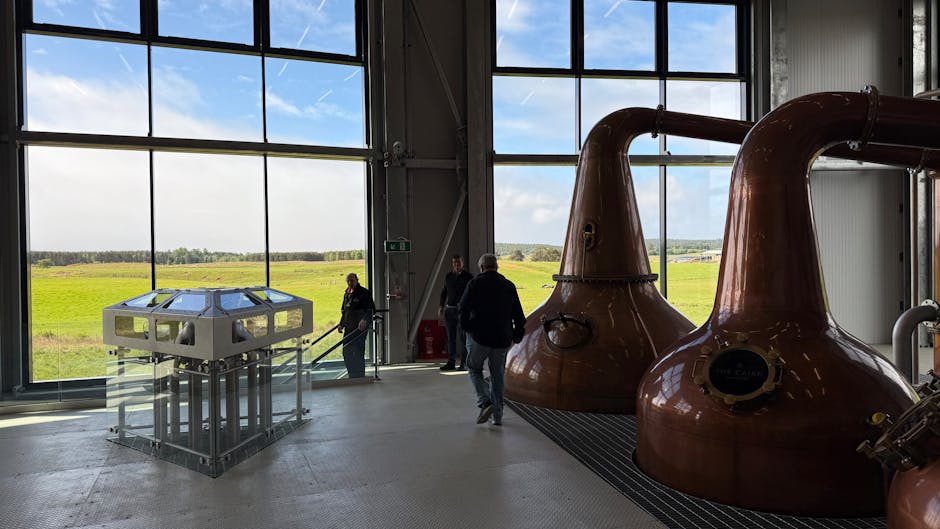
The Numbers Tell a Surprisingly Bold Story
As of early 2026, South Korea boasts approximately 18 to 22 operational or actively-producing craft distilleries, a remarkable leap from just a handful five years ago. This growth tracks closely with global craft spirits trends — the Korean craft spirits market was valued at roughly KRW 85 billion (approx. USD 62 million) in 2025, and 2026 projections suggest a 14–17% year-over-year increase, driven largely by domestic premiumization and export curiosity from the U.S., Japan, and European markets.
What’s fueling this? A few interconnected forces are worth breaking down:
- Regulatory easing: The Korean government’s revision of the Liquor Tax Act in 2022 and its follow-up amendments in 2024 significantly lowered the barrier for small-batch distillery licensing, making it far more feasible for independent operators to enter the market.
- Cultural tailwinds: The global K-culture wave hasn’t just exported K-pop and K-drama — it’s created genuine international curiosity about Korean food and drink culture, including spirits.
- Terroir storytelling: Korean distillers are leaning hard into local grain sourcing — think Gangwon-do barley, Jeju Island water profiles, and even Korean oak (Quercus mongolica) cask experiments that genuinely differentiate their products.
- Investment climate: Venture capital and lifestyle-brand investment into the premium beverage sector has remained unusually active in Korea through 2025–2026, giving distilleries runway to age their spirits properly.
Key Players Shaping the Landscape in 2026
Let’s talk about the distilleries actually making noise right now. Three Societies Distillery (삼사회 증류소), operating out of Gyeonggi-do, released its first 5-year single malt expression in late 2025 to considerable domestic acclaim and picked up a Bronze at the Asia Spirits Awards 2026 — not a headline-grabber yet, but absolutely a sign of trajectory. Meanwhile, Jeju Single Malt Project has been quietly building its aged inventory since 2021 and is expected to drop its first official 4-year release mid-2026, with pre-orders reportedly selling out within hours.
On the more established side, Goldenblue continues to dominate the blended Korean whisky segment, though purists debate whether their model — blending imported Scotch malt with domestic grain spirit — truly qualifies as “Korean whisky” under the emerging geographic indication discussions currently underway at the Korean Intellectual Property Office.
How Korea Compares: Learning from Japan, Taiwan, and India
It’s impossible to discuss Korean whisky in 2026 without acknowledging the footsteps it’s following — and occasionally trying to leapfrog. Japan’s Nikka and Suntory spent decades building credibility before Western markets took them seriously. Taiwan’s Kavalan essentially rewrote the rulebook by winning major international awards within just a few years of production, partly because Taiwan’s subtropical climate accelerates maturation dramatically (angels’ share runs as high as 10–15% annually versus Scotland’s 2%). India’s Paul John and Amrut followed a similar fast-maturation, terroir-forward playbook.
Korea’s climate sits interestingly between these extremes. The peninsula’s four distinct seasons — particularly the dramatic temperature swings between summer and winter — create a maturation dynamic that distillers describe as “aggressive but nuanced.” Casks breathe intensely in summer heat, then contract in the cold, which accelerates wood interaction. Early tasting notes from Korean single malts in their 3–5 year range often show more oak integration than you’d expect from comparable Scottish expressions at the same age.
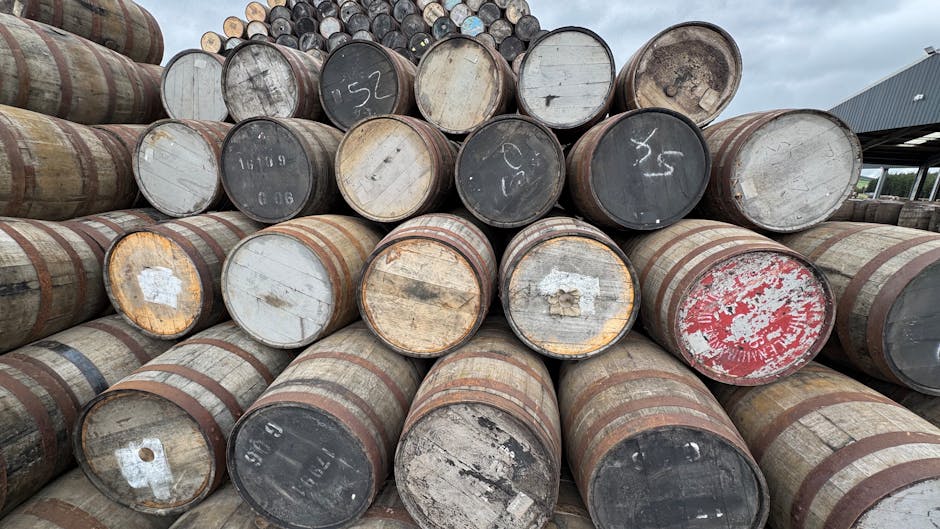
The Challenges Nobody Wants to Talk About
Let’s be honest here, because a realistic picture serves you better than cheerleading. Korean whisky faces real headwinds:
- Age statement credibility gap: Most Korean distilleries are still working with 3–6 year spirits. The global whisky community, while increasingly open-minded, still tends to equate age with seriousness. This perception battle takes time — and more award wins — to overcome.
- Domestic market dominance by soju: Soju still commands over 60% of Korean spirits consumption. Convincing domestic drinkers to pay KRW 80,000–150,000 for a locally-made whisky when imported Scotch sits at similar price points is a genuinely tricky value proposition.
- Grain sourcing pressure: Ambitious distillers wanting to use 100% Korean-grown barley face supply chain inconsistencies. Agricultural infrastructure for malting-quality barley is still developing in Korea.
- Export regulatory complexity: Navigating EU and U.S. import regulations for a category that doesn’t yet have a fully codified “Korean Whisky” geographic identity adds friction to international expansion.
Realistic Paths Forward: What Should You Actually Do With This Information?
Whether you’re a whisky enthusiast, a potential investor, or someone in the hospitality space, here’s how I’d think about engaging with Korea’s whisky moment:
- For drinkers: Get in early. The next 3–5 years will see the first wave of properly aged (5–8 year) Korean single malts hit the market. Buying current younger releases helps support distilleries through their aging inventory build and gives you the fun of watching a style evolve in real time.
- For hospitality professionals: A Korean whisky section on your menu in 2026 is still a genuine differentiator. By 2029, it’ll be expected. The window for looking ahead-of-the-curve is now.
- For investors or entrepreneurs: The maturation infrastructure (warehousing, cooperage) is the unsexy but high-value play. Distilleries are growing faster than the ecosystem that supports them.
- For curious travelers: Distillery tourism is quietly blossoming. Several Gangwon-do and Jeju-based distilleries now offer visitor experiences that rival early Scottish craft distillery tours in charm and educational depth.
The Korean whisky story in 2026 is genuinely one of the most exciting slow-burn narratives in the global spirits world. It doesn’t have the explosive overnight fame of Kavalan’s early competition victories, and it doesn’t have Japan’s century of heritage to lean on. What it has is momentum, creative energy, and a food culture that has already shown the world it can turn domestic craft traditions into global obsessions.
That feels like a pretty good foundation to me.
Editor’s Comment : If I had to bet on one underrated spirits region to watch between now and 2030, Korean whisky would be my pick without much hesitation. The ingredients are all there — passionate distillers, a unique climate for maturation, strong cultural soft power, and a domestic premium drinks market that’s still growing. My practical suggestion? Visit at least one Korean distillery this year if you can. The conversations you’ll have with the people making these spirits are worth the trip alone, and frankly, the drams aren’t bad either.
태그: [‘Korean whisky 2026’, ‘Korea distillery scene’, ‘craft whisky Asia’, ‘Korean single malt’, ‘Korean spirits industry’, ‘whisky terroir Korea’, ‘Asia craft distillery’]
Leave a Reply