Picture this: it’s a drizzly Tuesday evening in Copenhagen, and a small distillery tucked between a bicycle repair shop and a florist has a line out the door. People aren’t waiting for the latest sneaker drop or a celebrity chef’s tasting menu — they’re queuing for a limited-release botanical gin infused with locally foraged sea buckthorn and Nordic spruce tips. Sound niche? Absolutely. But this scene is playing out across hundreds of European cities right now, and it tells us something profound about where modern drinking culture is heading.
The European craft gin movement didn’t just survive its mid-2010s hype cycle — it evolved, deepened, and in 2026, it has fully matured into a legitimate cultural force. Let’s think through what’s actually driving this, because it’s far more layered than just “people like artisanal stuff.”
The Numbers Behind the Boom: It’s Bigger Than You Think
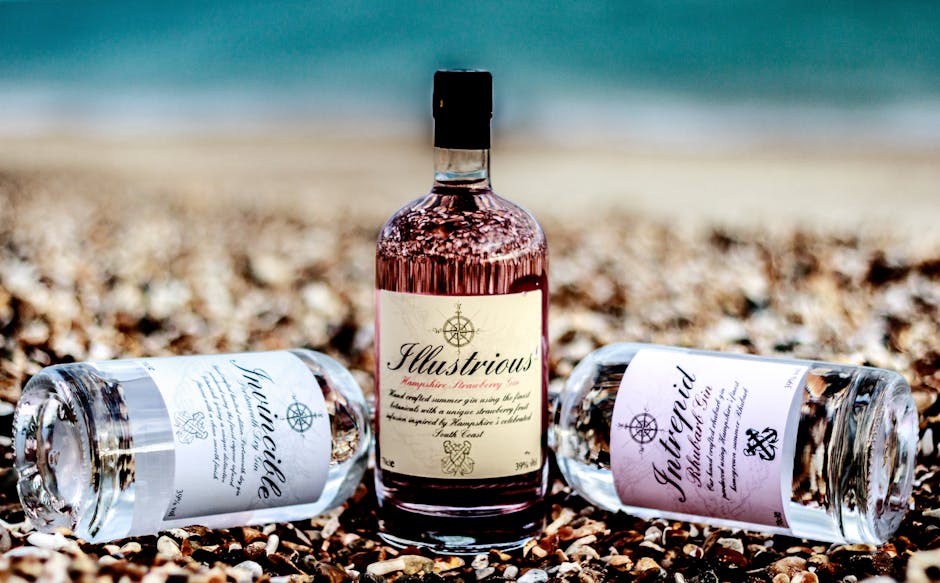
To understand the scale here, let’s ground ourselves in some data. The European craft spirits market was valued at approximately €4.2 billion in 2025, with gin consistently claiming the largest share — roughly 38% of that category. More telling is the growth trajectory: the number of registered micro-distilleries across the EU has more than tripled since 2018, with Germany, Spain, and the Netherlands leading the new entrant surge in 2025–2026.
Spain alone — once synonymous with Rioja and cava — now hosts over 600 active gin producers. That’s not a typo. The “gin-tonica” culture that exploded in Barcelona and Madrid has become a formal export identity, with Spanish craft gins regularly landing on shortlists at the London Spirits Competition and the San Francisco World Spirits Competition.
What’s particularly interesting from a market analysis standpoint is the consumer age shift. Early craft gin adopters skewed 30–45, but 2026 data from Nielsen IQ’s European Beverage Report shows that 22–29-year-olds are now the fastest-growing segment of craft gin purchasers — and they’re prioritizing sustainability credentials and provenance storytelling over brand prestige. That’s a fundamental value realignment.
What Makes Craft Gin Culturally Stickier Than Other Spirits Trends
Here’s where it gets philosophically interesting. Why has craft gin outlasted, say, the craft vodka moment or the absinthe revival? A few logical reasons emerge when you dig in:
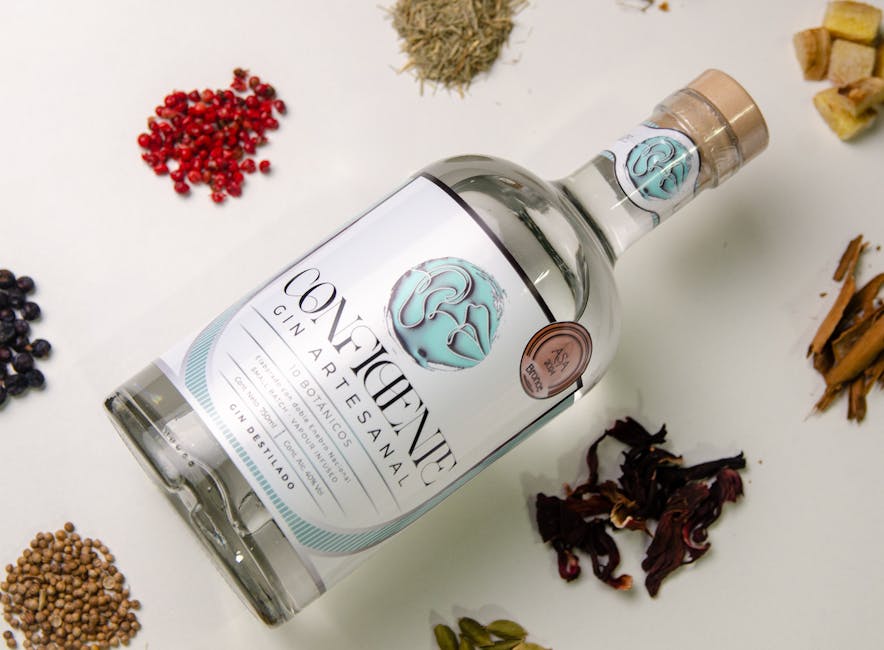
- Botanical freedom: Unlike whisky or cognac, gin has almost no regulatory cage around its botanicals (beyond requiring juniper as the dominant flavor). This means distillers can genuinely innovate with local flora — Croatian lavender, Portuguese eucalyptus, Scottish heather — creating products that are irreducibly tied to a place and season.
- The cocktail ecosystem: Gin plays well with others. Its complexity makes it a bartender’s favorite canvas, which means it has a natural amplification network through the global cocktail community.
- Low barrier to entry (relatively speaking): Compared to aged spirits, gin can be produced and sold within months. This accelerates innovation cycles and keeps the category feeling fresh.
- Tourism integration: Distillery tourism has become a genuine travel segment. Visiting a small-batch gin producer in the Basque Country or the Scottish Highlands is now a legitimate itinerary anchor — creating real-world brand loyalty that no Instagram ad can replicate.
- Sustainability alignment: Many craft producers are leading on regenerative agriculture partnerships, minimal-waste distillation, and refillable bottle programs — values that resonate deeply with 2026’s eco-conscious consumer.
Case Studies: Brands That Are Doing It Right
Let’s look at some concrete examples, because theory only takes us so far.
Empirical Spirits (Copenhagen, Denmark) — Originally known for their experimental fermentation approach, Empirical has become a reference point for the “flavor-first” philosophy. Their collaboration with local cheesemakers and winemakers to source unusual fermentation bases has attracted attention from the fine dining world, blurring the line between spirits and gastronomy. In 2026, they’ve expanded their direct-to-consumer model across 14 EU countries with remarkable retention rates.
Ginebra Xoriguer (Menorca, Spain) — A fascinating counterpoint. This is one of Europe’s oldest gin traditions, with Protected Geographical Indication (PGI) status. Rather than chasing novelty, Xoriguer has leaned into heritage, attracting a new generation of consumers who are actually seeking authenticity over trend-chasing. Their visitor center saw a 40% year-on-year increase in 2025.
Kyrö Distillery (Isokyrö, Finland) — Built inside a converted dairy, Kyrö has become a masterclass in brand storytelling. Their rye-based gin is distinctly Finnish — bold, earthy, unapologetically Nordic — and they’ve paired it with an export strategy that positions Finnish nature as a luxury concept. They’re a case study in how regional identity becomes a competitive advantage rather than a limitation.
The Challenges Nobody Talks About Enough
It wouldn’t be an honest analysis without acknowledging the friction. The craft gin space in 2026 is also experiencing real growing pains:
- Market saturation: In some urban markets — particularly London and Amsterdam — consumers report “gin fatigue.” When every cocktail bar has a back wall of 80 gins, differentiation becomes genuinely difficult.
- Distribution bottlenecks: Small producers often struggle to scale beyond their local market without losing the authenticity that made them appealing in the first place.
- Economic pressure: Rising energy costs for distillation, combined with premium botanical sourcing, have squeezed margins significantly. Several beloved small producers have closed or been acquired by larger spirits groups in the past 18 months.
- “Craft washing”: As with craft beer before it, larger corporations are launching “small batch” sub-brands that occupy shelf space while offering none of the genuine provenance of true independent distillers.
Realistic Alternatives: Not a Gin Person? Here’s Where the Adjacent Opportunity Lives
If you’re a traveler, drinks enthusiast, or even a food entrepreneur reading this and thinking “I love this culture but gin specifically isn’t my entry point” — here’s the good news. The craft spirits movement is a mindset, and it’s spreading laterally:
- Amaro and bitter liqueurs: Italian and Eastern European craft amaro producers are following almost exactly the same playbook as gin pioneers, with complex botanical heritage and distillery tourism potential.
- Aquavit: The Scandinavian caraway-forward spirit is having its craft moment, with Norwegian and Swedish micro-distillers attracting international attention.
- Craft rum (European style): Distillers in France (rhum agricole traditions), Germany, and even Sweden are producing terroir-driven rums that challenge Caribbean conventions.
- Non-alcoholic craft spirits: Brands like Seedlip (UK) have validated the market, and in 2026 a wave of European “zero-proof botanical distillates” is genuinely impressive in complexity — offering the same cultural experience without alcohol.
The underlying logic is consistent: consumers want provenance, craft process, a story they can tell, and ideally a physical place they can visit. Whatever liquid is in the bottle matters less than whether those conditions are met.
What This Means for the Bigger Picture
Zoom out for a moment. The craft gin movement is really a symptom of a broader cultural reorientation: people are pushing back against globalized, homogenized consumption. When every city center has the same five international spirit brands on every bar shelf, the local distillery with its hand-labeled bottles and head distiller who will actually talk to you becomes genuinely countercultural.
In 2026, that counter-cultural impulse has gone mainstream — which is both its vindication and its challenge. The question for the next chapter of European craft spirits is whether the category can preserve its soul while scaling its reach. Based on the most resilient examples we’ve seen, the answer involves staying fiercely regional, building community before chasing distribution, and treating the distillery itself as a destination, not just a production facility.
Editor’s Comment : What I find most compelling about the European craft gin story isn’t the gin itself — it’s the proof that people still deeply want things made with intention and rooted in a specific place. In a world of algorithmic recommendations and infinite scroll, there’s something quietly radical about a bottle of spirits that tastes like a particular forest in a particular country in a particular season. That’s not just a product. That’s a relationship with the world. And honestly? That’s worth exploring, one small pour at a time.
태그: [‘craft gin Europe 2026’, ‘European spirits culture’, ‘craft distillery tourism’, ‘botanical gin trends’, ‘artisan spirits market’, ‘gin craze analysis’, ‘small batch distillery Europe’]
Leave a Reply