Picture this: it’s a rainy Tuesday evening, and a friend of mine — a self-described “whisky agnostic” who previously swore by craft beer — slides a glass of Japanese single malt across the table and says, “Just try it.” That was two years ago. Today, she runs a monthly whisky tasting club with 40 members in her apartment building. That story, oddly enough, perfectly captures what’s happening across the global whisky landscape in 2026. The category is no longer the exclusive domain of tweed-jacketed connoisseurs. It has become a vibrant, evolving, and genuinely exciting cultural conversation.
So let’s think through what’s actually driving the market right now, where the most interesting bottles are coming from, and — perhaps most importantly — how you can navigate this world without blowing your entire budget on a hype bottle.
📊 The Numbers Don’t Lie: Global Whisky Market in 2026
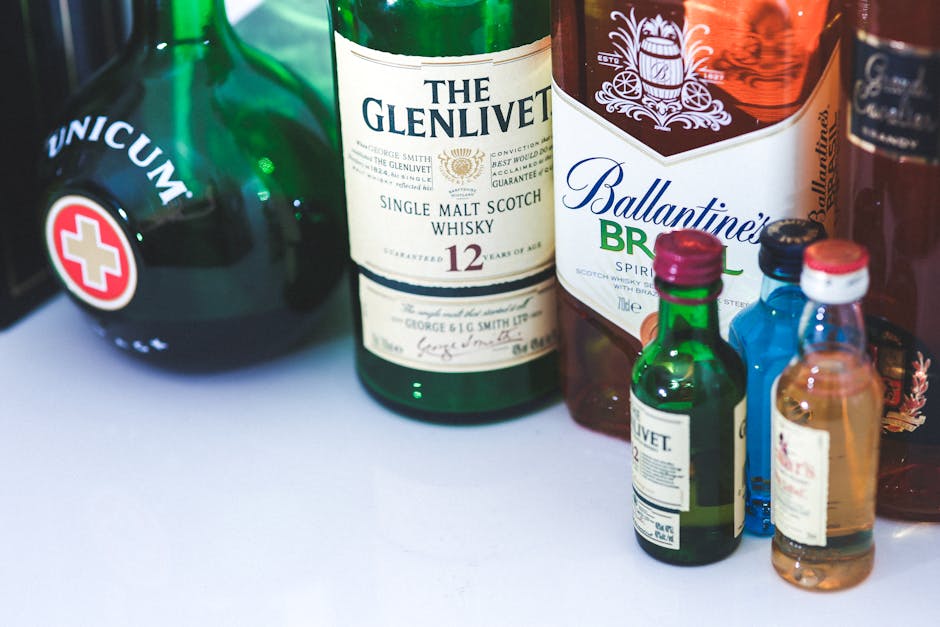
The global whisky market crossed the $115 billion USD valuation mark in early 2026, according to industry tracking by IWSR (International Wine & Spirits Research). That’s a compound annual growth rate hovering around 6.8% since 2022 — and the momentum shows no signs of slowing. But here’s where it gets interesting: growth is no longer concentrated in traditional Western markets.
- Asia-Pacific now accounts for over 38% of global whisky consumption, with India alone overtaking the United States as the world’s largest whisky market by volume.
- Indian Single Malts like Indri and Amrut have seen export demand increase by over 200% year-on-year, earning critical acclaim at international competitions.
- Non-traditional whisky nations — Taiwan, Australia, Sweden, and even South Africa — are producing award-winning expressions that are reshaping what “quality” means in the category.
- Premiumization continues to dominate purchasing behavior: consumers are buying less frequently but spending significantly more per bottle, with the $80–$150 USD “accessible premium” tier growing fastest.
- Sustainability credentials have become a genuine purchasing driver — not just a marketing footnote. Distilleries with transparent carbon-neutral or regenerative farming practices report 22% higher brand loyalty scores among under-40 consumers.
🌍 From Scotland to Seoul: The Brands Defining the Moment
Let’s look at who’s actually capturing imagination and shelf space right now, because the whisky map in 2026 looks wonderfully different from even five years ago.
Scotland remains the cornerstone, but the conversation has shifted. The independent bottler scene — names like Hunter Laing, Gordon & MacPhail, and newer players like Elixir Distillers — is arguably generating more excitement than the major distillery releases. Collectors and enthusiasts are hunting single cask expressions with the same fervor once reserved for limited Scotch releases from Macallan or Glenfarclas.
Japan’s market correction is the industry’s most fascinating subplot. After years of skyrocketing secondary market prices, Japanese whisky has experienced a healthy recalibration. New distilleries — Akkeshi, Mars Shinshu, and the recently opened Kanosuke coastal facility — are releasing mature stocks that bring the quality promise back into accessible price ranges. Meanwhile, Nikka’s cross-malt expressions are winning back drinkers who had been priced out of the category.
American whiskey is diversifying furiously. While Buffalo Trace’s Antique Collection still causes annual retail chaos, the real energy is in craft distilleries experimenting with heritage grains — heirloom corn varieties, Bloody Butcher, and Jimmy Red — as well as non-traditional cask finishes like Mizunara, Oloroso Sherry, and even Calvados barrels. Tennessee, Texas Hill Country, and the Hudson Valley in New York have all emerged as legitimate regional whiskey identities.
India’s moment has fully arrived. Amrut’s Fusion and Indri’s Trini have both appeared on multiple “World’s Best” lists in 2025–2026 competition cycles. The tropical aging climate — which causes angels’ share evaporation rates 2–3 times higher than Scotland — produces a concentrated, rich flavor profile that sommeliers describe as uniquely expressive. If you haven’t explored Indian single malts yet, this is genuinely the best entry point in the category right now.
🌱 The Sustainability Wave: More Than a Buzzword
One trend I find genuinely compelling — and worth reasoning through carefully — is the sustainability push. Let’s be honest: distilling is inherently energy-intensive, and the barrel aging process locks up capital and resources for years or decades. So how do you reconcile that with climate consciousness?
Distilleries are approaching this from several angles. Bruichladdich on Islay now sources 100% of its barley from Scottish farms and runs on 100% renewable energy. Starward in Australia uses local wine barrels rather than shipping American or European oak across the world, reducing the category’s maritime carbon footprint while simultaneously creating a distinctly Australian flavor identity. Even the packaging is evolving — lighter bottles, reduced water usage, and spent grain repurposed as animal feed or biofuel are becoming industry standards rather than marketing novelties.
For the consumer, this actually matters in a practical sense: distilleries with sustainable supply chains tend to have more stable pricing because they’re less exposed to global commodity and shipping shocks. That’s a real benefit, not just a feel-good story.
💡 Realistic Alternatives: How to Explore Whisky in 2026 Without Breaking the Bank
Here’s where I want to talk to you directly, especially if you’re newer to whisky or feeling overwhelmed by the price escalation at the top end. The good news? There has never been a better time to drink excellent whisky at accessible prices, if you know where to look.
- Try before you buy: Whisky bars with extensive by-the-glass programs have exploded globally. In cities like Seoul, Melbourne, London, and New York, specialist bars now offer 1oz pours of bottles that retail for $300+. A $20 evening of exploration beats a $300 gamble.
- Explore “World Whisky” expressions: Indian, Taiwanese (Kavalan remains exceptional value), and Australian whiskies consistently punch above their price class in blind tastings.
- Consider independent bottlers: Companies like Compass Box, Signatory, and Cadenhead’s release single cask expressions from well-known distilleries at lower prices than the official distillery bottlings.
- Join a tasting club or online community: Communities like r/Scotch, Master of Malt’s Whisky Exchange forums, and local club meetups are genuinely where the most useful, unbiased advice lives.
- Look at store-pick or private-label expressions: Many specialist retailers negotiate exclusive single barrel picks — these are often the best value per dollar in any market.
- Don’t overlook blended Scotch: Blended malts like Compass Box’s Great King Street or Monkey Shoulder offer complexity at half the price of single malts and are beautifully versatile for cocktails and sipping alike.
🔮 Where Is This All Heading?
If I had to make a few informed predictions for where global whisky goes from here, I’d focus on three things. First, geographic diversification will accelerate — expect meaningful releases from South Korea’s growing craft distillery scene, Scandinavia, and even parts of Latin America within the next few years. Second, transparency will become a competitive differentiator — consumers increasingly want to know the grain source, the distillation date, the cask history, and the true age. Distilleries that can tell that story clearly will win long-term loyalty. Third, the cocktail renaissance will keep pulling new drinkers in — a perfectly made Penicillin or a Highball in a Tokyo-style long glass remains one of the most powerful “gateway” experiences in all of drinks culture.
Whisky in 2026 is less about gatekeeping and more about invitation. And that, honestly, is the best possible trend of all.
Editor’s Comment : The biggest mistake first-time whisky buyers make in 2026 is chasing hype bottles at inflated secondary market prices before they even know their own palate. My honest advice? Spend your first $100 on five $20 glasses at a good whisky bar instead of one bottle at home. You’ll learn infinitely more, have a genuinely better time, and when you do decide to commit to a bottle, you’ll make a choice that actually suits you — not the algorithm.
태그: [‘global whisky trends 2026’, ‘best whisky 2026’, ‘Indian single malt whisky’, ‘Japanese whisky market’, ‘whisky investment guide’, ‘sustainable whisky distilleries’, ‘world whisky buying guide’]
Leave a Reply