A friend of mine, who runs a small hobby farm outside of Portland, called me up last spring sounding completely defeated. She’d started beekeeping the previous year with all the enthusiasm in the world — two hives, a full suit, a gorgeous cedar box she’d built herself — and by month ten, both colonies had collapsed. ‘I did everything the YouTube videos told me,’ she said. ‘What went wrong?’ That conversation stuck with me, because honestly? I’d heard almost the exact same story from at least a dozen beginners. Beekeeping looks serene and simple from the outside. Inside? It’s an ecosystem management challenge that nobody fully prepares you for.
So let’s dig into the real mechanics of beekeeping — not the romanticized version, but the one that actually keeps your bees alive through winter and beyond.
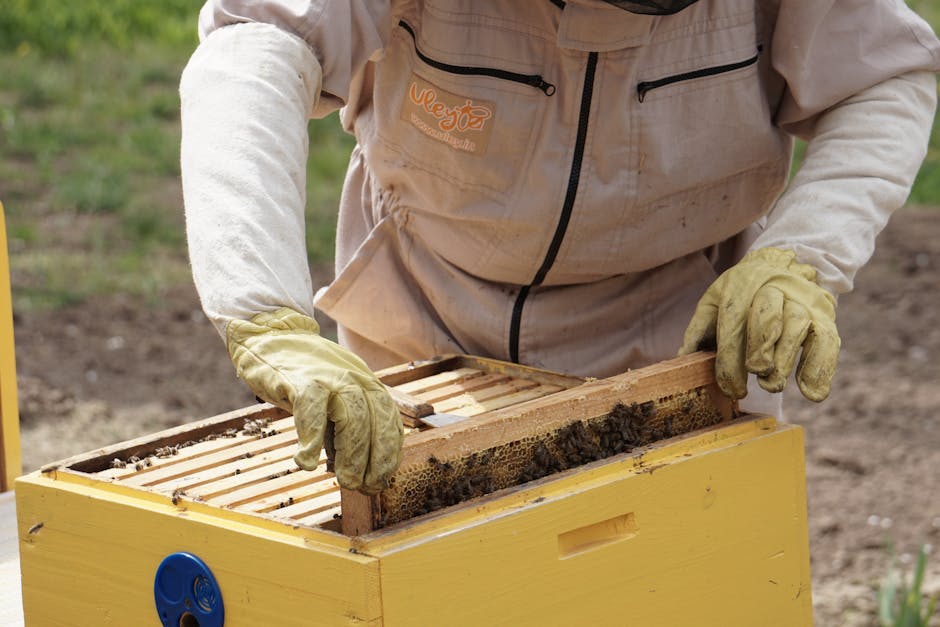
Why First-Year Colony Loss Is So Common (And Not Your Fault — Mostly)
Here’s the hard truth: according to the Bee Informed Partnership’s annual survey data, overwinter colony loss rates in the US consistently hover between 30% and 45% for hobby beekeepers. Some years, commercial operations report losses exceeding 50%. That’s not a beginner problem — that’s a structural one baked into modern beekeeping environments.
The three leading killers, in rough order of frequency, are:
- Varroa destructor mite infestations: This is the number one cause of colony collapse, full stop. Varroa weakens bees by feeding on fat bodies during larval development, transmitting viruses like Deformed Wing Virus (DWV). If your mite wash comes back above 2 mites per 100 bees during the brood season, you’re already behind. At 3+ mites per 100 bees in late summer, your colony is statistically unlikely to survive winter without treatment.
- Poor queen health or queen failure: A failing queen who transitions to drone-layer status can destroy a colony within 6 weeks. Signs include scattered, spotty brood patterns and a noticeable drop in worker population. Many beginners misread this as a nectar dearth problem.
- Starvation during late winter or early spring: Counterintuitively, more colonies die in February and March than in January. The cluster breaks apart trying to reach food that’s just a few frames away but thermally inaccessible. A colony can starve with 20 lbs of honey 8 inches from the cluster.
Setting Up Right: Equipment Decisions That Actually Matter
Walk into any beekeeping supply store in 2025 and you’ll face a wall of options. Let me cut through it with a practical framework:
Hive type — Langstroth vs. Top Bar vs. Warre: If you want community support, access to local bee clubs, and equipment compatibility, go Langstroth. Ten-frame deeps are the industry standard. Eight-frame mediums are gaining popularity because a fully loaded 10-frame deep box can weigh 80+ lbs — a back injury waiting to happen for solo beekeepers. If your situation is ‘I want maximum simplicity and minimal intervention,’ a top-bar hive suits a philosophical approach; if your situation is ‘I want data-driven management and scalability,’ Langstroth is the clear answer.
Bees — Packages vs. Nucs vs. Splits: A 3-lb package costs roughly $30–$50 depending on region and typically contains a mated queen in a cage. A nucleus colony (nuc) — 5 frames of established brood, workers, and a laying queen — runs $150–$220 but gives you a 6–8 week head start on population building. In most US climates, a nuc installed in late April will reach honey-production strength faster and with lower first-year loss rates than a package. If budget allows, start with nucs.
The Varroa Protocol Nobody Talks About Clearly
Here’s where a lot of well-meaning beginners get lost in conflicting advice. Let me give you a concrete treatment calendar framework that works in temperate North American climates:
- June (post-honey-harvest pre-treatment window): Perform an alcohol wash or sugar roll to count mites. If ≥2 mites/100 bees, treat. Oxalic acid (OA) vaporization works well here but requires multiple applications when brood is present. Apivar (amitraz strips) left in for 6–8 weeks is more forgiving for beginners.
- August–September (critical window): The bees being raised NOW are your winter bees. They need to be healthy. Treat again based on your wash results. This treatment round is arguably the most important of the year. Missing it is the single most common reason colonies die in February.
- December–January (broodless period): A single OA vaporization or dribble treatment during the broodless cluster period has near-100% efficacy against phoretic mites. Low-cost, highly effective — don’t skip it.
One important note: rotate your miticide chemistries year to year. Varroa populations resistant to amitraz have been documented in parts of the US and Europe. Alternating between Apivar and OA-based treatments reduces selection pressure.
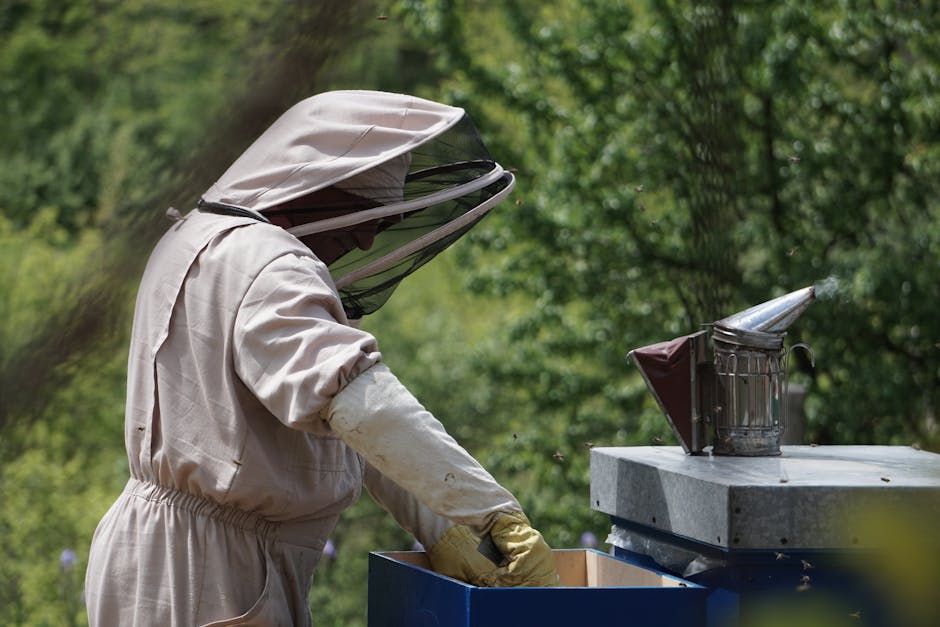
Real-World Case Studies: What Experienced Beekeepers Actually Do
Randy Oliver of ScientificBeekeeping.com has been publishing empirical field trial data on Varroa management and nutrition for over a decade. His research on protein supplementation — specifically, that colonies given pollen substitute patties in late summer produce larger, longer-lived winter bees — has been replicated by hobbyists and commercial operations alike. If you haven’t read his oxalic acid extended-release trial data, it’s worth an afternoon of your time.
On the commercial side, operations like Olivarez Honey Bees in California and Kelley Bees out of Kentucky have shifted increasingly toward integrated pest management (IPM) protocols that combine genetic selection for hygienic behavior with chemical treatments. The takeaway for hobbyists: hygienic-trait queens (VSH queens — Varroa Sensitive Hygiene) from reputable breeders genuinely reduce mite load compared to standard Italian or Carniolan stock. They cost $35–$55 more per queen, but the math works out over a full season.
The British Beekeepers Association’s annual survey (published on bbka.org.uk) consistently shows that beekeepers who perform mite counts at least three times per year lose significantly fewer colonies than those who treat on a calendar schedule alone. Data-driven management over intuition, every time.
Nutrition, Forage, and the Things Beyond Your Control
A hive placed in a landscape with poor forage diversity produces bees with compromised immune function. This isn’t anecdotal — research from Washington State University demonstrates measurable differences in hemolymph protein levels between bees foraging in monoculture agricultural settings versus diverse wildflower environments.
If you’re in a forage-poor area, consider:
- Planting a pollinator corridor with staggered bloom times: early (willow, red maple), mid-season (clovers, phacelia, borage), and late (goldenrod, asters, buckwheat).
- Supplemental feeding with high-quality pollen substitute patties during dearths — MegaBee and Global Patties are widely used commercial formulations.
- Moving hives seasonally if local ordinances allow it — even a 5-mile relocation to follow a black locust bloom can make a measurable difference.
The Financial Realism Check
Let’s talk money, because the startup costs surprise most people. A realistic first-year budget for one hive looks roughly like this:
- Hive setup (Langstroth 2-deep + one super): $180–$260
- Protective gear (suit + gloves + veil): $80–$150
- Tools (smoker, hive tool, brush): $40–$60
- Nuc or package of bees: $50–$220
- Varroa treatments (full year supply): $30–$60
- Feeder + supplemental feed: $20–$40
- Total: approximately $400–$790 for year one
First-year honey harvest, realistically? Zero to modest — and that’s fine. The first year is infrastructure and learning year. Factor that into your expectations before you start calculating honey profits at $12/lb.
When Something Goes Wrong: Diagnosis vs. Panic
Most beginners panic at the wrong moments and miss the real warning signs. Here’s a quick diagnostic framework:
- Suddenly aggressive bees: Check for a missing or failing queen. Queenless colonies become defensive within days. Also check for robbing — a separate colony raiding yours looks like chaos at the entrance mid-afternoon.
- No brood for 3+ weeks in summer: Either queenless, or you have an unfertilized drone-layer. Look for multiple eggs per cell (laying worker) vs. a single egg (queen or recently queenless).
- Bees dying at the entrance in large numbers: In summer, this is often pesticide exposure. Check what’s blooming within 2 miles. In winter, it’s normal cluster maintenance. Context matters enormously.
- Chalkbrood (white mummified larvae): A sign of a damp, poorly ventilated hive or a stressed colony. Usually self-resolving if you reduce humidity and the colony is otherwise strong.
The single best investment you can make beyond equipment is joining a local beekeeping association. Most states have county-level clubs, and many offer mentorship programs. Real-time help from someone who knows your local flora, climate quirks, and regional Varroa resistance patterns is worth more than any book or video.
Beekeeping in 2025 is genuinely harder than it was 30 years ago — Varroa changed everything, and environmental pressures have compounded since. But it’s also more supported, with better data, better treatments, and a more connected community than any previous generation of beekeepers had access to. The learning curve is steep, yes. The losses are real. But the beekeepers who stay with it past year two almost universally say the same thing: it becomes one of the most rewarding things they’ve ever done.
One beekeeper’s tip: Don’t measure success by the honey jar in your first year — measure it by the colony that’s still alive and building in spring. That’s the real win, and it’s absolutely achievable if you take the Varroa seriously and find a local mentor who’s been through a few winters already.
📚 관련된 다른 글도 읽어 보세요
- 2026년 가성비 쩌는 싱글몰트 위스키 Top3 — 이거 모르면 돈 낭비입니다
- AI 코딩 도구 쓰다가 팀 전체 코드베이스 날릴 뻔했어요 — 2026년 기준 실제로 쓸 만한 AI 코딩 어시스턴트 비교
- 혼자 세팅하다 3번 날려먹은 사람이 알려주는 — Proxmox VE 2026 기준 한번에 성공하는 실제 세팅법
태그: beekeeping for beginners, varroa mite treatment, colony collapse prevention, backyard beekeeping 2025, Langstroth hive setup, bee colony management, first year beekeeping guide
Leave a Reply