A friend of mine — sharp guy, works in finance — spent six months grinding through forex charts, reading every strategy guide he could find, and still managed to blow through two practice accounts before even going live. When he finally asked me what I thought he was doing wrong, my answer surprised him: he was doing almost everything right, just in the wrong order. That conversation is basically what sparked this deep-dive, because forex trading is one of those topics where the gap between “technically correct” information and actually profitable execution is enormous.
So let’s talk about what forex trading really looks like in 2025 — not the glossy broker ads, not the Twitter gurus with rented Lamborghinis — but the actual mechanics, the risk math, and the realistic scenarios where you make money versus the specific conditions where you don’t.
What Forex Actually Is (And Why Most Explanations Miss the Point)
Forex — the foreign exchange market — is the largest financial market on earth, trading roughly $7.5 trillion per day as of 2025 BIS estimates. That number sounds exciting until you realize that approximately 70–80% of retail forex traders lose money, a figure consistently reported by regulated brokers in the EU and UK under ESMA/FCA disclosure requirements.
The market operates 24 hours a day, five days a week, across four major sessions: Sydney, Tokyo, London, and New York. The most liquid window — and the one worth your attention — is the London-New York overlap, roughly 8 AM to 12 PM EST. Spreads tighten, volume spikes, and price action becomes more technically reliable during this window. Outside it, especially in the Asian session on minor pairs, you’re often just fighting noise.
Currency pairs are categorized as:
- Majors: EUR/USD, GBP/USD, USD/JPY, USD/CHF — highest liquidity, tightest spreads (often 0.1–1.0 pips on ECN accounts)
- Minors (Cross Pairs): EUR/GBP, AUD/JPY — moderate liquidity, wider spreads
- Exotics: USD/TRY, USD/ZAR — volatile, wide spreads (10–50 pips common), high swap costs overnight
New traders consistently overexpose themselves to exotics chasing big moves. The spread alone on USD/TRY can eat 20–40% of a typical retail position’s profit target before price even moves in your favor.
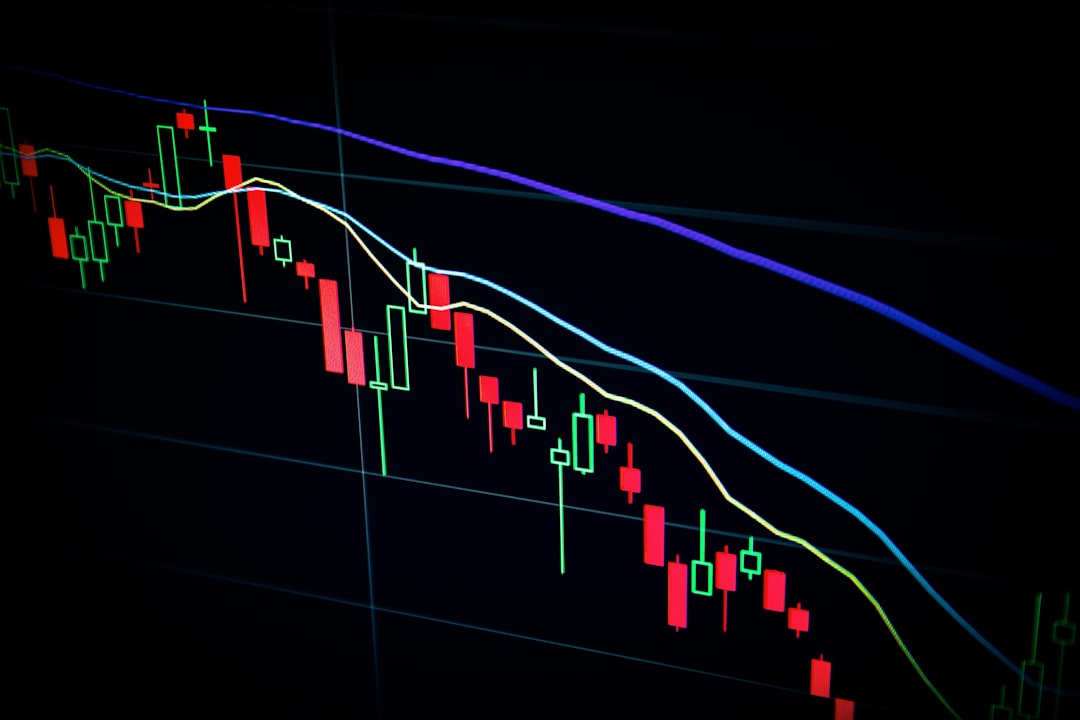
The Leverage Trap: Where Most Retail Accounts Die
Here’s the risk-management reality nobody puts in the headline: forex brokers offer leverage up to 500:1 in offshore jurisdictions, and even regulated EU/UK brokers offer up to 30:1 on major pairs. Leverage is mathematically neutral — it amplifies both gains and losses equally. The problem is psychological asymmetry.
Let’s run concrete numbers. You open a $1,000 account. You trade 1 standard lot (100,000 units) of EUR/USD at 100:1 leverage. A 1% adverse move (100 pips on EUR/USD at ~$10/pip) wipes your entire account. That’s not a theoretical worst case — EUR/USD routinely moves 80–120 pips on a US CPI print day.
Professional traders — the ones consistently profitable over 3+ year horizons — typically risk 0.5% to 2% of account equity per trade. That means on a $10,000 account, your stop loss should represent a maximum $200 loss. If your setup requires a 50-pip stop on EUR/USD, your position size should be 0.4 mini lots, not 1 full lot.
The bullish scenario for forex trading in 2025: with the Fed navigating a potential rate-cut cycle and the ECB diverging on policy, EUR/USD has genuine macro-driven trending potential — the kind of clean 300–500 pip directional moves where trend-following strategies print. But the specific conditions under which losses accelerate: ranging markets with false breakouts, which dominated Q1 2025 across multiple major pairs and triggered stop hunts at obvious technical levels.
Strategy Frameworks That Actually Hold Up
After looking at verified track records across prop firm challenges (FTMO, MyForexFunds successors, and The Funded Trader) and retail broker data, a few strategy archetypes show statistically consistent results:
- London Breakout Strategy: Trades the range established in the Asian session, entering on breakout at London open. Win rate typically 45–55%, but favorable risk-reward ratios of 1:2 or better make it net positive. Works best on GBP/USD and EUR/USD.
- Higher Timeframe Structure + Lower TF Entry: Identify trend on Daily/4H, enter on H1 pullback to key level (demand/supply zones, 50 EMA). Reduces noise significantly. This is the backbone of most successful retail traders I’ve observed in 2025 Discord communities and Myfxbook verified accounts.
- News Fade Strategy: Wait 2–3 minutes after major news release (NFP, CPI, FOMC), identify the initial spike direction, then fade the overreaction as liquidity normalizes. High skill ceiling — not for beginners — but experienced traders using this on USD pairs in 2025 have seen strong asymmetric setups.
- Carry Trade (Position Trading): Exploit interest rate differentials by going long high-yield currencies (currently AUD, NZD) vs. low-yield (JPY, CHF). Works in stable macro environments. Falls apart aggressively during risk-off events — see JPY short squeeze events in 2024 as a warning model.
Broker Selection: The Details That Cost You Money
Not all brokers are equal, and in 2025 the regulatory landscape matters more than ever. Key criteria:
- Regulation: FCA (UK), ASIC (Australia), CySEC (EU) offer meaningful retail protection. Offshore brokers (St. Vincent, Seychelles) may offer higher leverage but zero recourse if issues arise.
- Execution Type: ECN/STP brokers pass your orders to the interbank market. Market makers take the other side of your trade — inherent conflict of interest, though not always a problem if spreads are transparent.
- Spread + Commission: An ECN account might charge $7 per round turn on a standard lot but offer 0.0–0.2 pip raw spreads. A market maker offers “commission-free” but bakes 1.5–2 pip spreads in. Do the math based on your trade frequency.
- Platform Stability: MT4/MT5 remain industry standard. cTrader is gaining traction for algorithmic traders. Verify broker uptime records during major news events — slippage and requotes during NFP on a bad broker can turn a winning trade into a loss.

The Psychology Variable Nobody Budgets For
Here’s what the research consistently shows: trading journals from FTMO’s public dataset and academic studies on retail trader behavior (notably the DailyFX Intelligence Unit’s 2023–2024 analysis) find that traders who use stop losses on every trade and maintain consistent position sizing have dramatically better outcomes — not because their technical analysis is better, but because they survive long enough to let edge play out over a large sample of trades.
The cognitive traps that reliably destroy accounts: moving stop losses when price approaches them (loss aversion), doubling position size after a loss to “recover quickly” (martingale psychology), and overtrading after a win because of false confidence (recency bias). These aren’t moral failures — they’re predictable responses to uncertainty that require systematic rules to counteract.
If your situation is A — you have disposable capital, 6+ months of demo experience, and can genuinely afford to lose what you deploy — a live account with micro lots makes sense as a learning accelerator. If your situation is B — you’re trading with money you need, or you haven’t yet had a consistently profitable three-month demo stretch — the market will take that money and the lesson will be expensive.
Realistic Expectations for 2025
Prop firm data from FTMO’s published statistics show roughly 10–15% of challenge participants pass and receive funded accounts. Of those, a smaller percentage maintain consistent profitability for 12+ months. These are self-selected, motivated traders — the broader retail population fares worse.
A realistic target for a developing forex trader: 2–5% monthly return on risk capital, compounded. That’s 26–80% annually — genuinely exceptional by any asset class standard. But it requires treating this as a skill-based business, not a passive investment. Time investment in 2025 is not optional: minimum 3–6 months of structured study and demo trading before meaningful live exposure.
One last thought worth sitting with: forex isn’t a get-rich-quick vehicle, and anyone positioning it that way has something to sell you. But approached as a probabilistic, rules-based craft — with proper position sizing, a genuine edge you’ve tested over 100+ trades, and the psychological discipline to execute consistently — it remains one of the few markets accessible to retail participants where skill genuinely compounds over time. Start small, track everything, and let the math do the heavy lifting.
📚 관련된 다른 글도 읽어 보세요
- 2026년 가성비 쩌는 싱글몰트 위스키 Top3 — 돈 더 쓰기 전에 이것부터 마셔봐요
- Why I Almost Missed My Flight Trusting Airport Parking Apps — Real 2025 Guide to DFW Airport Parking
- 직접 써보고 말하는 솔직 후기 — 사기 전에 제발 이것만 확인하세요 [2026 기준]
태그: []
Leave a Reply